
Filter
19
Featured
3
2
Language
Document type
11
3
1
1
1
1
1
Countries
6
3
3
1
1
1
1
1
Authors & Publishers
Publication Years
Category
11
7
1
This template dossier complements and should be used after fulfilling the criteria and preconditions specified in the Process of validation of elimination of kala-azar as a public health problem in South-East Asia. The national kala-azar programme should be in the consolidation phase of elimination;
...
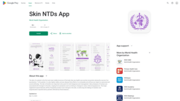
Skin NTDs App
recommended
Recognizing neglected tropical diseseases through changes on the skin.
App for Android and IOS, free of charge. The App is available in English and French, with plans to explore translations into other languages, such as Portuguese and Spanish, to better serve diverse communities.
A patient's skin
...
Website last accessed on 22.05.2023
Leishmaniasis refers to a diverse group of diseases caused by single-celled parasites called Leishmania. About 12 million people are infected at any one time, causing up to 40,000 deaths annually.
The VALIDATE Network - Vaccine development for complex intra
...
Website last accessed on 04.06.2023
Treatment options for Visceral Leishmaniasis in HIV-coinfected people include oral miltefosine; find additional information on diagnosis and ART treatment.
La Organización Panamericana de la Salud se complace en presentar la segunda edición del Manual de procedimientos para la vigilancia y el control de las leishmaniasis en la Región de las Américas, un instrumento de apoyo a las áreas de gestión y de servicios que trabajan con la leishmaniasis e
...

The leishmaniases are a group of diseases caused by Leishmania spp., which occur in cutaneous, mucocutaneous and visceral forms. They are neglected tropical diseases (NTDs), which disproportionately affect marginalized populations who have limited access to health care. HIV co-infected patients with
...
2nd edition. These guidelines include several notable changes from the first edition. For cutaneous leishmaniasis, ketoconazole has been removed from the list of treatment options; the number of Leishmania species for which there is strong evidence for the efficacy of miltefosine has increased from
...
Tis first edition describes the standard operating procedures for health products for NTDs amenable to preventive chemotherapy and the medicines donated to treat them. These include albendazole for lymphatic filariasis and soil-transmitted helminthiases; azithromycin for trachoma and yaws; diethylca
...
Localized cutaneous leishmaniasis and its evolving forms (diffuse cutaneous leishmaniasis, mucosal leishmaniasis and cutaneous leishmaniasis recidivans), together with the sequela of visceral leishmaniasis (post-kala-azar dermal leishmaniasis), account for about one million cases of dermal leishmani
...
Leishmaniasis is a complex vector-borne disease involving in its transmission several species of protozoan parasites called Leishmania, a wide variety of animal reservoirs and phlebotomine sandflies vectors. Cutaneous Leishmaniasis (CL) is the most common form of the disease, and its clinical manife
...
In the Region of the Americas, the leishmaniases are a group of diseases caused by various species of Leishmania, which cause a set of clinical syndromes in infected humans that can involve the skin, mucosa, and visceral organs. The spectrum of clinical disease is varied and depends on the interacti
...
El manual tiene por objetivo ampliar los conocimientos sobre la enfermedad y aspira a ser una herramienta de trabajo para que el personal de salud y los equipos de gestión presten apoyo a los ministerios de salud en sus respectivos procesos de estructuración de los servicios de salud, así como en
...
El documento ayudará a los países a identificar las áreas de necesidades y determinar cómo se puede reforzar la red de entomología, especialmente en el contexto de un sistema de salud descentralizado. Las recomendaciones también tienen en cuenta los diferentes grados de desarrollo y las difere
...
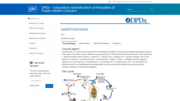
Leishmaniasis is a vector-borne disease that is transmitted by sandflies and caused by obligate intracellular protozoa of the genus Leishmania. Human infection is caused by about 21 of 30 species that infect mammals. These include the L. donovani complex with 3 species (L. donovani, L. infantum, and
...

La implementación de la presente Norma Nacional y Manual de Procedimientos Técnicos de la Leishmaniasis en el país, permitirá al personal de salud del sistema público y privado fortalecer sus capacidades técnicas y operativas a través de la estandarización y unificación de estrategias y acc
...
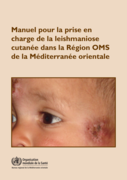
Leishmaniose cutanée : un important problèmede santé
La leishmaniose cutanée est une maladie potentiellement grave et défigurante. Les personnes atteintes de leishmaniose cutanée ont une ou plusieurs lésions durables sur la peau, le plus souvent sans fièvre ni symptômes généraux. L'impac
...
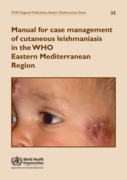
This publication represents a key step forward in translating Control of the leishmaniases (WHO Technical Report Series, No. 949) into a more practical tool for health personnel directly involved in the case management of cutaneous leishmaniasis. With this manual, countries will have, for the first
...
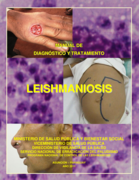
National Guideline
La leishmaniasis es un problema creciente de salud pública en el contextomundial. En Colombia, la situación es de alarma debido al incremento de casos de leishmaniasis cutánea que se viene registrando desde 2003 y el cambio en el patrón epidemiológico dado por la aparición de nuevos focos, el
...
