
Filter
97
Featured
14
3
Language
Document type
36
15
10
8
7
6
5
4
3
2
1
Countries
7
1
1
Authors & Publishers
Publication Years
Category
16
4
2
1
1
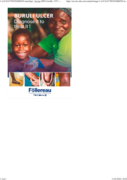
Poster. Accessed March 11, 2025
Buruli ulcer is caused by Mycobacterium and belongs to the family of bacteria that causes tuberculosis and leprosy. Although the causative organism of Buruli ulcer is an environmental bacterium, the mode of transmission to humans remains unknown. The organism produces a unique toxin – mycolactone
...
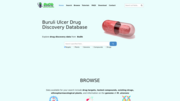
Data available for your search include drug targets, tested compounds, existing drugs, ethnopharmacological plants, and information on the genome of M. ulcerans
Explore a world of health data
Buruli ulcer (BU) is a skin-related neglected tropical disease (skin NTD) caused by infection with
Mycobacterium ulcerans. BU is the third most common mycobacterial disease after tuberculosis and leprosy
in people who are not immunocompromised. The infection manifests in non-ulcerative forms as no
...

MEDBOX Issue Brief no.35: The first issue brief on the NTD Toolbox contains general strategies, roadmaps, key treatment guidelines, reports, and training material on Buruli ulcer, Chagas, and Leishmaniasis.
Skin NTDs App
recommended
Recognizing neglected tropical diseseases through changes on the skin.
App for Android and IOS, free of charge. The App is available in English and French, with plans to explore translations into other languages, such as Portuguese and Spanish, to better serve diverse communities.
A patient's skin
...
The Lancet Volume 403, Issue 10422p203-218January 13, 2024, Free Download with free registration
Pharmaceuticals 2024, 17(6), 691; https://doi.org/10.3390/ph17060691
Although Buruli ulcer, tuberculosis, and leprosy are the three most common mycobacterial diseases, One Health dimensions of these infections remain poorly understood. This narrative review aims at exploring the scientific literature with respect to the presence of animal reservoir(s) and other envir
...
Wound measurements are relevant in monitoring the rate of healing (RoH) and may predict time to healing. Predicting the time to healing can help improve the management of Buruli ulcer. We examine three methods for the determination of RoH and their use as predictors of time to healing.
Wound measurements are relevant in monitoring the rate of healing (RoH) and may predict time to healing. Predicting the time to healing can help improve the management of Buruli ulcer. We examine three methods for the determination of RoH and their use as predictors of time to healing.
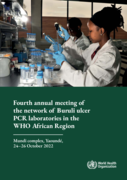
n October 2019, WHO convened the first meeting of the Buruli ulcer laboratory network (BU-LABNET) in Yaoundé, Cameroon, bringing together 11 laboratories from nine countries at the Pasteur Centre of Cameroon (CPC), the network’s Coordinating Centre. The network was formally established at th
...
PLoS Negl Trop Dis 16(11): e0010908. https://doi.org/10.1371/journal.pntd.0010908

The aim of the meeting was to broaden the network’s initiatives. Preliminary work involved integrating laboratory testing for skin NTDs other than Buruli ulcer, such as cutaneous leishmaniasis, mycetoma, leprosy and yaws, while extending the network’s reach to encompass additional laboratories.
Website last accessed on 18.03.2023
Website last accessed on 18.03.2023
The GHO data repository is WHO's gateway to health-related statistics for its 194 Member States. It provides access to over 1000 health topics indicators.
Website last accessed on 18.03.2023
Early detection of cases is critical to complete cure with combined antibiotics. In its late stages, Buruli ulcer causes severe destruction of the skin, leading to permanent disability. #BeatNTDs

Website - last accessed on 18.03.2023
