
Filter
133
Featured
2
17
Language
Document type
59
20
17
10
8
8
4
4
1
1
1
Countries
12
4
2
2
2
1
1
1
1
1
Authors & Publishers
Publication Years
Category
14
2
2
1

This tool enables a rapid, systematic review of pharmacy curricula at the national or institutional level to evaluate their robustness in delivering the expected content and competencies. It can also assist institutions in designing strategies to strengthen AMR curricular content, and to facilitate
...
La résistance aux antimicrobiens (RAM) constitue une menace pour la santé mondiale, la sécurité alimentaire et la réalisation des Objectifs de développement durable (ODD) à l'horizon 2030. Il est essentiel de s'attaquer à la RAM pour préserver la capacité des pays à traiter les maladies c
...
Issue Brief 31: Antimicrobial resistance (AMR) can occur when viruses, bacteria, parasites and fungi change over time. There is no longer a response to medicines, and the infection treatment gets really difficult which increases the risk of a disesase spread, which can lead to severe health problems
...
The Africa Centres for Disease Control and Prevention (Africa CDC) Biosafety and Biosecurity Initiative was launched by the Africa CDC in April 2019 with the aim of strengthening the African Union (AU) Member States’ biosafety and biosecurity systems and enabling them to comply with national and i
...
web annex: infographics

Antimicrobial resistance (AMR) is a major global public health concern and a food safety issue. When pathogens become resistant to antimicrobial agents they can pose a greater human health risk as a result of potential treatment failure, loss of treatment options and increased likelihood and severi
...

This document provides additional guidance for the responsible and prudent use of antimicrobials in food-producing animals, and should be read in conjunction with the Recommended International Code of Practice for Control of the Use of Veterinary Drugs CAC/RCP 38-1993. Its objectives are to minimize
...

Le présent document donne des indications supplémentaires pour un usage responsable et prudent des
antimicrobiens chez les animaux élevés pour l’alimentation humaine. II convient de le lire en conjonction
avec le Code d’usages international recommandé pour le contrôle de l'utilisation de
...

Este documento brinda orientación adicional para el uso responsable y prudente de los antimicrobianos en los animales productores de alimentos y debería leerse junto con el Código Internacional Recomendado de Prácticas para la Regulación del Uso de Medicamentos Veterinarios CAC/RCP 38-1993. Su
...
Антибиотики – это медикаменты, сдерживающие рост бактерий и убивающие их. Но если принимать
их неправильно или слишком часто, то может возникнуть устойчивость. Ан
...
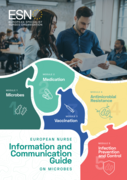
This manual addresses all the issues. It focus on the cycle of microbes, antibiotics, vaccination, AMR,
infection prevention and control. It will support nurses on better action and also on communication towards
their patients and families.
Education is UNESCO’s top priority because
it is a basic human right and the foundation
on which to build peace and drive sustainable
development. UNESCO is the United Nations’
specialized agency for education and the
Education Sector provides global and
regional leadership in education, s
...
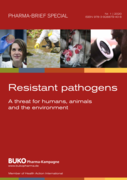
BUKO Pharma-Kampagne has investigated the causes and consequences of antibiotic resistance in India, South Africa, Tanzania and Germany. Together with our partners we collected data and did interviews with numerous stakeholders. The outcome is presented in a brochure that is now available in English
...
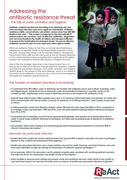
Antibiotic resistant bacteria are spreading at an alarming rate and some bacterial infections may once again be untreatable. Antibiotic resistance (ABR), conservatively calculated, causes more than 500 000 deaths every year. This number is projected to rise dramatically if radical actions are not ta
...
Устойчивость к противомикробным препаратам возникает, когда микроорганизмы (бактерии, грибки, вирусы и паразиты) меняются под воздействием противомикробных препÐ
...
The videos introduce AMR, what it is, and how it is spread (hospital-acquired, community-acquired, foods of animal origin, environmentally acquired). The take-home messages are what can be done to reduce the risk of AMR. They were produced through a partnership with the Food and Agriculture Organiza
...
Such as antibiotics, antivirals, antiparasitics, and antifungals are important for infectious disease control in humans, animals and plants,
but they can only continue to be effective if we use them responsibly and according to professional advice.
Available in English, French and Portuguese
This curricula guide builds on several existing products of WHO and partners, aimed at supporting countries in their effort to address the first objective of the GAP-AMR (to improve awareness and understanding of AMR). It is targeted specifically at health educators and policy planners, and applies
...
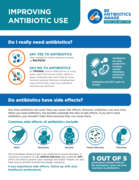
Do I really need antibiotics? - Fact Sheet for Patients
