
Filter
43
Featured
1
Language
Document type
32
5
3
1
1
1
Countries
3
1
1
1
Authors & Publishers
Publication Years
Category
1
La résistance aux antimicrobiens (RAM) constitue une menace pour la santé mondiale, la sécurité alimentaire et la réalisation des Objectifs de développement durable (ODD) à l'horizon 2030. Il est essentiel de s'attaquer à la RAM pour préserver la capacité des pays à traiter les maladies c
...
Антибиотики – это медикаменты, сдерживающие рост бактерий и убивающие их. Но если принимать
их неправильно или слишком часто, то может возникнуть устойчивость. Ан
...
Antibiotic resistant bacteria are spreading at an alarming rate and some bacterial infections may once again be untreatable. Antibiotic resistance (ABR), conservatively calculated, causes more than 500 000 deaths every year. This number is projected to rise dramatically if radical actions are not ta
...
Устойчивость к противомикробным препаратам возникает, когда микроорганизмы (бактерии, грибки, вирусы и паразиты) меняются под воздействием противомикробных препÐ
...
The videos introduce AMR, what it is, and how it is spread (hospital-acquired, community-acquired, foods of animal origin, environmentally acquired). The take-home messages are what can be done to reduce the risk of AMR. They were produced through a partnership with the Food and Agriculture Organiza
...
Such as antibiotics, antivirals, antiparasitics, and antifungals are important for infectious disease control in humans, animals and plants,
but they can only continue to be effective if we use them responsibly and according to professional advice.
Available in English, French and Portuguese
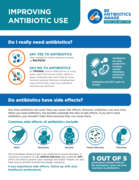
Do I really need antibiotics? - Fact Sheet for Patients
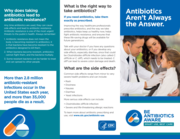
Brochure for Patients and General Public
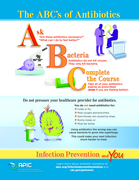
This infographic from APIC helps patients and families better understand their role in preventing infections and includes a list of questions to ask their healthcare provider about antibiotics.
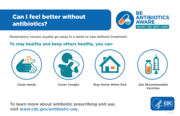
Fact Sheet for General Public
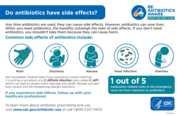
Wait-Room-Poster
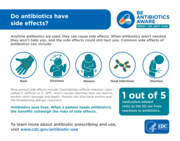
Infographic for General Public
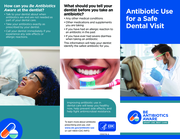
Brochure for General public
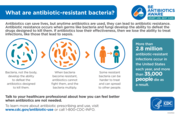
Antibiotic resistance occurs when bacteria no longer respond to the drugs designed to kill them. Anytime antibiotics are used, they can cause antibiotic resistance.
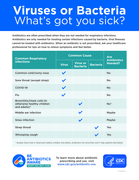
Antibiotics are only needed for treating certain infections caused by bacteria. Viral illnesses cannot be treated with antibiotics. When an antibiotic is not prescribed, ask your healthcare professional for tips on how to relieve symptoms and feel better.
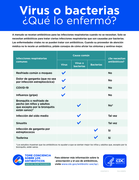
Los antibióticos solo son necesarios para tratar ciertas infecciones causadas por bacterias. Las enfermedades virales no pueden tratarse con antibióticos. Cuando tomar antibióticos no sea lo indicado, pídale a su profesional de atención médica consejos sobre cómo aliviar los síntomas y senti
...
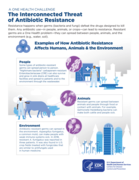
Resistance happens when germs (bacteria and fungi) defeat the drugs designed to kill them. Any antibiotic use—in people, animals, or crops—can lead to resistance. Resistant germs are a One Health problem—they can spread between people, animals, and the environment.
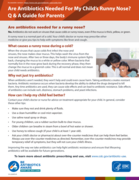
Q & A Guide for Parents - Factsheet
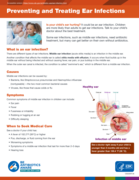
Is your child’s ear hurting? It could be an ear infection. Children are more likely than adults to get ear infections. Talk to your child’s doctor about the best treatment. Some ear infections, such as middle ear infections, need antibiotic treatment, but many can get better on their own without
...
Antibiotics only fight infections caused by bacteria. Like all drugs, they can be harmful and should only be used when necessary. Taking antibiotics when you have a virus can do more harm than good: you will still feel sick and the antibiotic could give you a skin rash, diarrhea, a yeast infection,
...
