
Filter
133
Featured
2
17
Language
Document type
59
20
17
10
8
8
4
4
1
1
1
Countries
12
4
2
2
2
1
1
1
1
1
Authors & Publishers
Publication Years
Category
14
2
2
1
This manual will contribute directly to the fourth focus area of the FAO Action Plan by promoting the prevention of infections and the prudent use of antibiotics in the pig and poultry sectors. The pig and poultry sectors are addressed together, as these sectors generally have the highest use of ant
...
Educational materials (slide presentations) from FAO covering important biosecurity aspects in poultry farms
Antimicrobial or antibiotic resistance is a multi-sectoral global threat affecting human and animal health, food safety, plants, fisheries and the environment as a whole.
Hence, there is a need for a multi-sectoral approach to address AMR. The resulting FAO Action Plan on antimicrobial resistance h
...
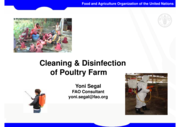
Educational materials (slide presentations) from FAO covering important biosecurity aspects in poultry farms
Educational materials (slide presentations) from FAO covering important biosecurity aspects in poultry farms.
This publication describes an arduous campaign to tackle the use of antimicrobials - specifically antibiotics - in the Danish swine-producing sector thanks to the collaboration between the regulatory sector within the Ministry of Environment and Food, private veterinary practitioners and swine produ
...
Antimicrobial Resistance - What is it?
Fact Sheet
A role for nuclear techniques
Antimicrobials play a critical role in the treatment of human and animal (aquatic and terrestrial) diseases, which has led to their widespread application and use. Antimicrobial resistance (AMR) is the ability of microorganisms to stop an antibiotic, such as an antimic
...

Veterinarians are leaders and stewards in preserving the effectiveness of antibiotics for animals and people. Working with animal owners and producers, veterinarians can slow antibiotic resistance by implementing disease prevention strategies and improving the use of antibiotics while also guarante
...
In recognition of the growing problem of antimicrobial resistance (AMR), its increasing threat to human, animal and plant health, and the need for a One Health approach to address this issue, the 39th Session of the Codex Alimentarius Commission (CAC) agreed it was important for the food safety comm
...
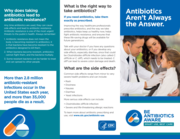
Brochure for Patients and General Public
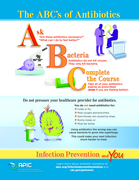
This infographic from APIC helps patients and families better understand their role in preventing infections and includes a list of questions to ask their healthcare provider about antibiotics.
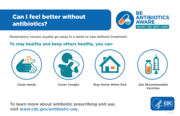
Fact Sheet for General Public
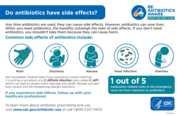
Wait-Room-Poster
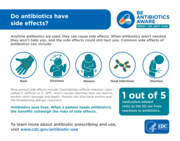
Infographic for General Public
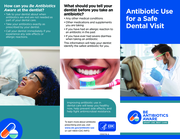
Brochure for General public
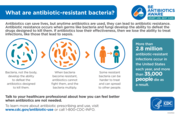
Antibiotic resistance occurs when bacteria no longer respond to the drugs designed to kill them. Anytime antibiotics are used, they can cause antibiotic resistance.
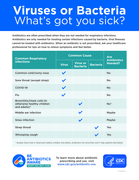
Antibiotics are only needed for treating certain infections caused by bacteria. Viral illnesses cannot be treated with antibiotics. When an antibiotic is not prescribed, ask your healthcare professional for tips on how to relieve symptoms and feel better.
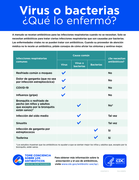
Los antibióticos solo son necesarios para tratar ciertas infecciones causadas por bacterias. Las enfermedades virales no pueden tratarse con antibióticos. Cuando tomar antibióticos no sea lo indicado, pídale a su profesional de atención médica consejos sobre cómo aliviar los síntomas y senti
...
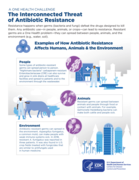
Resistance happens when germs (bacteria and fungi) defeat the drugs designed to kill them. Any antibiotic use—in people, animals, or crops—can lead to resistance. Resistant germs are a One Health problem—they can spread between people, animals, and the environment.
