
Filter
774
Text search:
WHO
Country
Office
for
Nepal
Featured
Recommendations
77
New Publications
243
Language
Document type
No document type
459
Studies & Reports
141
Guidelines
71
Manuals
56
Strategic & Response Plan
19
Fact sheets
9
Training Material
8
Situation Updates
8
Infographics
3
Countries / Regions
Nepal
129
Global
51
South–East Asia Region
37
Asia
30
India
26
Bangladesh
17
Myanmar / Burma
10
Pakistan
7
Indonesia
7
Ethiopia
6
Ghana
6
Uganda
6
Haiti
6
Zambia
6
Liberia
5
Philippines
5
Tanzania
5
Thailand
5
South Africa
5
Vietnam
5
Sierra Leone
4
Afghanistan
4
Lebanon
4
Cambodia
4
Malawi
4
Mozambique
4
Sri Lanka
4
Africa
4
Laos
4
Nigeria
3
Jordan
3
Syria
3
Kenya
3
Brazil
3
North Macedonia
3
Latin America and the Carribbean
3
Western and Central Europe
3
Russia
3
Congo, Democratic Republic of
2
Zimbabwe
2
South Sudan
2
Germany
2
Rwanda
2
East and Southern Africa
2
Western Pacific Region
2
Bhutan
2
Georgia
2
Guinea
1
Senegal
1
Morocco
1
Somalia
1
China
1
Central African Republic
1
Argentina
1
Namibia
1
Peru
1
Serbia
1
Hungary
1
Ukraine
1
Colombia
1
Ecuador
1
Mexico
1
Yemen
1
West and Central Africa
1
Middle East and North Africa
1
Eastern Europe and Central Asia
1
Other region
1
Venezuela
1
Eastern Europe
1
North Korea
1
Armenia
1
Timor Leste/ East Timor
1
Romania
1
Kyrgyzstan
1
Jamaica
1
Belgium
1
Norway
1
Portugal
1
Belarus
1
Authors & Publishers
Publication Years
Category
Countries
220
Key Resources
91
Women & Child Health
62
Clinical Guidelines
58
Public Health
43
Capacity Building
13
Pharmacy & Technologies
3
Toolboxes
HIV
76
Disability
72
Mental Health
53
COVID-19
39
Planetary Health
32
TB
29
NTDs
28
Natural Hazards
27
Global Health Education
22
Conflict
19
AMR
16
Caregiver
14
2.0 Rapid Response
14
Refugee
12
NCDs
11
Rapid Response
10
Pharmacy
10
Health Financing Toolbox
8
Malaria
5
Polio
4
Specific Hazards
4
Ebola & Marburg
3
Cholera
3
Typhoon
2
Zika
1

Nepal has only recently started its journey on the path to an integrated response to the challenge of antimicrobial resistance (AMR). Despite this, it is notable that the Nepal Health Sector Strateg
...
This publication outlines public health aspects of alcohol use and harm in WHO South East Asia Region Countries. It summarizes Global Regional and country specific data and also discusses aspects of
...
The report aims to help policy-makers and programme managers identify the areas that need attention and to work towards effective implementation and enforcement of policies and legislations. The need for alcohol policy-specific infrastructures to su
...
The Report describes the evaluation of WHO's contribution to the Maternal Health Program in South-East Asia Region. This was an independent evaluation conducted in 2015 by Amaltas, a Delhi based organization. The evaluation highlights the progress i
...

There is a broad consensus nowadays that the Earth is warming up as a result of greenhouse gas emissions caused by anthropogenic activities. It is also clear that current trends in the fields of energy, development and population growth will lead to continuous and ever more dramatic climate change.
...



Lessons learned from recent public health events such as the COVID-19 pandemic, Ebola virus disease, Zika virus disease outbreaks, and other public health threats, including earthquakes and floods, have highlighted the need for countries to continuo
...
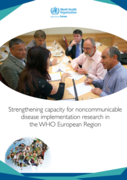
Calls for greater implementation research (IR) capacity came in the wake of compelling evidence that implementation strategies are critically important for the dissemination and facilitation of evid
...
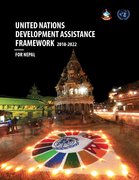
The United Nations Development Assistance Framework (UNDAF) 2018-2022 sets out the UN partnership aiming to support Nepal as it carves out its development agenda over the next five years. At the core of this new UNDAF are the SDGs, the Government of
...

Hand hygiene is vital for safe health care delivery, yet practices at the point of care remain suboptimal worldwide. A comprehensive research agenda is therefore necessary to improve our understanding of factors influencing hand hygiene behaviour an
...
The overall objective of the framework is to support WHO and Members States in meaningful engagement of people living with NCDs, and mental health and neurological conditions to co-create and enhance related policies, programmes and services. This f
...

The report provides an overview of the disaster risk reduction and management in Nepal, a country under threat of multiple natural hazards: earthquakes, floods, landslides, fires, storms, the epidem
...
Revised and expanded version of the Guidelines
