
Filter
2850
Text search:
household
living
conditions
Featured
266
883
Language
2795
54
40
22
21
14
11
6
6
5
4
3
3
3
3
2
2
2
2
2
1
1
1
1
1
1
1
1
1
1
1
1
1
1
1
1
1
Document type
1686
509
297
130
126
37
36
22
4
3
Countries
116
112
104
96
77
70
69
69
64
62
59
58
52
52
49
48
44
43
39
35
35
32
31
29
26
25
23
22
20
19
19
17
16
16
15
15
15
15
14
13
13
12
11
11
10
10
9
9
8
8
8
8
8
8
8
7
7
6
6
5
5
5
5
5
5
4
4
4
4
4
4
3
3
3
3
3
2
2
2
2
2
2
2
2
2
2
2
2
2
2
2
2
2
1
1
1
1
1
1
1
1
1
1
1
1
1
1
1
1
1
1
1
1
1
1
1
1
1
1
1
Authors & Publishers
268
94
92
63
61
55
43
37
31
26
24
20
19
18
17
17
17
16
16
15
14
14
14
14
13
13
13
13
12
12
12
11
11
11
11
11
10
10
10
10
9
9
9
9
9
9
8
8
8
8
8
7
7
7
7
7
7
7
7
7
7
7
7
7
6
6
6
6
6
6
6
6
6
6
6
6
6
6
5
5
5
5
5
5
5
5
5
5
5
5
5
5
5
5
5
5
5
5
5
4
4
4
4
4
4
4
4
4
4
4
4
4
4
4
4
4
4
4
4
4
4
4
4
4
4
4
3
3
3
3
3
3
3
3
3
3
3
3
3
3
3
3
3
3
3
3
3
3
3
3
3
3
3
3
3
3
3
3
3
3
3
3
3
3
3
3
3
3
3
3
3
3
3
3
3
3
3
3
3
3
3
3
3
3
3
3
3
3
3
3
3
3
3
3
3
3
3
2
2
2
2
2
2
2
2
2
2
2
2
2
2
2
2
2
2
2
2
2
2
2
2
2
2
2
2
2
2
2
2
2
2
2
2
2
2
2
2
2
2
2
2
2
2
2
2
2
2
2
2
2
2
2
2
2
2
2
2
2
2
2
2
2
2
2
2
2
2
2
2
2
2
2
2
2
2
2
2
2
2
2
2
2
2
2
2
2
2
2
2
2
2
2
2
2
2
2
2
2
2
2
2
2
2
2
2
2
2
2
2
2
2
2
2
2
2
2
2
2
2
2
2
2
2
2
2
2
2
2
2
2
2
2
2
2
2
2
2
2
2
2
2
2
2
2
2
2
2
2
2
2
2
2
2
2
2
2
2
2
2
2
2
2
2
2
2
2
2
2
2
2
2
2
2
2
2
2
2
2
2
2
2
1
1
1
1
1
1
1
1
1
1
1
1
1
1
1
1
1
1
1
1
1
1
1
1
1
1
1
1
1
1
1
1
1
1
1
1
1
1
1
1
1
1
1
1
1
1
1
1
1
1
1
1
1
1
1
1
1
1
1
1
1
1
1
1
1
1
1
1
1
1
1
1
1
1
1
1
1
1
1
1
1
1
1
1
1
1
1
1
1
1
1
1
1
1
1
1
1
1
1
1
1
1
1
1
1
1
1
1
1
1
1
1
1
1
1
1
1
1
1
1
1
1
1
1
1
1
1
1
1
1
1
1
1
1
1
1
1
1
1
1
1
1
1
1
1
1
1
1
1
1
1
1
1
1
1
1
1
1
1
1
1
1
1
1
1
1
1
1
1
1
1
1
1
1
1
1
1
1
1
1
1
1
1
1
1
1
1
1
1
1
1
1
1
1
1
1
1
1
1
1
1
1
1
1
1
1
1
1
1
1
1
1
1
1
1
1
1
1
1
1
1
1
1
1
1
1
1
1
1
1
1
1
1
1
1
1
1
1
1
1
1
1
1
1
1
1
1
1
1
1
1
1
1
1
1
1
1
1
1
1
1
1
1
1
1
1
1
1
1
1
1
1
1
1
1
1
1
1
1
1
1
1
1
1
1
1
1
1
1
1
1
1
1
1
1
1
1
1
1
1
1
1
1
1
1
1
1
1
1
1
1
1
1
1
1
1
1
1
1
1
1
1
1
1
1
1
1
1
1
1
1
1
1
1
1
1
1
1
1
1
1
1
1
1
1
1
1
1
1
1
1
1
1
1
1
1
1
1
1
1
1
1
1
1
1
1
1
1
1
1
1
1
1
1
1
1
1
1
1
1
1
1
1
1
1
1
1
1
1
1
1
1
1
1
1
1
1
1
1
1
1
1
1
1
1
1
1
1
1
1
1
1
1
1
1
1
1
1
1
1
1
1
1
1
1
1
1
1
1
1
1
1
1
1
1
1
1
1
1
1
1
1
1
1
1
1
1
1
1
1
1
1
1
1
1
1
1
1
1
1
1
1
1
1
1
1
1
1
1
1
1
1
1
1
1
1
1
1
1
1
1
1
1
1
1
1
1
1
1
1
1
1
1
1
1
1
1
1
1
1
1
1
1
1
1
1
1
1
1
1
1
1
1
1
1
1
1
1
1
1
1
1
1
1
1
1
1
1
1
1
1
1
1
1
1
1
1
1
1
1
1
1
1
1
1
1
1
1
1
1
1
1
1
1
1
1
1
1
1
1
1
1
1
1
1
1
1
1
1
1
1
1
1
1
1
1
1
1
1
1
1
1
1
1
1
1
1
1
1
1
1
1
1
1
1
1
1
1
1
1
1
1
1
1
1
1
1
1
1
1
1
1
1
1
1
1
1
1
1
1
1
1
1
1
1
1
1
1
1
1
1
1
1
1
1
1
1
1
1
1
1
1
1
1
1
1
1
1
1
1
1
1
1
1
1
1
1
1
1
1
1
1
1
1
1
1
1
1
1
1
1
1
1
1
1
1
1
1
1
1
1
1
1
1
1
1
1
1
1
1
1
1
1
1
1
1
1
1
1
1
1
1
1
1
1
1
1
1
1
1
1
1
1
1
1
1
1
1
1
1
1
1
1
1
1
1
1
1
1
1
1
1
1
1
1
1
1
1
1
1
1
1
1
1
1
1
1
1
1
1
1
1
1
1
1
1
1
1
1
1
1
1
1
1
1
1
1
1
1
1
1
1
1
1
1
1
1
1
1
1
1
1
1
1
1
1
1
1
1
1
1
1
1
1
1
1
1
1
1
1
1
1
1
1
1
1
1
1
1
1
1
1
1
1
1
1
1
1
1
1
1
1
1
1
1
1
1
1
1
1
1
1
1
1
1
1
1
1
1
1
1
1
1
1
1
1
1
1
1
1
1
1
1
1
1
1
1
1
1
1
1
1
1
1
1
1
1
1
1
1
1
1
1
1
1
1
1
1
1
1
1
1
1
1
1
1
1
1
1
1
1
1
1
1
1
1
1
1
1
1
1
1
1
1
1
1
1
1
1
1
1
1
1
1
1
1
1
1
1
1
1
1
1
1
1
1
1
1
1
1
1
1
1
1
1
1
1
1
1
1
1
1
1
1
1
1
1
1
1
1
1
1
1
1
1
1
1
1
1
1
1
1
1
1
1
1
1
1
1
1
1
1
1
1
1
1
1
1
1
1
1
1
1
1
1
1
1
1
1
1
1
1
1
1
1
1
1
1
1
1
1
1
1
1
1
1
1
1
1
1
1
1
1
1
1
1
1
1
1
1
1
1
1
1
1
1
1
1
1
1
1
1
1
1
1
1
1
1
1
1
1
1
1
1
1
1
1
1
1
1
1
1
1
1
1
1
1
1
1
1
1
1
1
1
1
1
1
1
1
1
1
1
1
1
1
1
1
1
1
1
1
1
1
1
1
1
1
1
1
1
1
1
1
1
1
1
1
1
1
1
1
1
1
1
1
1
1
1
1
1
1
1
1
1
1
1
1
1
1
1
1
1
1
1
1
1
1
1
1
1
1
1
1
1
1
1
1
1
1
1
1
1
1
1
1
1
1
1
1
1
1
1
1
1
1
1
1
1
1
1
1
1
1
1
1
1
1
1
1
1
1
1
1
1
1
1
1
1
1
1
1
1
1
1
1
1
1
1
1
1
1
1
1
1
1
1
1
1
1
1
1
1
1
1
1
1
1
1
1
1
1
1
1
1
1
1
1
1
1
1
1
1
1
1
1
1
1
1
1
1
1
1
1
1
1
1
1
1
1
1
1
1
1
1
1
1
1
1
1
1
1
1
1
1
1
1
1
1
1
1
1
1
1
1
1
1
1
1
1
1
1
1
1
1
1
1
1
1
1
1
1
1
1
1
1
1
1
1
1
1
1
1
1
1
1
1
1
1
1
1
1
1
1
1
1
1
1
1
1
1
1
1
1
1
1
1
1
1
1
1
1
1
1
1
1
1
1
1
1
1
1
1
1
1
1
1
1
1
1
1
1
1
1
1
1
1
1
1
1
1
1
1
1
1
1
1
1
1
1
1
1
1
1
1
1
1
1
1
1
1
1
1
1
1
1
1
1
1
1
1
1
1
1
1
1
1
1
1
1
1
1
1
1
1
1
1
1
1
1
1
1
1
1
1
1
1
1
1
1
1
1
1
1
1
1
1
1
1
1
1
1
1
1
1
1
1
1
1
1
1
1
1
1
1
1
1
1
1
1
1
1
1
1
1
1
1
1
1
1
1
1
1
1
1
1
1
1
1
1
1
1
1
1
1
1
1
1
1
1
1
1
1
1
1
1
1
1
1
1
1
1
1
1
1
1
1
1
1
1
1
1
1
1
1
1
1
1
1
1
1
1
1
1
1
1
1
1
1
1
1
1
1
1
1
1
1
1
1
1
1
1
1
1
1
1
1
1
1
1
1
1
1
1
1
1
1
1
1
1
1
1
1
1
1
1
1
1
1
1
1
1
1
1
1
1
1
1
1
1
1
1
1
1
1
1
1
1
1
1
1
1
1
1
1
1
1
1
1
1
1
1
1
1
1
1
1
1
1
1
1
1
1
1
1
1
1
1
1
1
1
1
1
1
1
1
1
1
1
1
1
1
1
1
1
1
1
1
1
1
1
1
1
1
1
1
1
1
1
1
1
1
1
1
1
1
1
1
1
1
1
1
1
1
1
1
1
1
1
1
1
1
1
1
1
1
1
1
1
1
1
1
1
1
1
1
1
1
1
1
1
1
1
1
1
1
1
1
1
1
1
1
1
1
1
1
1
1
1
1
1
1
1
1
1
1
1
1
1
1
1
1
1
1
1
1
1
1
1
1
1
1
1
1
1
1
1
1
1
1
1
1
1
1
1
1
1
1
1
1
1
1
1
1
1
1
1
1
1
1
1
1
1
1
1
1
1
1
1
1
1
1
1
1
1
1
1
1
1
1
1
1
1
1
1
1
1
1
1
1
1
1
1
1
1
1
1
1
1
1
1
1
1
1
1
1
1
1
1
1
1
1
1
1
1
1
1
1
1
1
1
1
1
1
1
1
1
1
1
1
1
1
1
1
1
1
1
1
1
1
1
1
1
1
1
1
1
1
1
1
1
1
1
1
1
1
1
1
1
1
1
1
1
1
1
1
1
1
1
1
1
1
1
1
1
1
1
1
1
1
1
1
1
1
1
1
1
1
1
1
1
1
1
1
1
1
1
1
1
1
1
1
1
1
1
1
1
1
1
1
1
1
1
1
1
1
1
1
1
1
1
1
1
1
1
1
1
1
1
1
1
1
1
1
1
1
1
1
1
1
1
1
1
1
1
1
1
1
1
1
1
1
1
1
1
1
1
1
1
1
1
1
1
1
1
1
1
1
1
1
1
1
1
1
1
1
1
1
1
1
1
1
1
1
1
1
1
1
1
1
1
1
1
1
1
1
1
1
1
1
1
1
1
1
1
1
1
1
1
1
1
1
1
1
1
1
1
1
1
1
1
1
1
1
1
1
1
1
1
1
1
1
1
1
1
1
1
1
1
1
1
1
1
1
1
1
1
1
1
1
1
1
1
1
1
1
1
1
1
1
1
1
1
1
1
1
1
1
1
1
1
1
1
1
1
1
1
1
1
1
1
1
1
1
1
1
1
1
1
1
1
1
1
1
1
1
1
1
1
1
1
1
1
1
1
1
1
1
1
1
1
1
1
1
1
1
1
1
1
1
1
1
1
1
1
1
1
1
1
1
1
1
1
1
1
1
1
1
1
1
1
1
1
Publication Years
799
1767
274
9
1
Category
1300
231
151
126
122
57
14
Toolboxes
228
167
166
150
139
138
112
75
68
62
60
58
45
36
34
24
24
22
21
16
15
12
11
7
5
2
1
A study conducted by the World Health Organisation Regional Office for Africa. The COVID-19 pandemic has had a significant impact on older persons both globally and in the African region. Although overall the region’s population is younger relative to many other world regions, the WHO AFRO region
...
has a population just over 62 million older people and is ageing rapidly, with the number of older people expected to triple in the next three decades (Aboderin et al., 2020).
more
The emergence and transmission of zoonotic diseases are driven by complex interactions
between health, environmental, and socio-political systems. Human movement is considered
a significant and increasing factor in these processes, yet forced migration remains an
understudied area of zoonotic res
...
earch–due in part to the complexity of conducting interdisciplinary
research in these settings.
more
Working towards better COVID-19 outcomes in the WHO European Region.From the first COVID-19 cases in Europe reported on
24 January 2020, the pandemic reached 1 million cases
within 3 months, 10 million cases within 8 months, and
100 million cases in Europe alone within 2 years. Over
the course o
...
f its two years, COVID-19 has claimed over
1.6 million lives across Europe and Central Asia. The
World Health Organization (WHO) European Region has
accounted for close to a third of the cumulative global
COVID-19 cases and deaths.
more

Current evidence that the climate is changing is overwhelming. Impacts of climate change and variability are being observed: more intense heat-waves, fires and floods; and increased prevalence of food- water- and vector-borne diseases. Climate change will put pressure on environmental and health det
...
erminants, such as food safety, air pollution and water quantity and quality. A climate-resilient future depends fundamentally on reducing greenhouse gas emissions. Limiting warming to below 2 °C requires transformational technological, institutional, political and behavioural changes: the foundations for this are laid out in the Paris Agreement of December 2015. The health sector can lead by example, shifting to environmentally friendly practices and minimizing its carbon emissions. A climate-resilient future will increasingly depend on managing and reducing climate change risks to protect health. In the near term, this can be enhanced by including climate change in national health programming and creating climate-resilient health systems.
more
The Planetary Health Education Framework is a project of the Planetary Health Alliance (planetaryhealthalliance.org). The Planetary Health Alliance is a consortium of over 250 partners from around the world committed to understanding and addressing the human health impacts of global environmental ch
...
ange
more
Europe and Central Asia Economic Update.
The Russian Federation’s war with Ukraine has triggered a catastrophic humanitarian crisis and threatened the stability of geopolitical relations. Economic output in the Europe and Central Asia region is forecast to contract by more than 4.1% in 2022—the
...
second major shock and regional recession in two years. Moreover, the war has added to mounting concerns of a sharp global growth slowdown.
more

Constraints, Technologies, Policies and Processes
Transformation and outlook
Health is routinely considered in strategic environmental assessment (SEA) and environmental impact assessment (EIA), following requirements of European Union directives and the Protocol on Strategic Environmental Assessment to the Convention on Environmental Impact Assessment in a Trans
...
boundary Context (Espoo Convention). Policy-makers and other sources report that these assessments mostly adopt a biophysical perspective and that few cases consider or define health in a manner which is consistent with the WHO Constitution, by considering the wider social, economic, behavioural and institutional aspects of health. This systematically conducted review of over 333 SEA and EIA cases in the WHO European Region shows that while about 80% of assessments pursue a narrow, biophysical interpretation of health, around 10% consider wider determinants when defining health, and another 10% consider wider determinants of health in the actual assessment. Twelve case studies are presented, literature is reviewed and implications for practice are considered.
more
The COVID-19 HEalth caRe wOrkErs Study (HEROES): Regional Report from the Americas is a multicenter prospective cohort study to assess the impact of the COVID-19 pandemic on the mental health of health care workers in 26 countries on four continents and how it is affected by several factors at diffe
...
rent interrelated levels: individual, family, occupational, and social. This brief report presents the evidence generated from the baseline survey of 11 participating countries in the Region of the Americas. Using validated scales, the findings show high rates of depressive symptoms, suicidal ideation, and psychological distress in several countries of the Region. The spirit of the project is not only to generate quality scientific evidence on the mental health of health care workers, but also to help develop interventions (both individual and institutional) and policies to address the negative impacts of the COVID-19 pandemic on mental health.
more
The crisis caused by the COVID-19 pandemic exacerbated preexisting structural economic inequalities, and had a disproportionate impact on informal workers, especially on women and young people, who lost jobs and income. The situation was even more difficult for single-parent households led by women,
...
who also had to endure more housework and care tasks. As shown by various research studies, the asymmetric distribution of care tasks, taken up by women, is an inequality factor.
more

Latin America and the Caribbean is characterized by a matrix of social inequality whose axes —such as
socioeconomic stratum, gender, stage in the life cycle, ethnicity and race, territory, disability, and immigration
status— create multiple, often concurrent, situations of exclusion and discri
...
mination. The coronavirus
disease (COVID-19) pandemic has exacerbated wide social gaps and it is no coincidence that Latin America
and the Caribbean is one of the regions in which the health and socioeconomic impacts of the pandemic have
been the most severe, which shows that the costs of inequality are unsustainable
more
This profile is part of a series of Climate Risk Country Profiles developed by the World Bank Group (WBG). The country profile synthesizes most relevant data and information on climate change, disaster risk reduction, and adaptation actions and policies at the country level. The country profile seri
...
es are designed as a quick reference source for development practitioners to better integrate climate resilience in development planning and policy making. This effort is managed and led by Veronique Morin (Senior Climate Change Specialist, WBG) and Ana E. Bucher (Senior Climate Change Specialist, WBG)
more
Joint EUAA, IOM and OECD report provides new insights on displacement from and within Ukraine
The European Union Agency for Asylum (EUAA), the International Organization for Migration (IOM) and the Organisation for Economic Co-operation and Development (OECD) have published a Joint Report on profil
...
es, experiences, and aspirations of forcibly displaced people by the Russian invasion of Ukraine.
The Joint Report provides an in-depth study of the scale of displacement to EU countries and people seeking protection there, by building on initial findings derived from a June EUAA-OECD Survey.
more

Atlas of African Health Statistics 2022: Health situation analysis of the WHO African Region
Since 2019, we have been implementing Phase 2 of the regional Transformation Agenda, which informs and aligns with the global WHO Transformation, to ensure WHO is accountable, driven by re- sults and provid
...
ing value for money in the pursuit of better health. Our global priority in this period is to contribute to delivering on the triple billion targets of expanding universal health coverage, protecting people from emergencies, and promoting health and well-being for people across the Region.
This year’s Atlas of African Health Statistics is being produced in the context of the COVID-19 pandemic that we have been expe- riencing for over two years. The ongoing coronavirus pandemic, together with other health emergencies in the WHO African Re- gion, is yet again testing the strength and resilience of our health systems. Indeed, the impact of COVID-19 is visible in the disruption of services. The report also presents the latest data for more than 50 health-related indicators of the Sustainable Development Goals and WHO’s “triple billion” targets and provides comprehensive country-level statistics using the results chain of the AFRO frame- work of actions for strengthening health systems to achieve UHC and the health-related SDGs.
more

Trachoma causes more vision loss and blindness than any other infection in the world. This disease is caused by Chlamydia trachomatis bacteria. Other variants or strains of these bacteria can cause a sexually transmitted infection (chlamydia) and disease in lymph nodes.
This is photomicrograph
...
of a conjunctival smear that revealed the presence of what are known as, intracytoplasmic inclusions Trachoma is easily spread through direct personal contact such as from fingers, through shared towels and clothes, and through flies that have been in contact with the eyes or nose of an infected person. When left untreated, repeated Chlamydia trachomatis infections in the eye can cause severe scarring on the inside of the eyelid. This can cause the eyelashes to scratch the cornea (trichiasis). In addition to causing pain, trichiasis permanently damages the cornea and can lead to irreversible blindness.
Chlamydia trachomatis infections spread in areas that lack access to safely managed drinking water and sanitation systems. Trachoma affects the most resource-limited communities in the world. Globally, almost 1.9 million people have vision loss because of trachoma, and it causes 1.4% of all blindness worldwide.1 In 2021, 136 million people lived in trachoma-endemic areas and were at risk of trachoma blindness.
more
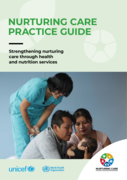
This Guide responds to requests from practitioners and country teams who have learned about the Nurturing care framework and want to understand how to adapt health and nutrition services to be supportive of nurturing care and strengthen caregivers’ capacity.

Schistosomiasis is widely recognized as a disease that is socially determined. An understanding of the social and behavioural factors linked to disease transmission and control should play a vital role in designing policies and strategies for schistosomiasis prevention and control. To this must be a
...
dded the awareness that schistosomiasis is also a disease of poverty. It still survives in poverty-stricken, remote areas where there is little or no safe water or sanitation, and health care is scarce or non-existent. For a variety of complex reasons, many of which are addressed in this book, the disease is particularly prevalent in sub-Saharan Africa, and persists in certain areas of rural China. This concern for human behaviour in an environment of poverty echoes the concerns of the new research priority for “diseases of poverty” identified by the Special Programme for Research & Training in Tropical Diseases.
more
Surveillance, prevention and control of leishmaniases in the European Union and its neighbouring countries
European Centre for disease prevention and control (ECDC)
European Centre for disease prevention and control (ECDC)
(2022)
C_CDC
This technical report presents the epidemiology of human and animal leishmaniases in the EU and its neighbouring countries and concludes that the disease remains widespread and underreported in many countries of southern Europe, northern Africa, and the Middle East and that there is a need to improv
...
e leishmaniasis prevention and control based on robust surveillance in humans, animals, and vectors, and to increase public awareness following a one health approach.
more
