
Filter
190
Text search:
kosovo
Featured
12
29
Language
Document type
105
41
15
12
7
6
1
1
1
1
Countries
29
18
7
7
6
4
3
3
2
2
2
2
2
2
2
2
2
1
1
1
1
1
1
1
1
1
1
1
1
1
1
1
1
1
1
1
1
1
1
1
1
1
1
1
1
1
1
Authors & Publishers
Publication Years
Category
25
22
8
8
4
3
Toolboxes
43
40
14
13
9
8
6
5
4
4
4
3
2
2
2
1
1
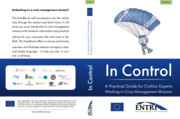
Hands-on information and practical advice for everyday life and work in the field as well as background information on crisis management structures in international organizations lie at the heart of the new handbook. It has been developed in the realm of Europe’s New Training Initiative for Civili
...
Neben umfassenden Wanderungsdaten zu Deutschland enthält der Bericht einen europäischen Vergleich zum Migrationsgeschehen und zur Asylzuwanderung. Er behandelt das Phänomen der irregulären Migration und informiert über die Struktur und Entwicklung der Bevölkerung mit Migrationshintergrund in D
...
BMJ Global Health2020;5:e002014. doi:10.1136/bmjgh-2019-002014
In Baden-Württemberg haben sich einige Behandlungszentren auf die ärztliche und psychologische dolmetschergestützte Psychotherapie von traumatisierten MigrantInnen spezialisiert. Die Arbeit dieser Zentren, die in einem Gesprächskreis um die Menschenrechtsbeauftragte der Landesärztekammer Baden-
...
Anforderungen an die Darlegung von Abschiebungshindernissen aufgrund von Krankheit im Asyl- und Aufenthaltsrecht
Lücken schließen – Angebote ergänzen
Der Kooperationsverbund Gesundheitliche Chancengleichheit hat eine Handreichung zur Gesundheitsförderung mit Geflüchteten veröffentlicht. Die Broschüre führt in das Thema ein und formuliert grundlegende Handlungsoptionen. Ergänzt wird die Veröffentli
...
The World Happiness Report 2021 focuses on the effects of COVID-19 and how people all over the world have fared. Our aim was two-fold, first to focus on the effects of COVID-19 on the structure and quality of people’s lives, and second to describe and evaluate how governments all over the world ha
...
9 June 2021
Since its launch, GLASS has expanded in scope and coverage and as of May 2021, 109 countries and territories worldwide have enrolled in GLASS. A key new component in GLASS is the inclusion of antimicrobial consumption (AMC) surveillance at the national level highlighted in this fourth G
...
21 January 2022
The overall threat posed by Omicron largely depends on four key questions: (i) how transmissible the variant is; (ii) how well vaccines and prior infection protect against infection, transmission, clinical disease and death; (iii) how virulent the variant is compared to other varian
...
Geflüchtete Kinder haben Rechte - auch in Aufnahmeeinrichtungen. terre des hommes und JUMEN, ein Verein zum Schutz der Grundrechte in Deutschland, veröffentlichen ein Rechtsgutachten zum Anspruch auf Entlassung aus einer Erstaufnahmeeinrichtung für Kinder und ihre Familien
This report presents the key findings of the end-of-project assessment of households and
community health volunteers, conducted in 2017 in the Kamukunji and Embakasi sub-counties
of Nairobi, Kenya, for a Community Health Volunteers’ Decision Support System (CHV DSS)
intervention project. The re
...
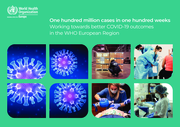
Working towards better COVID-19 outcomes in the WHO European Region.From the first COVID-19 cases in Europe reported on
24 January 2020, the pandemic reached 1 million cases
within 3 months, 10 million cases within 8 months, and
100 million cases in Europe alone within 2 years. Over
the course o
...
There is a broad consensus nowadays that the Earth is warming up as a result of greenhouse gas emissions caused by anthropogenic activities. It is also clear that current trends in the fields of energy, development and population growth will lead to continuous and ever more dramatic climate change.
...

En 2015, 26 % des décès de 5,9 millions d'enfants de moins de cinq ans auraient pu être évités si les facteurs de risque
environnementaux avaient été pris en compte – cette possibilité manquée de sauver des vies est révoltante. La période prénatale
et de la petite enfance constitue u
...

In 2015, 26% of the deaths of 5.9 million children who died before reaching their fifth birthday could have been prevented
through addressing environmental risks – a shocking missed opportunity. The prenatal and early childhood period represents
a window of particular vulnerability, where enviro
...
Screening programmes for tuberculosis (TB) among immigrants rarely consider the heterogeneity of
risk related to migrants’ country of origin. We assess the performance of a large screening programme in asylum seekers by analysing (i) the difference in yield and numbers needed to screen (NNS) by c
...
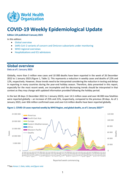
Globally, more than 3 million new cases and 10 000 deaths have been reported in the week of 26 December 2022 to 1 January 2023. This represents a reduction in weekly cases and deaths of 22% and 12%, respectively. In the last 28 days (5 December 2022 to 1 January 2023), over 14.5 million cases and ov
...
This collection of case studies on risk communication and community engagement (RCCE) from 18 different country/area level public health partners in the WHO European Region provides evidence of numerous results achieved and lessons learned since the start of the COVID-19 pandemic. RCCE has not
...
