
Filter
2456
Text search:
determinants
Featured
182
573
Language
2286
102
85
57
25
24
18
13
3
2
1
1
1
1
1
1
1
Document type
1167
640
263
147
134
45
35
7
4
3
2
2
2
1
Countries
166
73
68
67
63
62
55
44
40
39
38
38
37
36
36
34
33
30
27
22
22
21
19
19
19
18
18
16
15
14
13
13
12
12
11
11
11
11
11
11
9
9
9
9
8
7
7
7
7
6
6
6
6
6
6
5
5
5
5
5
5
4
4
4
4
4
4
4
3
3
3
3
3
3
2
2
2
2
2
2
2
2
2
2
2
1
1
1
1
1
1
1
1
1
1
1
1
1
1
1
1
1
1
1
1
1
1
1
1
1
1
1
1
1
Authors & Publishers
395
108
102
92
78
37
34
31
28
26
22
21
19
19
19
18
16
15
14
11
11
11
10
8
8
8
8
7
7
7
7
7
7
6
6
6
6
6
6
6
6
5
5
5
5
5
5
5
5
5
4
4
4
4
4
4
4
4
4
4
4
4
4
4
4
4
4
4
4
4
4
4
4
4
4
4
4
4
4
4
4
3
3
3
3
3
3
3
3
3
3
3
3
3
3
3
3
3
3
3
3
3
3
3
3
3
3
3
3
3
3
3
3
3
3
3
3
3
3
3
3
3
3
3
3
3
3
2
2
2
2
2
2
2
2
2
2
2
2
2
2
2
2
2
2
2
2
2
2
2
2
2
2
2
2
2
2
2
2
2
2
2
2
2
2
2
2
2
2
2
2
2
2
2
2
2
2
2
2
2
2
2
2
2
2
2
2
2
2
2
2
2
2
2
2
2
2
2
2
2
2
2
2
2
2
2
2
2
2
2
2
2
2
2
2
2
2
2
2
2
2
2
2
2
2
2
2
2
2
2
2
2
2
2
2
2
2
2
2
2
2
2
2
2
2
2
2
2
2
2
2
2
2
2
2
2
2
2
2
2
2
1
1
1
1
1
1
1
1
1
1
1
1
1
1
1
1
1
1
1
1
1
1
1
1
1
1
1
1
1
1
1
1
1
1
1
1
1
1
1
1
1
1
1
1
1
1
1
1
1
1
1
1
1
1
1
1
1
1
1
1
1
1
1
1
1
1
1
1
1
1
1
1
1
1
1
1
1
1
1
1
1
1
1
1
1
1
1
1
1
1
1
1
1
1
1
1
1
1
1
1
1
1
1
1
1
1
1
1
1
1
1
1
1
1
1
1
1
1
1
1
1
1
1
1
1
1
1
1
1
1
1
1
1
1
1
1
1
1
1
1
1
1
1
1
1
1
1
1
1
1
1
1
1
1
1
1
1
1
1
1
1
1
1
1
1
1
1
1
1
1
1
1
1
1
1
1
1
1
1
1
1
1
1
1
1
1
1
1
1
1
1
1
1
1
1
1
1
1
1
1
1
1
1
1
1
1
1
1
1
1
1
1
1
1
1
1
1
1
1
1
1
1
1
1
1
1
1
1
1
1
1
1
1
1
1
1
1
1
1
1
1
1
1
1
1
1
1
1
1
1
1
1
1
1
1
1
1
1
1
1
1
1
1
1
1
1
1
1
1
1
1
1
1
1
1
1
1
1
1
1
1
1
1
1
1
1
1
1
1
1
1
1
1
1
1
1
1
1
1
1
1
1
1
1
1
1
1
1
1
1
1
1
1
1
1
1
1
1
1
1
1
1
1
1
1
1
1
1
1
1
1
1
1
1
1
1
1
1
1
1
1
1
1
1
1
1
1
1
1
1
1
1
1
1
1
1
1
1
1
1
1
1
1
1
1
1
1
1
1
1
1
1
1
1
1
1
1
1
1
1
1
1
1
1
1
1
1
1
1
1
1
1
1
1
1
1
1
1
1
1
1
1
1
1
1
1
1
1
1
1
1
1
1
1
1
1
1
1
1
1
1
1
1
1
1
1
1
1
1
1
1
1
1
1
1
1
1
1
1
1
1
1
1
1
1
1
1
1
1
1
1
1
1
1
1
1
1
1
1
1
1
1
1
1
1
1
1
1
1
1
1
1
1
1
1
1
1
1
1
1
1
1
1
1
1
1
1
1
1
1
1
1
1
1
1
1
1
1
1
1
1
1
1
1
1
1
1
1
1
1
1
1
1
1
1
1
1
1
1
1
1
1
1
1
1
1
1
1
1
1
1
1
1
1
1
1
1
1
1
1
1
1
1
1
1
1
1
1
1
1
1
1
1
1
1
1
1
1
1
1
1
1
1
1
1
1
1
1
1
1
1
1
1
1
1
1
1
1
1
1
1
1
1
1
1
1
1
1
1
1
1
1
1
1
1
1
1
1
1
1
1
1
1
1
1
1
1
1
1
1
1
1
1
1
1
1
1
1
1
1
1
1
1
1
1
1
1
1
1
1
1
1
1
1
1
1
1
1
1
1
1
1
1
1
1
1
1
1
1
1
1
1
1
1
1
1
1
1
1
1
1
1
1
1
1
1
1
1
1
1
1
1
1
1
1
1
1
1
1
1
1
1
1
1
1
1
1
1
1
1
1
1
1
1
1
1
1
1
1
1
1
1
1
1
1
1
1
1
1
1
1
1
1
1
1
1
1
1
1
1
1
1
1
1
1
1
1
1
1
1
1
1
1
1
1
1
1
1
1
1
1
1
1
1
1
1
1
1
1
1
1
1
1
1
1
1
1
1
1
1
1
1
1
1
1
1
1
1
1
1
1
1
1
1
1
1
1
1
1
1
1
1
1
1
1
1
1
1
1
1
1
1
1
1
1
1
1
1
1
1
1
1
1
1
1
1
1
1
1
1
1
1
1
1
1
1
1
1
1
1
1
1
1
1
1
1
1
1
1
1
1
1
1
1
1
1
1
1
1
1
1
1
1
1
1
1
1
1
1
1
1
1
1
1
1
1
1
1
1
1
1
1
1
1
1
1
1
1
1
1
1
1
1
1
1
1
1
1
1
1
1
1
1
1
1
1
1
1
1
1
1
1
1
1
1
1
1
1
1
1
1
1
1
1
1
1
1
1
1
1
1
1
1
1
1
1
1
1
1
1
1
1
1
1
1
1
1
1
1
1
1
1
1
1
1
1
1
1
1
1
1
1
1
1
1
1
1
1
1
1
1
1
1
1
1
1
1
1
1
1
1
1
1
1
1
1
1
1
1
1
1
1
1
1
1
1
1
1
1
1
1
1
1
1
1
1
1
1
1
1
1
1
1
1
1
1
1
1
1
1
1
1
1
1
1
1
1
1
1
1
1
1
1
1
1
1
1
1
1
1
1
1
1
1
1
1
1
1
1
1
1
1
1
1
1
1
1
1
1
1
1
1
1
1
1
1
1
1
1
1
1
1
1
1
1
1
1
1
1
1
1
1
1
1
1
1
1
1
1
1
1
1
1
1
1
1
1
1
1
1
1
1
1
1
1
1
1
1
1
1
1
1
1
1
1
1
1
1
1
1
1
1
1
1
1
1
1
1
1
1
1
1
1
1
1
1
1
1
1
1
1
1
1
1
1
1
1
1
1
1
1
1
1
1
1
1
1
1
1
1
1
1
1
1
1
1
1
1
1
1
1
1
1
1
1
1
1
1
1
1
1
1
1
1
1
1
1
1
1
1
1
1
1
1
1
1
1
1
1
1
1
1
1
1
1
1
1
1
1
1
1
1
1
1
1
1
1
1
1
1
1
1
1
1
1
1
1
1
1
1
1
1
1
1
1
1
1
1
1
1
1
1
1
1
1
1
1
1
1
1
1
1
1
1
1
1
1
1
1
1
1
1
1
1
1
1
1
1
1
1
1
1
1
1
1
1
1
1
1
1
1
1
1
1
1
1
1
1
1
1
1
1
1
1
1
1
1
1
1
1
1
1
1
1
1
1
1
1
1
1
1
1
1
1
1
1
1
1
1
1
1
1
1
1
1
1
1
1
1
1
1
1
1
1
1
1
1
1
1
1
1
1
1
1
1
1
1
1
1
1
1
1
1
1
1
1
1
1
1
1
1
1
1
1
1
1
1
1
1
1
1
1
1
1
1
1
1
1
1
1
1
1
1
1
1
1
1
1
1
1
1
1
1
1
1
1
1
1
1
1
1
1
1
1
1
1
1
1
1
1
1
1
1
1
1
1
1
1
1
1
1
1
1
1
1
1
1
1
1
1
1
1
1
1
1
1
1
1
1
1
1
1
1
1
1
1
1
1
1
1
1
1
1
1
1
1
1
1
1
1
1
1
1
1
1
1
1
1
1
1
1
1
1
1
1
1
1
1
1
1
1
1
1
1
1
1
1
1
1
1
1
1
1
1
1
1
1
1
1
1
1
1
1
1
1
1
1
1
1
1
1
1
1
1
1
1
1
1
1
1
1
1
1
1
1
1
1
1
1
1
1
1
1
1
1
1
1
1
1
1
1
1
1
1
1
1
1
1
1
1
1
1
1
1
1
1
1
1
1
1
1
1
1
1
1
1
1
1
1
1
1
1
1
1
1
1
1
1
1
1
1
1
1
1
1
1
1
1
1
1
1
1
1
1
1
1
1
1
1
1
1
1
1
1
1
1
1
1
1
1
1
1
1
1
1
1
1
1
1
1
1
1
1
1
1
1
1
1
1
1
1
1
1
1
1
1
1
1
1
1
1
1
1
1
1
1
1
1
1
1
1
1
1
1
1
1
1
1
1
1
1
1
1
1
1
1
1
1
1
1
1
1
1
1
1
1
1
1
1
1
1
1
1
1
1
1
1
1
1
1
1
1
1
1
1
1
1
1
1
1
1
1
1
1
1
1
1
1
1
1
1
1
1
1
1
1
1
1
1
1
1
1
1
1
1
1
1
1
1
1
1
1
1
1
1
1
1
1
1
1
1
1
1
1
1
1
1
1
1
1
1
1
1
1
1
1
1
1
1
1
1
1
1
1
1
1
1
1
1
1
1
1
1
1
1
1
1
1
1
1
1
1
1
1
1
1
1
1
1
1
1
1
1
1
1
1
1
1
1
1
1
1
1
1
1
1
1
1
1
1
1
1
1
1
1
1
1
1
1
1
1
1
1
1
1
1
1
1
1
1
1
1
1
1
1
1
1
1
1
1
1
1
1
1
1
1
1
1
1
1
1
1
1
1
1
1
1
1
1
1
1
1
1
1
1
1
1
1
1
1
1
1
1
1
1
1
1
1
1
1
1
1
1
1
1
1
1
1
1
1
1
1
1
1
1
1
1
1
1
1
1
1
1
1
1
1
1
1
1
1
1
1
1
1
1
1
1
1
1
1
1
1
1
1
1
1
1
1
1
1
1
1
1
1
1
1
1
1
1
1
1
1
1
1
1
1
1
1
1
1
1
1
1
1
1
1
1
1
1
1
1
1
1
1
1
1
1
1
1
1
1
1
1
1
1
1
1
1
1
1
1
1
1
1
1
1
1
1
1
1
1
1
1
1
1
1
1
1
1
1
1
1
1
1
1
1
1
1
1
1
1
1
1
1
1
1
1
1
1
1
1
1
1
1
1
1
1
1
1
1
1
Publication Years
861
1442
148
4
1
Category
931
220
136
133
109
37
6
1
Toolboxes
205
181
171
144
117
94
85
83
69
68
57
55
42
42
29
28
22
18
13
10
10
10
8
7
4
Recent increases in family planning (FP) use have been reported among women of reproductive age in union (WRAU) in Senegal. However, trends have not been monitored among harder-to-reach groups (including adolescents, unmarried and rural poor women), key to understanding whether FP progress is equita
...
ble. We combined data from six Demographic and Health Surveys conducted in Senegal between 1992/93 and 2014. We examined FP trends over time among WRAU and subgroups, and trends in knowledge of FP and intention to use among women with unmet need for FP. Our results show that percent demand satisfied is lower among rural poor women and adolescents than WRAU, although higher among unmarried women. Marked recent increases have been observed in all subgroups, however fewer than 50% of women in need of FP use modern contraception in Senegal. Knowledge of FP has risen steadily among women with unmet need; however, intention to use FP has remained stable at around 40% since 2005 for all groups except unmarried women (75% of whom intend to use). Significant progress in meeting the need for FP has been achieved in Senegal, but more needs to be done particularly to improve acceptability of FP, and to strategically target interventions toward adolescents and rural poor women.
more

The World Health Organization (WHO) recommends the use of insecticide-treated nets (ITNs) and intermittent preventive treatment in pregnancy (IPTp) as a cost-effective intervention for the prevention of malaria during pregnancy in endemic areas. This study was conducted to investigate: (1) the exten
...
t of use of both IPTp and ITNs, and (2) conduct multinomial regression to identify factors affecting the optimal usage of IPTp and ITNs among women with a recent pregnancy in Senegal.
more
Malar J (2017) 16:174 DOI 10.1186/s12936-017-1808-x
Background: Since 2004, artemisinin-based combination therapy (ACT) has been the first-line treatment for uncomplicated malaria in Benin. In 2016, a medicine outlet survey was implemented to investigate the availability, price, and market share of
...
anti-malarial treatment and malaria diagnostics. Results provide a timely and important benchmark to measure future interventions aimed at increasing access to quality malaria case management services.
more

In resource-limited countries, the number of available antiretroviral (ARV) drugs is relatively limited. Hence, caregivers face some caution and constraints in the changes of ARV treatment (ART) in people living with HIV (PLHIV). Our objective was to calculate the incidence, to describe the main cau
...
ses and to identify the predictive factors of the first change of ARV treatment in Senegal.
more
These guidelines are intended for use by health care workers responsible for performing MMC, as well as DoH officials, nongovernmental organizations
Chapter 1 of the WHO manual for male circumcision as an HIV prevention strategy
provides an overview of how medical male circumcision (VMMC) can reduce the risk of female-to-male HIV transmission. It explains that VMMC is an effective and safe risk-reduction method that, according to three randomiz
...
ed controlled trials, reduces HIV acquisition by approximately 60%. The chapter highlights that VMMC should be offered as part of a combination prevention approach, alongside other strategies like safer sex education and condom use, to address concerns about potential behavioral changes.
more
Pig management: Ensuring appropriate husbandry practices for profitability
Lawrence Mayega, Michel M. Dione, Brian Kawuma, et al.
International Livestock Research Institute ILRI
(2015)
C2
Training manual that outlines the training of smallholder farmers to improve biosecurity and practices in their farms to prevent infectious diseases and thus the need for use of veterinary drugs. Describes training sessions and includes exercises and handouts.
The International Pharmaceutical Federation (FIP) is a global federation of national associations of pharmacists and
pharmaceutical scientists. In order to support these associations in their fight against AMR, FIP has prepared this
briefing document. It is an overview of the different activities
...
that community and hospital pharmacists are involved
into prevent AMR and to reverse AMR rates.
more
Scientists have known for more than half a century that patients could develop resistance to the drugs used to treat them. Alexander Fleming, who is credited with creating the first antibiotic, penicillin, in 1928, cautioned of the impending crisis while accepting his Nobel prize in 1945: “There
...
is the danger that the ignorant man may easily underdose himself and by exposing his microbes to non-lethal quantities of the drug make them resistant.” Since then antibiotics have proved one of the most effective interventions in human medicine. Sadly, the overuse and misuse of this precious resource have brought us to a global crisis of antimicrobial resistance (AMR). To address this crisis nearly seven decades after Fleming’s lecture the first UN general assembly meeting on drug resistance bacteria was convened in September 2017.
more
This manual for developing national action plans to address antimicrobial resistance has been developed at the request of the World Health Assembly to assist countries in the initial phase of developing new, or refining existing national action plans in line with the
strategic objectives of the Glo
...
bal Action Plan. It proposes an incremental approach that countries can adapt to the specific needs, circumstances and available resources of each individual country. Details of actions to be taken will vary according to national contexts.
more
Stand 2.10.2020
This FY 2019 Malaria Operational Plan presents a detailed implementation plan for Burkina Faso, based on the strategies of PMI and the National Malaria Control Program (NMCP). It was developed in consultation with the NMCP and with the participation of national and international partners involved in
...
malaria prevention and control in the country. The activities that PMI is proposing to support fit in well with the national malaria control strategy and plan and build on investments made by PMI and other partners to improve and expand malaria-related services, including malaria grants from the Global Fund to Fight AIDS, Tuberculosis, and Malaria. This document briefly reviews the current status of malaria control policies and interventions in Burkina Faso, describes progress to date, identifies challenges and unmet needs to achieving the targets of the NMCP and PMI, and provides a description of activities that are planned with FY 2019 funding.
more
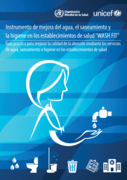
Guía práctica para mejorar la calidad de la atención mediante los servicios de agua, saneamiento e higiene en los establecimientos de salud
A Guide to the Application of the WHO Multimodal Hand HygieneImprovement Strategy and the “My Five Moments for Hand Hygiene”Αpproach
Water, sanitation, hygiene, and waste management for SARS-CoV-2, the virus that causes COVID-19
recommended
Updated Interim guidance 29 July 2020
The provision of safe water, sanitation and waste management and hygienic conditions is essential for preventing and for protecting human health during all infectious disease outbreaks, including of coronavirus disease 2019 (COVID-19). Ensuring evidenced-based
...
and consistently applied WASH and waste management practices in communities, homes, schools, marketplaces, and healthcare facilities will help prevent human-to-human transmission of pathogens including SARS-CoV-2, the virus that causes COVID-19.
more
The purpose of this guidance is to assist WHO Member States, and other stakeholders, in the establishment and development of programmes of integrated surveillance of antimicrobial resistance in foodborne bacteria (i.e., bacteria commonly transmitted by food). In this guidance, “integrated surveill
...
ance of antimicrobial resistance in foodborne bacteria” is defined as the collection, validation, analyses and reporting of relevant microbiological and epidemiological data on antimicrobial resistance in foodborne bacteria from humans, animals, and food, and on relevant antimicrobial use in humans and animals. Integrated surveillance of antimicrobial resistance in foodborne bacteria therefore includes data from relevant food chain sectors (animals, food and humans) and includes data on both antimicrobial resistance and antimicrobial use. Integrated surveillance of antimicrobial resistance for foodborne bacteria expands on traditional public health surveillance to include multiple elements of the food chain, and to include antimicrobial use data, to better understand the sources of infection and transmission routes.
more
A conceptual framework for the environmental surveillance of antibiotics and antibiotic resistance
Patricia M.C. Huijbers, Carl-Fredrik Flach, D.G. Joakim Larsson
Centre for Antibiotic Resistance Research (CARe), University of Gothenburg
(2019)
C2
The systematic surveillance of antibiotic use and antibiotic re-sistance prevalence in humans and animals is imperative for managingbacterial infectious disease (JPIAMR, 2019;WHO, 2015). Many low-income countries currently face substantial challenges in building national surveillance systems due to
...
a lack of infrastructure and resources,resulting in a shortage of systematic data (FAO/OIE/WHO, 2018)
more

Nepal has only recently started its journey on the path to an integrated response to the challenge of antimicrobial resistance (AMR). Despite this, it is notable that the Nepal Health Sector Strategy Plan (HSSP)-2 mentions growing antibiotic resistanceas a public health challenge.
The WHO CIA List should be used as a reference to help formulate and prioritize risk assessment and risk management strategies for containing antimicrobial resistance. The WHO CIA List supports strategies to mitigate the human health risks associated with antimicrobial use in
...
food-producing animals and has been used by both public and private sector organizations. The list helps regulators and stakeholders know which types of antimicrobials used in animals present potentially higher risks to human populations and how use of antimicrobials might be managed to minimize antimicrobial resistance of medical importance. The use of the WHO CIA List, in conjunction with the OIE list of antimicrobials of veterinary importance (1) and the WHO Model Lists of Essential Medicines (2) , will allow for prioritization of risk management strategies in the human sector, the food animal sector, inagriculture (crops) and horticulture, through a coordinated multisectoral One Health approach.
more
