
Filter
502
Text search:
vaccine-preventable
diseases
Featured
45
146
Language
Document type
220
92
83
38
30
12
9
9
5
3
1
Countries
21
16
14
13
13
13
13
12
12
11
10
10
10
10
9
8
8
7
6
6
5
5
5
5
4
4
4
4
4
4
4
4
3
3
3
3
3
2
2
2
2
2
2
2
2
2
2
2
2
2
2
2
2
2
2
1
1
1
1
1
1
1
1
1
1
1
1
1
1
1
1
1
1
1
1
1
1
Authors & Publishers
Publication Years
Category
230
106
47
32
21
7
4
Toolboxes
67
26
24
22
19
17
15
11
9
8
8
7
7
5
5
5
3
2
2
2
2
2
1
This ten year global plan for measles and rubella outlines the strategy that needs to be fully implemented to achieve the measles and rubella goals endorsed by the World Health Assembly. The plan sets out the: vision, goals and targets for the 2011-2020 period, recommended strategies, guiding princi
...
28 Dec 2020. acualizada 28 de enero 2021 Las presentes orientaciones tienen como objetivo principal facilitar a los equipos de salud herramientas que sirvan de apoyo para la comunicación efectiva entre el personal de salud y la población general, con miras a lograr el objetivo de fortalecer, mant
...
1 marco 2021. As orientações deste documento visam, principalmente, equipar o pessoal da saúde com ferramentas que lhes permitam aumentar a eficiência da comunicação com a população geral e aumentar, manter ou recuperar a confiança do público nas vacinas e nos programa de imunização na R
...
3 February 2021
Las crisis relacionadas con las vacunas y la vacunación requieren una respuesta de comunicación diferente a las estrategias comunicacionales para promover los beneficios y la importancia de las vacunas en general. Este documento presenta las orientaciones técnicas necesarias para
...
Guide for clinical case management and infection prevention and control during ameasles outbreak. This guide has been developed to reduce the high morbidity and mortality seen in some of the current outbreaks of measles. This short guide outlines practical clinical care interventions and is derived
...

The meningitis road map has been designated as a flagship global strategy of the WHO’s Thirteenth General Programme of Work, 2019–2023 and is an essential component in achieving universal health coverage.
The road map will reinforce and combine with wider initiatives, such as those aimed at s
...

La méningite est mortelle et débilitante ; elle frappe brutalement ; elle a de graves conséquences sanitaires, économiques et sociales et touche tous les âges de la vie dans tous les pays du monde. La méningite bactérienne peut être à l’origine d’épidémies, entraîner la mort dans les
...

La meningitis es una enfermedad mortal y debilitante; golpea rápidamente, conlleva graves consecuencias sanitarias, económicas y sociales, y afecta a personas de todas las edades y en todos los países del mundo. La meningitis bacteriana puede provocar epidemias, ocasionar la muerte en 24 horas y
...

Defeating meningitis by 2030: a global road map

Defeating meningitis by 2030: a roadmap
Measles outbreak guide
recommended
This guide also draws on the standard operating procedures (SOPs) to apply for measles outbreak response
support from the Measles & Rubella Initiative Outbreak Response Fund (17) and includes a section on
measles outbreak recovery so that contributing factors and potential root causes are identifi
...
Tools and practical guidance for achieving high uptake
Currently, Mauritius and Seychelles have 85 and 82 percent vaccination rates, respectively, surpassing the 70 percent target set by the WHO in 2021. Countries that have attained vaccination rates of between 50 and 70 percent include Liberia
at 67 percent, Rwanda at 66 percent, Morocco at 62 percent
...
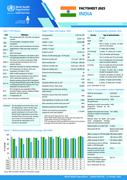
World Health Organization. Regional Office for South-East Asia
World Health Organization. Regional Office for South-East Asia.

The guidelines are primarily intended for health-care professionals working in first- or second-level health-care facilities, including emergency, inpatient and outpatient services. They are also directed at policy-makers, health-care planners and programme managers, academic institutions, non-gover
...
WHO guidelines on meningitis diagnosis, treatment and care. Web Annex A. Quantitative evidence reports
recommended
The guidelines are primarily intended for health-care professionals working in first- or second-level health-care facilities, including emergency, inpatient and outpatient services. They are also directed at policy-makers, health-care planners and programme managers, academic institutions, non-gover
...
