
Filter
1486
Text search:
Antenatal
care
coverage
Featured
94
613
Language
Document type
1009
209
132
49
43
16
13
8
6
1
Countries
103
83
67
61
56
56
55
51
48
47
45
42
39
39
38
37
36
21
20
20
19
17
16
15
12
11
10
10
9
9
9
9
9
9
9
8
6
6
5
5
4
4
4
4
4
4
3
3
3
3
3
2
2
2
2
2
2
2
2
2
2
2
1
1
1
1
1
1
1
1
1
1
1
1
1
1
1
1
Authors & Publishers
Publication Years
Category
990
134
78
71
39
16
3
Toolboxes
80
51
44
33
31
26
22
21
18
14
11
9
9
9
8
5
5
4
3
3
2
2
2
1

WHO’s Ambition and Action in Nutrition 2016-2025 is anchored in the six global targets for improving maternal, infant and young child nutrition and the global diet-related NCD targets.
In support of the 2030 Agenda for Sustainable Development, particularly SDG2 and SDG3, and in concert w ...
In support of the 2030 Agenda for Sustainable Development, particularly SDG2 and SDG3, and in concert w ...

The report reflects on the trends, achievements and challenges in global health over the past decade during which Dr Margaret Chan has been Director-General of WHO. It discusses the role of WHO in dealing with such issues as the rise of noncommunicable diseases, leaps in life expectancy, and emergin
...
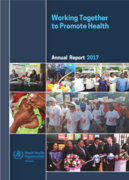
It provides insight into WHO’s work that aims to improve the health of the people of the United Republic of Tanzania in collaboration with key stakeholders.
The report studied child poverty in nine dimensions – development/stunting, nutrition, health, water, sanitation, and housing. Other dimensions included education, health related knowledge, and information and participation.
An estimated 36 million of a total population of 41 million children und
...
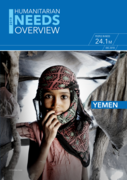
The humanitarian crisis in Yemen remains the worst in the world. Nearly four years of conflict and severe economic decline are driving the country to the brink of famine and exacerbating needs in all sectors. An estimated 80 per cent of the population – 24 million people – require some form of h
...
New criteria for classifying and diagnosing hyperglycaemia first detected during pregnancy have been accepted by a group of experts convened by WHO. These new criteria are an update of recommendations published by WHO in 1999
2nd revised edition. Accessed Apri. 17, 2019
Prevention strategies based on scientific evidence working with families, schools, and communities can ensure that children and youth, especially the most marginalized and poor, grow and stay healthy and safe into adulthood and old age. For every dollar
...
Since the Fourth World Conference on Women in Beijing in 1995, gender mainstreaming has become a widespread strategy for changing unequal social and institutional structures which discriminate against women and girls, with the goal of achieving gender equality. Much has changed for women since 1995:
...
The purpose of this manual is to provide a resource for training to increase understanding of Health in All Policies (HiAP) by health and other professionals. It is anticipated that the material in this manual will form the basis of two- or three-day workshops, which will:
• Bu
...
Health needs of displaced Syrians in refugee hosting countries have become increasingly complex in light of the protracted Syrian conflict. The primary aim of this study was to identify the primary health needs of displaced Syrians in Iraq, Jordan, Lebanon, Turkey, and Syria.
• Clashes continued between the Syrian Democratic Forces (SDF), the Syrian Arab Army (SAA), and Turkish backed forces, concentrated around the M4 highway and Tal Tamer district in Al-Hasakeh. Further displacement was reported.
• Several civilian casualties occurred due to improvised explosive
...
Antimalarial drug resistance has emerged as a threat to global malaria control efforts, particularly in the Greater Mekong subregion. Drawing on data collected through more than 1000 therapeutic efficacy studies as well as molecular marker studies of Plasmodium falciparum drug resistance, the Report
...
This policy paper underscores that, although children do not represent a high-risk group for direct COVID-19 fatality, the pandemic posts far-reaching secondary impacts that heighten risks to African children’s rights and wellbeing.
Sudan recorded the first COVID-19 case on 13 March 2020 and, at the beginning of July, the Federal Ministry of Health had confirmed that nearly 10,000 people had contracted the virus, including over 600 who died from the disease across the country. Although more than 70 per cent of the confirmed cas
...
