
Filter
1041
Text search:
Eradication
Featured
68
306
Language
Document type
534
212
118
67
57
16
14
8
7
4
2
1
Countries
66
64
33
30
29
27
22
21
21
20
19
14
14
13
13
12
12
12
11
11
11
10
10
9
9
8
8
8
7
7
7
7
7
6
6
6
5
5
5
5
5
5
4
4
4
3
3
3
3
3
3
2
2
2
2
2
2
2
2
2
2
2
2
2
2
2
2
2
1
1
1
1
1
1
1
1
1
1
1
1
1
1
1
1
1
1
1
1
1
1
1
1
1
1
1
1
1
1
1
1
1
Authors & Publishers
Publication Years
Category
403
77
66
58
40
14
7
Toolboxes
100
78
56
53
34
33
32
31
30
28
25
24
23
23
18
11
11
10
9
8
7
6
6
5
5
1
L’orthopoxvirus simien ou virus de la variole du singe (MPXV), est un virus à ADN double brin qui appartient au genre Orthopoxvirus de la famille
des Poxviridés. Les poxvirus causent des maladies chez l’espèce humaine et beaucoup d’autres animaux ; l’infection se manifeste généralement
...
The Malaria Partners International Webinar Series highlights the vital importance of education in the fight against malaria. The series provides a variety of educational resources, which have been created and curated by Malaria Partners International and its global partners. Key webinars address cri
...
Le paludisme reste un enjeu majeur de santé publique dans de nombreux pays à faible et moyen revenu. En 2018, l’OMS estimait à environ 228 millions le nombre de cas de paludisme, responsable de 405 000 décès principalement en Afrique subsaharienne. L’utilisation intensive des outils antipal
...
Malaria No More is a non-profit organisation dedicated to eradicating malaria, a preventable and treatable disease, in our lifetime. Through innovative partnerships, advocacy and data-driven solutions, Malaria No More works globally to ensure access to prevention tools, diagnostics and treatment, pa
...

Découverte par Alphonse Laveran en 1880, cette maladie parasitaire demeure en 2022 l’endémie la plus répandue dans les régions tropicales et subtropicales. Selon le rapport mondial sur le paludisme de 2021 de l'OMS, on estime à 232 millions le nombre de cas en 2019 dans 87 pays endémiques, d
...
Carlos Chagas discovered American trypanosomiasis, also named Chagas disease (CD) in his honor, just over a century ago. He described the clinical aspects of the disease, characterized by its etiological agent (Trypanosoma cruzi) and identified its insect vector. Initially, CD occurred only in Latin
...
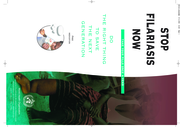
Poster
Stop filariasis now
do the right thing to save the next generation
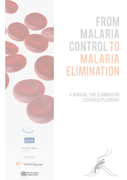
The elimination scenario planning (ESP) manual provides malaria-endemic countries with a comprehensive framework to assess different scenarios for moving towards this goal, depending on programme coverage and funding availability. It also helps countries set realistic timelines and provides essentia
...
This Framework offers a coherent approach for eliminating tuberculosis (TB) in low-incidence countries. It is designed to guide national policy-makers and those responsible for technical aspects of the national TB response in accelerating efforts towards elimination. The document will also be inform
...
A practioner's guide
This Training module on malaria elimination has been developed by WHO to support health professionals in planning, managing, monitoring and evaluating malaria elimination programmes
This Training module on malaria elimination has been developed by WHO to support health professionals in planning, managing, monitoring and evaluating malaria elimination programmes.
Supporting exercises: These files are necessary for participants to complete a number of exercises listed in the man
...

Globalization and Health201612:63; DOI: 10.1186/s12992-016-0195-3

Version 4
The purpose of these standard operating procedures (SOPs) is to offer policy guidance and to provide performance standards on how to respond to any type of poliovirus outbreak or event in a timely and effective manner, and specifically, to stop an outbrea
...
A WHO-UNICEF joint statement encouraging greater health commodity supply chain integration for temperature-sensitive pharmaceuticals where appropriate, 19 November 2020
Vector control, alongside case management, remains the most effective approach to controlling and eliminating malaria. Key interventions, such as indoor residual spraying (IRS) and long-lasting insecticidal nets (LLINs), have significantly reduced malaria transmission in many African countries. This
...
