Filter
1722
Text search:
training
module
Featured
193
472
Language
Document type
1002
193
157
152
122
46
22
14
5
4
2
2
1
Countries
134
54
43
33
31
29
28
27
26
26
26
24
24
22
21
20
20
19
19
17
14
13
12
12
12
12
11
11
11
11
10
8
7
7
7
6
6
6
5
5
5
5
4
4
4
4
4
4
3
3
3
3
3
3
3
3
2
2
2
2
2
2
2
2
2
2
2
2
2
2
2
1
1
1
1
1
1
1
1
1
1
1
1
1
1
1
1
1
1
1
1
1
1
1
1
1
1
Authors & Publishers
Publication Years
Category
605
198
147
135
118
72
17
Toolboxes
188
141
93
92
68
48
44
38
33
32
31
28
26
26
25
24
23
22
21
19
9
9
5
3
2

These 2025 guidelines respond to the need for better approaches to identify advanced HIV disease, improve the poor outcomes of people living with HIV being discharged from hospital and provide updated guidance for treatment for Kaposi’s sarcoma through evidence-informed recommendations. The public
...
The document provides guidance from the CDC on conducting an Operational Readiness Review (ORR) within the Public Health Emergency Preparedness (PHEP) cooperative agreement. It outlines the purpose, structure, and evaluation criteria used to assess whether public health systems are prepared to respo
...

The document is a report by an expert group that presents a framework for improving future pandemic preparedness and emergency response, particularly in the context of India but with relevance to global health systems. It analyzes lessons learned from COVID-19 and past epidemics, identifies key weak
...
Successful retention and re-engagement in HIV care depends largely on the ability of the provider to involve and motivate patients to attend ongoing care
This issue brief aims to provide a comprehensive overview of key publications, guidelines, and practical materials on malaria prevention, diagnosis, and treatment. The selected documents reflect current evidence and field-based experiences, supporting healthcare professionals, researchers, and publ
...

Medical evacuation in emergencies
recommended
A guidance for medical teams and specialized care teams.
This guidance aims to provide a comprehensive framework for the safe and context-adapted coordination, clinical care, operations support and logistics relevant to governments, national authorities, including ministries of health, civil protec
...
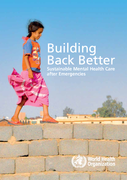
Emergencies, in spite of their tragic nature and adverse effects on mental health, are unparalleled opportunities to build better mental health systems for all people in need. This WHO publication shows how this was done in 10 diverse emergency-affected areas
Responding to a polio outbreak. Guidelines
recommended
The occurrence of a case of wild polio in a previously polio free area as presently in Syria, whether through importation, laboratory accident, or mutation of vaccine virus (VDPV), should be considered a public health emergency, that requires a rapid and high quality response as utmost priority
Integrated community case management (ICCM) – an approach where community-based health workers are trained to identify, treat and refer children under-five with pneumonia, diarrhoea and malaria – is increasingly being used across sub-Saharan Africa to supplement the gaps in basic healthcare prov
...
A lack of knowledge about the threat of vaccine-preventable diseases, risks and benefits of vaccines, mistrust of government and health workers, poor service delivery and alternative health or religious beliefs play a role in lower uptake of some vaccines. These challenges underscore the importance
...