
Filter
1384
Text search:
UNAIDS
Featured
110
449
Language
Document type
820
219
147
58
52
40
20
11
6
5
1
Countries
57
54
46
46
40
40
39
30
30
29
28
27
26
26
26
25
22
17
17
16
16
15
15
15
14
14
14
14
14
13
12
12
12
11
10
10
9
8
7
7
7
6
6
5
5
5
5
5
5
4
4
4
3
3
3
3
3
3
3
2
2
2
2
2
2
2
2
2
2
2
1
1
1
1
1
1
1
1
1
1
1
1
1
1
1
1
1
1
1
1
1
1
1
1
1
1
1
Authors & Publishers
Publication Years
Category
694
80
65
45
30
23
2
1
Toolboxes
264
100
58
43
36
30
25
17
15
15
13
13
13
8
8
8
5
5
4
4
3
3
2
The COVID-19 pandemic has had an unprecedented impact on health care systems that, in many instances, worsened the already existing assistance gaps. When it comes to Latin America and Central America, this challenge adds to the consequences mass mobilizations have had in recent years, which have exc
...
This report reviews the latest evidence on what works to reduce HIV-related stigma and discrimination through key programmes to reduce stigma and discrimination and increase access to justice in the six settings of focus for the Global Partnership. It includes guidance for national governments and k
...
Right now, we are facing an unpredictable and highly dynamic situation as a global community. However, as we have seen from the solidarity, support and power of communities in the HIV epidemic and already in communities responding to the COVID-19 pandemic, the response must not be fear and stigma. W
...
19ي زمن الكوفيدفالحقوق COVID-19دروس من فيروس نقص المناعة البشري من أجل استجابة فعالة يقودها المجتمع.

The COVID-19 pandemic has exposed the inadequacy of investments in public health, the persistence of profound economic and social inequalities and the fragility of many key global systems and approaches.
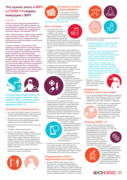
COVID-19 является серьезным заболеванием, и все люди, живущие с ВИЧ, должны принять все
рекомендуемые профилактические меры, чтобы минимизировать воздействие и предо
...
Уроки эпидемии ВИЧ-инфекции: эффективное реагирование силами сообщества
Human rights in times of COVID-19
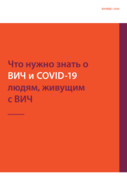
COVID-19 является серьезным заболеванием, и все люди,
живущие с ВИЧ, должны принять все рекомендуемые
профилактические меры, чтобы минимизировать воздействие
и предÐ
...
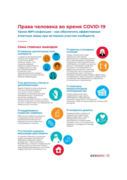
Уроки эпидемии ВИЧ-инфекции: эффективное реагирование силами сообщества
Human rights in times of COVID-19
25 February 2021
This technical guidance is a living document that builds on guidelines and reports of the UNAIDS Joint Programme. The definitions contained herein are working definitions that are subject to change. Updates will also be added furth
...
12 January 2021
The COVID-19 vaccines under development or approved by regulators are believed to be safe for most people, including people living with HIV.
This document is also available in Arabic and Portuguese.
12 January 2021
The COVID-19 vaccines under development or approved by regulators are believed to be safe for most people, including people living with HIV.
12 January 2021
The COVID-19 vaccines under development or approved by regulators are believed to be safe for most people, including people living with HIV.
The checklist and reference list has two parts: high-level cross-cutting content (Part A) and specific programme content (Part B). Part A applies to all countries and contains situation and response analysis, the NSP development process, the goal, targets and priority-setting of the NSP and the prin
...
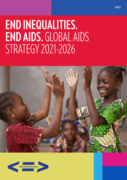
The new Global AIDS Strategy 2021--2026, End Inequalities, End AIDS, is a bold approach that uses an inequalities lens to close the gaps preventing progress to end AIDS
Steady progress in the scaleup of VMMC as an HIV prevention intervention in 15 eastern and southern African countries before the SARS-CoV2 pandemic

3 June 2021. After 40 years of AIDS, charting a course to end the pandemic.
The report shows that countries with progressive laws and policies and strong and inclusive health systems have had the best outcomes against HIV. In those countries, people living with and affected by HIV are more likely t
...
2021 UNAIDS Global AIDS Update. UNAIDS report shows that people living with HIV face a double jeopardy, HIV and COVID-19, while key populations and children continue to be left behind in access to H
...

This report makes the case for a major new initiative—to rapidly recruit, train and deploy 2 million community health workers in Africa. Drawing on a vast body of evidence and substantial regional experience, the report shows how community health workers save lives and improve quality of life and
...
