
Filter
589
Text search:
Polymerase
Chain
Reaction
(PCR)
Featured
104
176
Language
Document type
291
127
78
35
20
17
7
6
5
1
1
1
Countries
29
22
15
15
14
14
13
12
11
11
10
10
9
9
8
7
7
7
6
6
5
5
5
5
4
4
4
4
3
3
3
3
3
3
2
2
2
2
2
2
2
2
2
2
2
1
1
1
1
1
1
1
1
1
1
1
1
1
1
1
1
1
1
Authors & Publishers
Publication Years
Category
210
101
30
26
14
10
8
Toolboxes
74
71
40
35
30
26
22
19
18
10
10
7
7
5
4
3
3
2
2
2
1
1
This document contains: The systematic reviews and GRADE assessments used at the Index-TB Guideline Panel in July 2015; The Evidence to Decision tables that record the Panel’s assessment and recommendations from
this meeting
19 February 2018
Fact Sheet, May 2018.
Nipah virus (NiV) is a zoonotic virus (it is transmitted from animals to humans) and can also be transmitted through contaminated food or directly between people. In infected people, it causes a range of illnesses from asymptomatic (subclinical) infection to acute respiratory
...
HIV patient monitoring and case surveillance
1. What is COVID-19?
2. Who is at most risk for COVID-19?
3. What is the risk of COVID-19 infection in humans in South Africa?
4. How is COVID-19 transmitted?
5. What are the signs and symptoms of COVID-19 infection in humans?
6. How is COVID-19 diagnosed?
7. How is COVID-19 infection
...

The purpose of this document is to provide guidance on how quarantine and isolation can be achieved if there is a suspected or confirmed case in an overcrowded setting. It will focus on informal settlements and collective shelters, but the guidance can be applied in non-refugee settings as well, suc
...
Ensure effective and coordinated public health emergency preparedness and response using a One Health approach
Published: April 26, 2017 https://doi.org/10.1371/journal.pone.0176004

The overall goal of this strategy is to ensure accurate understanding of the
benefits of covid-19 vaccination and alleviate apprehension about the vaccine, to ensure its acceptance and encourage uptake across various audiences.
Objectives
x Create demand, promote acceptability and accessibility o
...
Panels Recommendation Updated Dec 2024
This manual is to assist health care providers and laboratory scientists to diagnose mycobacterium ulcerans disease (Buruli ulcer). The manual aims to achieve a better understanding of the clinical presentation and its diagnosis. The methods described are tailored to various levels of care and avail
...
To support its R&D activities on Chagas disease, DNDi launched the Chagas Clinical Research Platform (CCRP). The platform brings together partners, experts, and stakeholders to provide support for evaluation and development of new treatments for Chagas disease. The patient-centred platform aims to f
...

Epidemiology
Chagas disease (American trypanosomiasis) is caused by the protozoan parasite Trypanosoma cruzi, and transmitted to humans by infected triatomine bugs, and less commonly by transfusion, organ transplant, from mother to infant, and in rare instances, by ingestion of contaminated food or
...
Schistosomiasis is a helminthic infection and one of the neglected tropical diseases (NTDs). It is caused by blood flukes of the genus Schistosoma. It is an important public health problem, particularly in poverty-stricken areas, especially those within the tropics and subtropics. It is estimated th
...

Leptospirosis is a zoonotic disease with epidemic potential, especially after a heavy rainfall,
caused by a bacterium called Leptospira. Leptospira interrogans is pathogenic to humans and
animals, with more than 200 serologic variants or serovars. Humans usually acquire
leptospirosis through dire
...
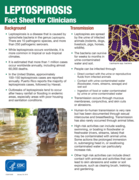
• Leptospirosis is a disease that is caused by
spirochete bacteria in the genus Leptospira.
There are 10 pathogenic species, and more
than 250 pathogenic serovars.
• While leptospirosis occurs worldwide, it is
more common in tropical or sub-tropical
climates.
Rabies has an enormous impact on both agriculture and conservation biology, but its greatest burden is undeniably on public health. As such, routine methods for rapid risk assessment after human exposures to rabies as well as applications for laboratory-based surveillance, production of biologicals
...
WHO guidelines on meningitis diagnosis, treatment and care. Web Annex A. Quantitative evidence reports
recommended
The guidelines are primarily intended for health-care professionals working in first- or second-level health-care facilities, including emergency, inpatient and outpatient services. They are also directed at policy-makers, health-care planners and programme managers, academic institutions, non-gover
...

WHO position paper on malaria vaccines, Weekly Epidemiological Record 10 May 2024
