
Filter
1170
Text search:
paho
Featured
112
189
Language
Document type
289
235
220
119
73
61
40
35
31
26
15
9
8
6
Countries
247
74
72
28
27
26
25
24
23
21
11
10
9
7
6
6
6
6
6
6
4
4
4
4
3
3
3
3
3
3
3
3
3
3
2
2
2
2
2
2
2
2
2
2
2
2
2
1
1
1
1
1
1
1
1
1
1
1
1
1
1
1
1
1
1
1
1
1
1
1
1
1
1
1
1
Authors & Publishers
Publication Years
Category
334
122
96
83
82
23
19
1
Toolboxes
264
102
90
69
57
53
47
34
34
31
30
29
25
23
16
16
14
12
11
11
6
6
5
3
3
1
June 2021, В настоящей ситуации распространяется неисчислимое количество информации о COVID-19, причем некоторые
уже говорят о “инфодемии”. Очень трудно найти информаци
...
Biweekly situation reports
The portable diagnostic imaging technology covered by this document will serve not only the pressing demands for tuberculosis screening and triage but also other diseases. Therefore, the requirements, accessories, hardware and software packages listed in the following specifications are described in
...
Временные рекомендации
9 августа 2021 г.
Цель данного документа - описать минимальный набор мероприятий по эпиднадзору, рекомендуемых на национальном уровне для выÑ
...
Healthy communities rely on well-functioning ecosystems. They provide clean air, fresh water, medicines and food security. They also limit disease and stabilize the climate. But biodiversity loss is happening at unprecedented rates, impacting human health worldwide, according to a new state of knowl
...
Climate change and health vulnerability and adaptation assessment
In 2013 the World Health Organization (WHO) published the report Protecting health from climate change:
vulnerability and adaptation assessment. The aim was to provide basic and flexible guidance on conducting national or subnati
...
The overview of findings from five Latin American countries
INTRODUCTION: The COVID-19 pandemic has disrupted health systems around the world. The objectives of this study are to estimate the overall effect of the pandemic on essential health service use and outcomes in Mexico, describe observed and predicted trends in services over 24 months, and to estimat
...
Connecting global priorities: biodiversity and human health: a state of knowledge review
Panam Salud Publica. 2021;45:e22. https://doi.org/10.26633/RPSP.2021.22
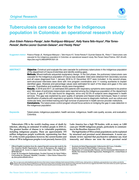
Rev Panam Salud Publica 45, 2021 |
Curr Opin Pharmacol . 2022 Apr;63:102203.doi: 10.1016/j.coph.2022.102203. Epub 2022 Feb 11.
The COVID-19 pandemic has widespread economic and social effects on Latin America (LA) and the Caribbean (CA). This region, which has a high prevalence of chronic diseases, has been one of the most affected
...

Interim rapid response guidance, 10 June 2022.
It includes considerations for certain populations such as patients with mild disease with considerations for community care, patients with moderate to severe disease, sexually active persons, pregnant or breastfeeding women, children and young persons
...
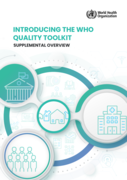
The WHO Quality Toolkit: Navigating tools to improve the quality of health services helps easy identification and access to a wide range of WHO published materials to improve the quality of health services. These tools support the actions described in the Quality health services: a planning guide, w
...
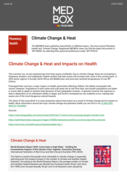
Climate Change & Heat and Impact on Health
recommended
MEDBOX Issue Brief no.23.
The intent of this Issue Brief is to raise awareness about heat waves as a result of climate change and its impact on
health. More information on the topic of climate change and planetary health you can find in our PLANETARY
HEALTH TOOLBOX www.planetaryhealthbox.org
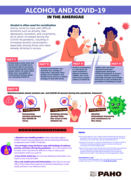
This fact sheet highlights the relationship between alcohol consumption and COVID-19. Heavy episodic drinking is considered a health risk for COVID-19, and alcohol is used by some to cope with difficult emotions that increased during the pandemic.
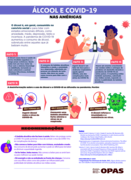
Esta ficha informativa destaca a relação entre o consumo de álcool e a COVID-19. O consumo episódico pesado é considerado um risco à saúde para a COVID-19, e o álcool é usado por alguns para lidar com as emoções difíceis que aumentaram durante a pandemia.
Policy Brief. More languages available here https://apps.who.int/iris/handle/10665/179517
