
Filter
402
Text search:
Global
Handwashing
Day
Featured
Recommendations
49
New Publications
91
Language
Document type
No document type
119
Studies & Reports
91
Guidelines
88
Manuals
33
Strategic & Response Plan
33
Situation Updates
15
Training Material
10
Fact sheets
8
Infographics
5
Countries / Regions
Global
17
Sierra Leone
13
Kenya
12
Nigeria
11
India
11
Ethiopia
10
Bangladesh
10
Myanmar / Burma
9
Liberia
8
South Sudan
8
Syria
8
Ghana
7
Zimbabwe
6
Tanzania
6
East and Southern Africa
6
Latin America and the Carribbean
6
Rwanda
5
South Africa
5
Malawi
5
Ukraine
5
Western and Central Europe
5
Venezuela
5
Congo, Democratic Republic of
4
Nepal
4
Sudan
4
Yemen
4
West and Central Africa
4
Africa
4
Vietnam
4
Burkina Faso
3
Uganda
3
Jordan
3
Cambodia
3
Mozambique
3
Central African Republic
3
Middle East and North Africa
3
South–East Asia Region
3
Laos
3
Mali
2
Haiti
2
Philippines
2
Iraq
2
Lebanon
2
Zambia
2
Thailand
2
Indonesia
2
Papua New Guinea
2
Namibia
2
Colombia
2
Eastern Europe and Central Asia
2
Asia
2
Palestine
2
Guinea
1
Senegal
1
Cameroon
1
Niger
1
Pakistan
1
Afghanistan
1
Turkey
1
Egypt
1
China
1
Malaysia
1
Eswatini/ Swaziland
1
Greece
1
Lesotho
1
Western Pacific Region
1
Poland
1
Albania
1
Tajikistan
1
Romania
1
Moldova
1
Iran
1
Japan
1
Denmark
1
Spain
1
Authors & Publishers
Publication Years
Category
Countries
165
Key Resources
64
Women & Child Health
28
Capacity Building
18
Clinical Guidelines
17
Public Health
14
Pharmacy & Technologies
1
Toolboxes
COVID-19
117
Planetary Health
26
AMR
20
Caregiver
20
Ebola & Marburg
17
Conflict
16
Cholera
15
NTDs
9
Rapid Response
8
Global Health Education
8
Natural Hazards
6
2.0 Rapid Response
5
Refugee
4
HIV
2
Polio
1
Mental Health
1
TB
1
Pharmacy
1
NCDs
1
Malaria
1

Safe sanitation is essential for health, from preventing infections to improving and maintaining mental and social
well-being. Lack of adequate sanitation contributes to diarrhoeal diseases, parasitic infections, and undernutrition, as
well as posing significant risks and causing anxiety, especial
...
While the world was gripped by the unfolding COVID-19 pandemic in 2020, children continued to face the same crisis they have for decades: intolerably high mortality rates and vastly inequitable chances at life. In total, more than 5.0 million children under age 5, including 2.4 million newborns, alo
...
The Water, Sanitation, and Hygiene Improvement Training Package is intended to support the training of local outreach workers and their subsequent work in communities to promote improved water, sanitation and hygiene (WASH) practices to reduce diarrhea
The Essential WASH Actions toolkit expands the connection between WASH and nutrition. This resource offers a comprehensive set of essential WASH actions, references training materials for health workers, nutrition managers and community workers to build capacity, and outlines accompanying behaviors
...

Ebola disease and Marburg disease outbreaks continue to occur in Africa, with increased frequency. In addition to resulting in high mortality and morbidity, the outbreaks generate fear and mistrust about the response activities within the communities affected.
Infection prevention and control (IP
...

The response to a cholera outbreak must focus on limiting mortality and reducing the spread of the disease. It should be comprehensive and multisectoral, including epidemiology, case management, water, sanitation and hygiene, logistics, community engagement and risk communication. All efforts must b
...
In March 2020 the IASC Reference Group on Mental Health and Psychosocial Support uniting 57 humanitarian organizations as member issued the Interim Briefing Note Addressing Mental Health and Psychosocial Aspects of COVID-19 Outbreak. This document has proven to be very useful in the response and has
...

This guide presents a basis for understanding how diarrhoeal diseases are currently influenced by climate and weather, and may be further exacerbated by climate change. It is a technical guide on how to conduct a Vulnerability & Adaptation assessment for diarrhoeal diseases and climate change, and p
...

This booklet presents key messages for action, summarized from a set of chapters on different environmental health issues, available at www.who.int/ ceh/publications/healthyenvironmentsforhealthychildren. The work is a result of an on-going partnership between WHO, UNEP and UNICEF in the area of chi
...
What school closures under COVID-19 mean for children and young people in
crisis-affected contexts

Frequently asked questions (FAQs)
This document highlights COVID-19 specific considerations in relation to camp and camp-like settings, and is intended to assist in guiding operations where camp/site management5 is being implemented. Although the guidance - structured around questions from the fiel
...
The protection of children and educational facilities is particularly important. Precautions are necessary to prevent the potential spread of COVID-19 in school settings; however, care must also be taken to avoid stigmatizing students and staff who may have been exposed to the virus. It is important
...
Cholera Outbreak Response
recommended
The document provides comprehensive guidelines for managing cholera outbreaks, including detection, confirmation, response, treatment, and prevention. It emphasizes the importance of rehydration, water sanitation, hygiene promotion, and community mobilization to limit the spread. This guide is desig
...
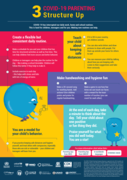
COVID-19 has taken away our daily work, home and school routines. This is hard for children, teenagers and for you. Making new routines can help.
Updated 8 June 2020
