
Filter
1365
Text search:
pollution
Featured
98
273
Language
Document type
462
451
150
81
74
61
21
19
18
9
6
6
4
2
Countries
137
45
32
31
26
23
21
20
19
18
16
15
15
15
14
14
13
12
12
11
11
11
11
10
10
9
9
8
8
8
8
7
7
6
6
5
5
5
5
5
4
4
4
4
4
4
4
4
3
3
3
3
3
3
3
3
3
3
3
3
3
3
3
2
2
2
2
2
2
2
2
2
2
1
1
1
1
1
1
1
1
1
1
1
1
1
1
1
1
1
1
1
1
1
1
1
1
1
Authors & Publishers
Publication Years
Category
440
148
127
45
30
19
6
Toolboxes
356
145
91
62
46
37
36
33
33
31
28
17
17
17
14
14
14
13
11
10
8
4
4
3
2
1
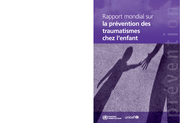
Plus de 2000 enfants meurent chaque jour des suites de traumatismes involontaires ou accidentels. Chaque année des dizaines de milliers d'autres sont hospitalisés pour des blessures qui les laissent souvent handicapés à vie.
Ce rapport conjoint de l'OMS et de l'UNICEF établit le premier b ...
Ce rapport conjoint de l'OMS et de l'UNICEF établit le premier b ...
The workshop is structured around 13 learning modules. The first module (Introduction) gives an overview of WSPs. The last module (Module 12) introduces participants to the quality assurance tool for WSPs (WHO & IWA, 2012). Modules 1–11 relate explicitly to the WSP manual produced by IWA and WHO (
...
This field guide is a practical tool for improving and maintaining drinking-water safety. It is designed to be used by YOU as a rural community member who shares responsibility for operation and management of the drinking-water supply in your community. It can also be used by YOU as a staff member o
...
Le présent guide pratique explique ce qu’est un plan de gestion de la sécurité sanitaire de l’eau (PGSSE) et de quelle manière celui-ci peut vous aider à renforcer la sécurité sanitaire de votre alimentation en eau potable, notamment par une amélioration progressive, étape par étape et
...
Census Report Volume 4-B
In the 2014 Census, early-age mortality was measured from the responses to two simple retrospective questions on childbearing addressed to ever-married women aged 15 and over. These questions referred to how many live children they had ever given birth to, and how many ...
In the 2014 Census, early-age mortality was measured from the responses to two simple retrospective questions on childbearing addressed to ever-married women aged 15 and over. These questions referred to how many live children they had ever given birth to, and how many ...

Report on Main Findings
The review encompasses three complementary components: 1) a review of published literature 2000-2015 on NCDs and their risk factors; 2) qualitative interviews with key actors engaged in NCD research in Myanmar; and 3) additional reviews of Myanmar ethical committee inqui ...
The review encompasses three complementary components: 1) a review of published literature 2000-2015 on NCDs and their risk factors; 2) qualitative interviews with key actors engaged in NCD research in Myanmar; and 3) additional reviews of Myanmar ethical committee inqui ...
Together we can Prevent and Control the World's Most Common Diseases
Objectives of the training manual
(1) To improve knowledge of NCD trends, burdens, as well as systems for management and monitoring of NCD services for Township Medical Officers (TMOs), Township Public Health Officers (TP ...
Objectives of the training manual
(1) To improve knowledge of NCD trends, burdens, as well as systems for management and monitoring of NCD services for Township Medical Officers (TMOs), Township Public Health Officers (TP ...

(Health Systems in Transition, Vol. 4, No. 3, 2014)


Background Paper prepared for the 2015 Global Assessment Report on Disaster Risk Reduction
The aim of this paper is to help bring voluntary standards into the toolbox of disaster risk reduction, including both by encouraging their use by business and by enhancing their role in legislation and ...
The aim of this paper is to help bring voluntary standards into the toolbox of disaster risk reduction, including both by encouraging their use by business and by enhancing their role in legislation and ...
The guide book provides a set of tools and methods to assess existing structures and capacities of national, district and local institutions with responsibilities for Disaster Risk Management (DRM) in order to improve their effectiveness and the integration of DRM concerns into development planning,
...
The National Disaster Management Plan (NDMP) provides a framework and direction to the government agencies for all phases of disaster management cycle. The NDMP is a “dynamic document” in the sense that it will be periodically improved keeping up with the emerging global best practices and knowl
...
The purpose of this Strategy is to set out the way to meet the needs of the rural populations for improved domestic water supply services, access to and use of improved sanitation with elimination of open defecation, and improved hygiene behaviour by the Year 2030. It also addresses water, sanitatio
...
Sectors in which Priority Adaptation Projects should be implemented first include:
- 1) Agriculture, Early Warning Systems and Forest (First Priority Level Sectors). This is followed by:
- 2) Public Health and Water Resources (Second Priority Level Sectors);
- 3) Coastal Zone (Thir ...
- 1) Agriculture, Early Warning Systems and Forest (First Priority Level Sectors). This is followed by:
- 2) Public Health and Water Resources (Second Priority Level Sectors);
- 3) Coastal Zone (Thir ...

This handbook presents basic content and tips for implementing a school-based risk reduction programme. It is organised into five modules: its importance; approach and process; activities to benefit children up to five years old; activities for students aged 5–17; and activities for young people a
...

Asia-Pacific Disaster Report 2017
The report looks at the extent and impact of natural disasters across the region and how these intersect with poverty, inequality and the effects of violent conflict. But it also shows how scientific and other advances have increased the potential for building di ...
The report looks at the extent and impact of natural disasters across the region and how these intersect with poverty, inequality and the effects of violent conflict. But it also shows how scientific and other advances have increased the potential for building di ...
The GCF aims to support developing countries in achieving a paradigm shift to low-emission and climate-resilient pathways. This is achieved by funding innovative and transformative lowemission (mitigation) and climate-resilient (adaptation) projects and programmes developed by the public and private
...
The BRACED Myanmar Alliance was a three-year project aiming to ‘build the resilience of 350,000 people across Myanmar to climate extremes’. The project worked in 7 states, 8 townships and 155 communities. The main impact for project populations was intended to be ‘improved well-being and reduc
...
The purpose of this document is to provide a comprehensive overview of existing institutional arrangement for disaster management in Myanmar at all levels with an aim to make information available to all stakeholders involved in disaster risk management in Myanmar.
