
Filter
775
Text search:
UNICEF
Bangladesh
Featured
Recommendations
80
New Publications
232
Language
Document type
No document type
459
Studies & Reports
140
Guidelines
88
Manuals
37
Training Material
20
Strategic & Response Plan
17
Situation Updates
6
Fact sheets
6
Resource Platforms
2
Countries / Regions
Bangladesh
84
Global
61
Myanmar / Burma
41
Nepal
30
India
22
Asia
16
Ethiopia
15
Uganda
13
South–East Asia Region
12
Pakistan
9
Nigeria
8
Zimbabwe
7
Haiti
6
Philippines
6
Syria
6
Kenya
6
Tanzania
6
Cambodia
6
Thailand
6
Indonesia
6
Mozambique
6
Africa
5
Liberia
4
Somalia
4
Afghanistan
4
Zambia
4
Rwanda
4
Malawi
4
Sri Lanka
4
Latin America and the Carribbean
4
Vietnam
4
Sierra Leone
3
Senegal
3
Ghana
3
South Sudan
3
Namibia
3
Brazil
3
Yemen
3
Guinea
2
Congo, Democratic Republic of
2
Germany
2
Lebanon
2
China
2
South Africa
2
Central African Republic
2
Ukraine
2
Western Pacific Region
2
Eastern Europe
2
Laos
2
Guinea-Bissau
1
Cameroon
1
Niger
1
Jordan
1
Chad
1
Malaysia
1
Sudan
1
Benin
1
Peru
1
Eswatini/ Swaziland
1
Serbia
1
Colombia
1
Botswana
1
Libya
1
Angola
1
West and Central Africa
1
Middle East and North Africa
1
Eastern Europe and Central Asia
1
Western and Central Europe
1
Other region
1
Paraguay
1
Bhutan
1
Venezuela
1
Italy
1
Russia
1
Georgia
1
Japan
1
France
1
South Korea
1
Authors & Publishers
Publication Years
Category
Countries
207
Women & Child Health
125
Key Resources
100
Clinical Guidelines
57
Public Health
35
Capacity Building
22
Pharmacy & Technologies
3
Toolboxes
COVID-19
74
Disability
71
Mental Health
48
HIV
38
Planetary Health
37
Caregiver
31
Global Health Education
25
Conflict
22
Refugee
17
Health Financing Toolbox
17
TB
14
Natural Hazards
12
Cholera
9
Rapid Response
8
AMR
7
Pharmacy
6
Ebola & Marburg
5
Polio
5
2.0 Rapid Response
5
NTDs
4
Malaria
4
Zika
2
Specific Hazards
2
NCDs
1
FAO’s component of the Global COVID-19 Humanitarian Response Plan
18.5.2020
2.4 billion reasons to end the global climate and inequality crisis. An estimated 774 million children across the world – or one third of the world’s child population - are living with the dual impacts of poverty and high climate .The country with the highest percentage of children impacted by t
...
Presentation on WASH in Malawi
In 2017, $37.4 billion of development assistance was provided to low- and middleincome countries to maintain or improve health. This amount is down slightly compared to 2016, and since 2010, development assistance for health (DAH) has grown at an annualized rate of 1.0%. While global development ass
...
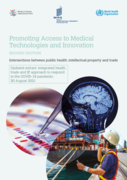
The second edition of the joint WHO, WIPO and WTO
publication “Promoting Access to Medical Technologies
and Innovation: Intersections between public health,
intellectual property and trade” (the Trilateral Study),*
published in 2020, included a special insert mappi
...

Medical devices are used for the prevention, diagnosis and treatment of illness and diseases and for rehabilitation. WHO developed guidance on medical device donation in 2011, which has been now reviewed, with new evidence, new references on considerations for medical device solicitation and provisi
...
Neurological, Psychiatric, and Developmental Disorders: Meeting the Challenge in the Developing World
Institute of Medicine (US) Committee on Nervous System Disorders in Developing Countries.
Washington (DC): National Academies Press (US); 2001.
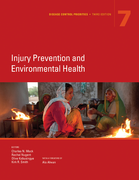
The substantial burden of death and disability that results from interpersonal violence, road traffic injuries, unintentional injuries, occupational health risks, air pollution, climate change, and inadequate water and sanitation falls disproportionally on low- and middle-income countries. Injury Pr
...
Extraced from the full version of WDI 2016
The United Nations (UN) adopted a new international legal instrument in November 2000, the UN Protocol to Prevent, Suppress and Punish Trafficking in Persons, especially Women and Children, supplementing the UN Convention against Transnational Organized Crime. This contained a new definition of traf
...
Orientações provisórias23 de Abrilde2020
Pan African Medical Journal 2017;27:215. doi: 10.11604/pamj.2017.27.215.12994
Nepal has made substantial progress in reducing under-five mortality and is on track to achieve Millennium Development Goal 4, but advances in neonatal health are less encouraging. The objectives of this study were to assess relative and absolute inequalities in neonatal mortality over time, and to
...
Financing Global Health 2016: Development Assistance, Public and Private Health Spending for the Pursuit of Universal Health Coverage presents a complete analysis of the resources available for health in 184 countries, with a particular focus on development assistance for health (DAH). DAH was estim
...
Slavery on fishing vessels, degradation of ecosystems, overfishing, debt bondage, human trafficking and child labour in peeling sheds – the scandals surrounding the Thai fishery and shrimp industries have garnered international censure. Farmed and processed at the cost of extreme exploitation of b
...
DHS Further Analysis Reports No. 108 - This report examines levels, trends, and inequalities in maternal health in Rwanda from 2010 to 2014-15 among women age 15-49 with a recent birth. The analysis uses Demographic and Health Survey (DHS) data for 15 key indicators of maternal health: 6 for antenat
...
