
Filter
6792
Text search:
prevention
strategy
Featured
Recommendations
616
New Publications
1780
Language
Document type
No document type
3640
Studies & Reports
1169
Guidelines
891
Strategic & Response Plan
396
Manuals
356
Fact sheets
139
Training Material
89
Situation Updates
65
Resource Platforms
15
Infographics
15
Brochures
10
Online Courses
6
Videos
1
Countries / Regions
Global
340
India
244
Kenya
213
Ethiopia
158
Sierra Leone
149
Uganda
142
South Africa
142
Liberia
139
Western and Central Europe
137
Nigeria
130
Africa
124
Nepal
120
Malawi
117
Latin America and the Carribbean
111
Zambia
99
Rwanda
98
Myanmar / Burma
89
Bangladesh
88
Tanzania
87
Ghana
82
Namibia
81
Syria
75
Congo, Democratic Republic of
64
Ukraine
62
Philippines
57
Eastern Europe
57
South–East Asia Region
53
Lesotho
51
Guinea
49
Mozambique
49
South Sudan
47
Indonesia
46
Zimbabwe
43
Cambodia
43
Asia
43
East and Southern Africa
42
Senegal
41
West and Central Africa
40
Middle East and North Africa
38
Russia
35
Brazil
33
Haiti
31
Botswana
31
Yemen
30
Colombia
28
Eastern Europe and Central Asia
27
Pakistan
26
Burkina Faso
22
Afghanistan
22
Cameroon
20
Thailand
19
Eswatini/ Swaziland
19
Venezuela
19
Lebanon
18
Sudan
18
Germany
16
Central African Republic
16
Western Pacific Region
15
Vietnam
15
Mali
14
Somalia
14
Benin
13
Paraguay
12
Laos
12
Tajikistan
12
Jordan
11
China
11
Peru
11
Albania
11
USA
10
Iraq
10
Moldova
10
North America
10
Côte d’Ivoire / Ivory Coast
9
Turkey
9
Burundi
9
Angola
9
Madagascar
9
Sri Lanka
9
Togo
8
Argentina
8
Chile
8
Georgia
8
North Macedonia
7
Honduras
7
Southern Africa
7
Niger
6
Egypt
6
Gambia
6
El Salvador
6
Palestine
6
Timor Leste/ East Timor
6
Iran
6
Ecuador
5
Bolivia
5
Turkmenistan
5
Spain
5
Guinea-Bissau
4
Chad
4
Papua New Guinea
4
Hungary
4
Mexico
4
Bhutan
4
Japan
4
Portugal
4
Saudi Arabia
3
Greece
3
Libya
3
Guatemala
3
Nicaragua
3
Poland
3
Romania
3
Uzbekistan
3
Kyrgyzstan
3
Kazakhstan
3
Jamaica
3
Mauritius
3
United Kingdom
3
Morocco
2
Malaysia
2
Dominican Republic
2
Switzerland
2
Serbia
2
Mongolia
2
Canada
2
Qatar
2
Estonia
2
Lithuania
2
Tunisia
2
Azerbaijan
2
Israel
2
Bosnia and Herzegovina
2
Guyana
2
Ireland
1
Austria
1
Croatia
1
Other region
1
North Korea
1
Djibouti
1
Armenia
1
Bulgaria
1
Slovakia
1
Uruguay
1
Denmark
1
Belgium
1
France
1
Maldives
1
Norway
1
Morocco
1
Belarus
1
Latvia
1
Belize
1
Costa Rica
1
Panama
1
Authors & Publishers
Publication Years
Category
Countries
2644
Clinical Guidelines
486
Public Health
440
Key Resources
385
Women & Child Health
326
Capacity Building
116
Pharmacy & Technologies
49
Annual Report MEDBOX
2
Toolboxes
HIV
627
COVID-19
558
TB
434
Mental Health
411
NTDs
236
Ebola & Marburg
217
AMR
213
Disability
190
Planetary Health
184
NCDs
155
Conflict
154
Caregiver
153
Rapid Response
142
Malaria
139
Refugee
98
Global Health Education
97
2.0 Rapid Response
86
Health Financing Toolbox
79
Natural Hazards
76
Pharmacy
75
Cholera
57
Polio
47
Zika
47
Specific Hazards
25
Social Ethics
9
Typhoon
4
Since there is no single objective diagnostic test for asthma this study suggests an approach of collecting and assembling pieces of clinical information to create a diagnostic picture, like making a jigsaw puzzle. These pieces should include demonstration of symptom and airway variability and/or br
...
Conflict and Health 2015, 9:8 doi:10.1186/s13031-015-0035-8

The report reflects on the trends, achievements and challenges in global health over the past decade during which Dr Margaret Chan has been Director-General of WHO. It discusses the role of WHO in dealing with such issues as the rise of noncommunicable diseases, leaps in life expectancy, and emergin
...
PLoS Neglected Tropical diseases August 16, 2021 https://doi.org/10.1371/journal.pntd.0009697
Chagas disease, also known as American trypanosomiasis, is a neglected tropical disease transmitted by triatomine insects, first identified in 1909. Chagas disease affects approximately 6–7 million peop
...

One important application of digital health in TB patient care is the support that it can lend to medication adherence. TB programmes have already been using short message service (SMS), video-supported treatment (VOT) and event monitoring device for medication support
...
Under-diagnosis of asthma in ‘under-fives’ may be alleviated by improved inquiry into disease history. We assessed a questionnaire-based screening tool for asthma among 614 ‘under-fives’ with severe respiratory illness in Uganda. The questionnaire responses were compared to post hoc consensu
...
Int J Health Policy Manag 2017, 6(10), 587–600
Low-income countries face many contextual challenges to manage healthcare technologies effectively, as the majority are imported and resources are constrained to a greater extent. Previous healthcare technology management (HTM) policies in Benin ha
...
The new WHO recommendations for the treatment of isoniazid-resistant, rifampicin-susceptible TB are based upon a review of evidence from patients treated with such regimens by a Guideline Development Group in conformity with WHO requirements for evidence-based policies.

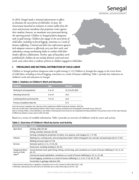
In 2016, Senegal made a minimal advancement in efforts to eliminate the worst forms of child labor. In June, the Government launched an initiative to remove tailbés from the street and prosecute marabouts that perpetrate crimes against their students; however, no marabouts were prosecuted during th
...
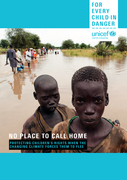
Around the world, approximately 1 in 45 children are on the move – nearly 50 million boys and girls that have migrated across borders or been forcibly displaced within their own countries.1 Climate-related events
and their impacts are already contributing significantly to these staggering numbers
...
Compiled by Tin Geber for HIVOS. London, March 2018
Diphtheria is caused by Corynebacterium species, mostly by toxin-producing Corynebacterium diphtheriae and rarely by toxin-producing strains of C. ulcerans and C. pseudotuberculosis. The most common type of diphtheria is classic respiratory diphtheria, whereby the exotoxin produced characteristicall
...
Based on the Vulnerability Index developed in this review, an estimated 22.7 million persons in Myanmar, or 44% of the population, were found to have some form of vulnerability related to human development and/or exposure to active conflict/violence. These people experience varying combinations of p
...
Ces orientations se concentrent sur le SARS-CoV-2, mais s'appliquent également à d'autres agents pathogènes préoccupants pour la santé publique.
