
Filter
1445
Text search:
South-East
Asia
Featured
156
384
Language
Document type
657
334
206
83
63
30
24
16
16
7
4
3
1
1
Countries
119
104
76
65
37
36
34
31
19
18
16
15
15
14
14
13
13
12
12
11
10
10
10
8
8
8
7
7
7
7
6
6
6
6
5
5
5
4
4
4
4
4
3
3
3
3
3
3
3
2
2
2
2
2
2
2
2
2
1
1
1
1
1
1
1
1
1
1
1
1
1
1
1
1
1
1
1
1
1
1
1
1
1
1
1
1
1
1
1
1
1
1
1
1
1
1
Authors & Publishers
Publication Years
Category
382
166
125
112
83
44
24
Toolboxes
150
97
82
81
73
61
56
48
46
42
41
36
36
27
27
23
20
17
15
15
15
13
10
9
2
1
Member States of the Region have initiated processes to strengthen leadership and governance for mental health. Several countries have developed and implemented mental health plans, strategies and legislations. Direct spending on mental health needs to be increased throughout the Region through the
...
In the WHO South-East Asia Region, epidemiological knowledge of mental health conditions remains
a relative unknown, given the sparsity of data an
...
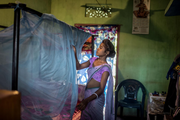
Malaria remains a significant public health challenge in the South-East Asia Region, which bears the second highest malaria burden in the world.
Ministrial Meeting Towards Ending TB in the South-East Asia, 15-16 March 2017, New Dehli India
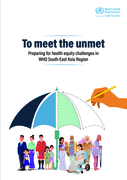
Health inequities are unjust and avoidable systematic differences in the health status and access to health resources of
different population groups. Health inequity manifests itself at all levels as differences across countries, within countries, between communities, and within population groups.
...

The social protection landscape for people affected by TB in the WHO South-East Asia Region
This template dossier complements and should be used after fulfilling the criteria and preconditions specified in the Process of validation of elimination of kala-azar as a public health problem in South-E
...

Access to safe blood and blood products is recognized as one of the key requirements for delivery of modern health care in the journey towards health for all. The foundation of safe and sustainable blood supplies depends on the collection of blood from voluntary non-remunerated and low-risk donors.
...
Summary of the main report: Direct and indirect effects of COVID-19 pandemic and response in South Asia .
It uses a series of exercises based on actual observed changes in services and intervention coverage to model impacts on mortality, hospita
...
The burden of mental health conditions in the Region is high and actions are being taken by WHO to address this issue. These include the PARO Declaration (1) by the health ministers of Member States at the Seventy-fifth Session of the WHO Regional Committee for
...
The leishmaniases are a group of diseases caused by Leishmania spp., which occur in cutaneous, mucocutaneous and visceral forms. They are neglected tropical diseases (NTDs), which disproportionately affect marginalized populations who have limited access to health care. HIV co-infected patients with
...
