
Filter
56
Text search:
M.
A.
Babu
Featured
Recommendations
2
New Publications
13
Language
Document type
No document type
24
Guidelines
12
Studies & Reports
11
Manuals
6
Training Material
3
Countries / Regions
India
12
Nepal
4
Global
4
Bangladesh
2
Russia
2
Uganda
1
Syria
1
Kenya
1
Indonesia
1
Brazil
1
Ukraine
1
Myanmar / Burma
1
Sri Lanka
1
South–East Asia Region
1
Bhutan
1
Eastern Europe
1
North Korea
1
Timor Leste/ East Timor
1
Authors & Publishers
Publication Years
Category
Countries
17
Clinical Guidelines
6
Public Health
5
Key Resources
2
Capacity Building
1
Women & Child Health
1
Toolboxes
TB
8
NTDs
8
Mental Health
7
Natural Hazards
3
COVID-19
3
Ebola & Marburg
2
Planetary Health
2
Pharmacy
2
NCDs
2
Conflict
1
Rapid Response
1
Refugee
1
Caregiver
1
2.0 Rapid Response
1
Prepared as an outcome of ICMR Subcommittee on Soft Tissue Sarcoma and Osteosarcoma | This consensus document on Management of Soft Tissue Sarcoma and Osteosarcoma summarizes the modalities of treatment including the site-specific anti-cancer therapies, supportive and palliative care and molecular
...
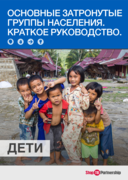
Очень часто дети это уязвимая под-группа внутри уже уязвимых групп населения. Поэтому необходимо, чтобы политики, гражданское общество и медицинские работники без
...
Prepared as an outcome of ICMR Subcommittee on Larynx & Hypopharynx Cancers | This consensus document on management of larynx and hypopharynx cancers summarizes the modalities of treatment including the site-specific anti-cancer therapies, supportive and palliative care and molecular markers and re
...

These guidelines group all recommendations on TB care and support in one document and are complemented by an operational handbook. The guidelines are to be used primarily by national TB programmes, or their equivalents in Ministries of Health, stakeholders and technical organizations working on
...

Guidelines for treatment of drug-susceptible tuberculosisand patient care
2017 Update
The guideline elaborates on the prevention and control strategy developed by the South-East Asia Regional Office of WHO, which consists of six key components.
Accessed August, 2017
