
Filter
3977
Filtered Results: 3977
Text search:
Child
Protection
Area
of
Responsibility
Featured
Recommendations
403
New Publications
1152
Language
Document type
No document type
2338
Studies & Reports
621
Guidelines
454
Manuals
250
Strategic & Response Plan
161
Training Material
82
Situation Updates
26
Fact sheets
24
Brochures
7
Infographics
7
Resource Platforms
6
Online Courses
1
Countries / Regions
Global
195
India
147
Kenya
129
Uganda
88
Sierra Leone
86
Nigeria
84
Western and Central Europe
83
Liberia
81
Myanmar / Burma
80
Ethiopia
79
Nepal
78
South Africa
78
Syria
68
Malawi
60
Bangladesh
60
Latin America and the Carribbean
59
Tanzania
59
Zambia
56
Rwanda
53
Ghana
47
Africa
42
Ukraine
38
South Sudan
38
Lesotho
37
Namibia
37
Congo, Democratic Republic of
33
Philippines
32
South–East Asia Region
32
Zimbabwe
27
Cambodia
27
Indonesia
26
Mozambique
24
Guinea
23
Eastern Europe
23
Asia
22
Afghanistan
20
Germany
19
East and Southern Africa
19
Botswana
18
Venezuela
16
Yemen
16
Haiti
15
Colombia
14
Eswatini/ Swaziland
14
Pakistan
14
West and Central Africa
12
Middle East and North Africa
12
Senegal
11
Burkina Faso
11
Lebanon
11
Albania
10
Jordan
10
Eastern Europe and Central Asia
10
Vietnam
10
Sudan
10
Somalia
10
Cameroon
8
Central African Republic
8
Tajikistan
7
Thailand
7
Benin
7
China
7
Laos
7
Western Pacific Region
7
Iraq
7
Peru
6
Papua New Guinea
6
Sri Lanka
6
Palestine
6
Timor Leste/ East Timor
5
Turkey
5
Paraguay
5
Brazil
5
Mali
5
Iran
4
Moldova
4
Russia
4
Ecuador
4
Togo
3
Chile
3
Singapore
3
Niger
3
USA
3
Croatia
3
Hungary
3
North America
3
Romania
3
Greece
3
Georgia
3
Poland
3
North Macedonia
2
Mexico
2
Serbia
2
Malaysia
2
Lithuania
2
Japan
2
Portugal
2
Spain
2
Belarus
2
Bolivia
2
Argentina
2
Egypt
2
Angola
2
Chad
2
Libya
2
Bhutan
2
Madagascar
2
North Korea
1
El Salvador
1
Gambia
1
Canada
1
Fiji
1
Estonia
1
Kyrgyzstan
1
Burundi
1
Qatar
1
Bulgaria
1
Mauritania
1
Italy
1
Armenia
1
Guinea-Bissau
1
Ireland
1
Saudi Arabia
1
Turkmenistan
1
France
1
Maldives
1
Mauritius
1
United Kingdom
1
South Korea
1
Azerbaijan
1
Bosnia and Herzegovina
1
Southern Africa
1
Djibouti
1
Guatemala
1
Authors & Publishers
Publication Years
Category
Countries
1510
Women & Child Health
316
Key Resources
302
Clinical Guidelines
290
Public Health
242
Capacity Building
121
Pharmacy & Technologies
25
Toolboxes
Mental Health
334
HIV
288
Disability
233
COVID-19
215
Conflict
153
TB
152
Planetary Health
134
Refugee
127
Caregiver
115
Global Health Education
84
Ebola & Marburg
76
NTDs
68
AMR
58
Rapid Response
55
Natural Hazards
55
Malaria
41
Health Financing Toolbox
40
NCDs
39
Pharmacy
37
2.0 Rapid Response
34
Cholera
26
Polio
21
Zika
20
Specific Hazards
13
Social Ethics
12
South Sudan
1
Typhoon
1
WHO consolidated guidelines on tuberculosis: module 1: prevention: tuberculosis preventive treatment
The 2020 recommendations for the programmatic management of TB preventive treatment are the first to be released under the rubric of WHO consolidated TB guidelines (Module 1 – Prevention). The WHO consolidated TB guidelines will gradually group all TB recommendations and will be complemented by ma...
Today more people are exposed to hazards. While humanitarian action to mitigate the impact of disasters will always be vitally important, the community is facing critical challenge- how to better anticipate, manage and reduce - disaster risks by integrating the potential threat into its planning and...
A key purpose of the Recovery Toolkit is to support countries in the reactivation of health services which may have suffered as a result of the emergency. These services include ongoing programmes such as immunization and vaccinations, maternal and child health services, and noncommunicable diseases...
This Course for Service Providers on how to give Vitamin A Supplementation and Deworming (VAS+D) uses both a Learner’sGuide and a Facilitator’s Guide. The Learner’s Guide is designed for participants in the course who are healthcare workers or trainers learning to deliver vitamin A and Albenda...
REGULATION (EU) No 604/2013 OF THE EUROPEAN PARLIAMENT AND OF THE COUNCIL
of 26 June 2013 establishing the criteria and mechanisms for determining the Member State responsible for examining an application for international protection lodged in one of the Member States by a third-country national or...

The “United Nations Framework for the immediate socio-economic response to COVID-19: Shared responsibility, global solidarity and urgent action for people in need” calls for protecting jobs, businesses and livelihoods to set in motion a safe recovery of societies and economies as soon as possibl...
Birth defect has been an emerging major cause of child mortality in the region. Scarcity of the birth defects information hampers policy decisions and control measures at national level. In order to create evidence for action for birth defects prevention in the region, WHO-SEARO in collaboration wit...
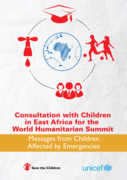
Children expressed the need for organisations to
support in the delivery of services such as health and
sanitation. The children also emphasized that schools
and the child-friendly spaces (CFSs) were effective
and important spaces to provide them with what they
need.
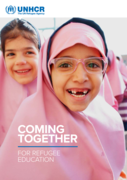
Children in every country are struggling with the impact of COVID-19. An entire generation has had its education disrupted, from nurseries and pre-primaries to universities and apprenticeships
Burns are a global public health problem, accounting for close to 200,000 deaths annually. The majority of these occur in low- and middle-income countries, where a number of constraints complicate the public health task of addressing burns. While the primary prevention of burns in low- and middle-in...
The International Association for Child and Adolescent Psychiatry and
Allied Professions (IACAPAP) aims to promote the mental health and
development of children and adolescents worldwide. It seeks to achieve
this by contributing to the training and professional development of the
child and adole...
Background: Community health worker (CHW) programmes are a valuable component of primary care in resource-poor settings. The evidence supporting their effectiveness generally shows improvements in disease-specific outcomes relative to the absence of a CHW programme. In this study, we evaluated expan...
The Standard consists of nine key inclusion standards, and seven sets of sector-specific inclusion standards for protection – water, sanitation and hygiene, food security and livelihoods, nutrition, shelter, settlement and household items, health and education. Each standard comes with key actions...
The health impact of radiological and nuclear emergencies can last for decades. Lessons learned from past radiological and nuclear accidents have demonstrated that the mental health and psychosocial consequences can outweigh the direct physical health impacts of radiation exposure. International rad...
The Good Enough Guide
recommended
A set of basic guidelines on how to be accountable to local people and measure program impact in emergency situations. The "good enough" approach emphasizes simple and practical solutions and encourages the user to choose tools that are safe, quick, and easy to implement
The duration of breastfeeding and support from health services to improve feeding practices among mothers living with HIV
This operational guidance, developed by WHO, UNICEF and ENN, outlines the duration of breastfeeding and support from health services to improve infant feeding practices amon...
This operational guidance, developed by WHO, UNICEF and ENN, outlines the duration of breastfeeding and support from health services to improve infant feeding practices amon...

Developmental disabilities are common. Yet, children with developmental disabilities have been neglected in health systems planning and policy provisions for health and continue to experience stigmatization, institutionalization, barriers to access health care and inequalities in health and educatio...
The key aim of this guideline is to present recommendations based on a critical evaluation of the evidence on emerging digital health interventions that are contributing to health system improvements, based on an assessment of the benefits, harms, acceptability, feasibility, resource use and equity...
Climate change is one of the most urgent challenges for people and ecosystems worldwide. The recently published sixth Assessment Report (AR6) of the Intergovernmental Panel on Climate Change (IPCC) stresses the occurrence of widespread adverse impacts of climate change. Increased frequency and inten...
Operational Guidelines and Field Manual on Human Rights Protection in Situations of Natural Disaster
