Filter
1453
Text search:
mass
violence
Featured
Recommendations
130
New Publications
441
Language
Document type
No document type
879
Studies & Reports
257
Guidelines
110
Strategic & Response Plan
72
Manuals
64
Training Material
32
Situation Updates
17
Fact sheets
16
Resource Platforms
3
Infographics
2
Online Courses
1
Countries / Regions
India
56
Global
55
Nepal
43
Syria
43
Kenya
42
Liberia
38
Bangladesh
37
Uganda
35
Myanmar / Burma
35
Sierra Leone
33
Congo, Democratic Republic of
32
Ethiopia
31
Nigeria
30
Zambia
30
Rwanda
29
South Sudan
28
Ukraine
25
Tanzania
21
Western and Central Europe
21
Latin America and the Carribbean
20
South Africa
19
Malawi
19
Namibia
17
Africa
16
Haiti
15
Mozambique
15
Venezuela
15
Lesotho
13
Ghana
12
Zimbabwe
12
Philippines
12
Yemen
11
South–East Asia Region
11
Guinea
10
Central African Republic
10
Senegal
9
Cambodia
9
Colombia
9
Indonesia
8
Afghanistan
7
Germany
7
Somalia
5
Jordan
5
Peru
5
West and Central Africa
5
Eastern Europe and Central Asia
5
Asia
5
Eastern Europe
5
Burkina Faso
4
Pakistan
4
Lebanon
4
Sudan
4
Burundi
4
East and Southern Africa
4
Middle East and North Africa
4
Mali
3
USA
3
Iraq
3
Eswatini/ Swaziland
3
Brazil
3
Botswana
3
Bolivia
3
Greece
3
Western Pacific Region
3
Timor Leste/ East Timor
3
Russia
3
Niger
2
Togo
2
Chad
2
Papua New Guinea
2
Benin
2
Ecuador
2
El Salvador
2
Libya
2
Angola
2
Madagascar
2
Mexico
2
Chile
2
Albania
2
Tajikistan
2
Iran
2
Georgia
2
Vietnam
2
Côte d’Ivoire / Ivory Coast
1
Cameroon
1
Turkey
1
Egypt
1
Thailand
1
China
1
Singapore
1
Argentina
1
Dominican Republic
1
Honduras
1
Guatemala
1
Sri Lanka
1
Other region
1
Paraguay
1
Bhutan
1
Poland
1
Palestine
1
Armenia
1
Southern Africa
1
Canada
1
Estonia
1
Romania
1
Lithuania
1
Moldova
1
North America
1
Mauritius
1
Morocco
1
Azerbaijan
1
Belarus
1
Authors & Publishers
Publication Years
Category
Countries
633
Key Resources
114
Women & Child Health
78
Public Health
57
Clinical Guidelines
45
Capacity Building
22
Annual Report MEDBOX
1
Pharmacy & Technologies
1
Toolboxes
Mental Health
138
COVID-19
130
Conflict
112
HIV
98
Refugee
55
Ebola & Marburg
46
Planetary Health
41
Disability
37
Natural Hazards
33
Global Health Education
29
TB
21
Caregiver
20
Rapid Response
17
NCDs
12
Specific Hazards
11
Health Financing Toolbox
10
Social Ethics
9
2.0 Rapid Response
7
NTDs
6
Zika
5
Typhoon
4
Cholera
3
Pharmacy
3
Malaria
3
Polio
2
South Sudan
1
How we respond both now and going forward will help mitigate the impact of COVID-19, and to the extent possible preserve children’s rights to Survive, Learn, and Be Protected. We will focus our efforts on the most critical work essential to maintaining these commitments to the extent possible.
Response to the tropical cyclone in southern Africa
Ebola virus disease outbreak in the Democratic Republic of the Congo
Meningitis outbreak in Togo
Lassa fever outbreak in Liberia.
Commissioned by Plan International the report draws on data from research conducted in Bangladesh in April 2018. It explores how adolescent girls within two age brackets (10-14 and 15-19) understand the unique impact the crisis has upon them, and how they have responded to the challenges they face.
...
...
Submitted to the United Nation's Committee on the Convention on the Elimination
of All Forms of Discrimination Against Women
February 2016
Published by the Albanian Center for Population and Development (ACPD) Adresa : Bul “ Gjergj Fishta”, Kompleksi “Tirana 2000” Kulla 4, kati 2, Tir
...
Les modules de formation et d’orientation QualityRights ont été élaborés pour renforcer les connaissances, les compétences et la compréhension des principales parties prenantes sur la manière de promouvoir les droits des personnes en situation de handicap psychosocial, intellectuel ou cogni
...
WHO has a unique combination of technical public health and scientific expertise, and a global operational footprint, with field offices in more than 150 countries. In 2020, this global, technical, and operational reach meant WHO was able to support countries around the world in every aspect of COVI
...
Fistula Care's implementing partner in Ethiopia, IntraHealth, has developed materials to train health workers on obstetric fistula prevention, identification, and pre-repair care. The course contains a participant handbook (PDF, 604 KB), a facilitator manual (PDF, 1.3 MB), ten modules, a variety of
...
Guiding Principles and Recommendations
The COVID-19 pandemic has put significant pressure on health systems all around the world. The drastic measures established to contain its spread are creating serious impediments to economic activity (including agrifood systems) and, consequently, to livelihoods and food security and nutrition.
In Climate Change 2014: Impacts, Adaptation, and Vulnerability. Part A: Global and Sectoral Aspects. Contribution of Working Group II to the Fifth Assessment Report of the Intergovernmental Panel on Climate Change
Section One
summarizes UNHCR’s mandate of international protecdtion and the aim and principles of emergency
response;
Section Two
deals with emergency management;
Section Three
covers the vital sectors and problem areas in refugee emergencies, including health, food, sanitation
and water, a
...
This tool is a living document that provides guidance on good partnership practices that promote strong relationships between civil society organizations and government representatives on engaging men and boys in gender equality and sexual and reproductive health and rights
(SRHR).
...
Health Workers and Health Facilities under Attack 2015, and Early 2016
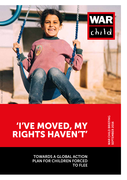
War child: "I´ve moved, my rights haven't" (Towards a global action plan for children forced to flee)
recommended
We live in a world in which 28 million children have been driven from their
homes as a result of conflict, persecution and insecurity¹. If current trends
continue, more than 63 million children could be forced to flee by 2025², of
which over 25 million will cross borders and become refugees. At
...
Guidelines for training personnel in developing countries for prosthetics and orthotics services
recommended
1.Orthopedics - education 2.Prostheses and implants - utilization 3. Orthotic devices - utilization 4.Developing countries 5.Guidelines 6.Teaching materials I.World Health Organization II.International Society for Prosthetics and Orthotics