
Filter
1555
Text search:
Billion
Lives
Featured
Recommendations
115
New Publications
377
Language
Document type
No document type
680
Studies & Reports
512
Strategic & Response Plan
115
Guidelines
99
Manuals
65
Fact sheets
30
Situation Updates
19
Training Material
12
Resource Platforms
10
Infographics
7
Brochures
4
Online Courses
1
Videos
1
Countries / Regions
Global
172
India
38
Syria
34
Africa
34
Kenya
33
Ethiopia
30
Nigeria
28
Asia
26
Myanmar / Burma
25
Nepal
24
Latin America and the Carribbean
23
Uganda
21
South Africa
20
Bangladesh
20
Western and Central Europe
20
South–East Asia Region
19
Liberia
17
South Sudan
16
Yemen
15
Sierra Leone
14
Zambia
14
Ukraine
14
Rwanda
13
Tanzania
12
Malawi
12
Pakistan
11
Namibia
11
Afghanistan
10
East and Southern Africa
10
Guinea
9
Philippines
9
West and Central Africa
9
Congo, Democratic Republic of
8
Central African Republic
8
Mozambique
7
Middle East and North Africa
7
USA
6
Ghana
6
Zimbabwe
6
Thailand
6
Indonesia
6
Sudan
6
Eastern Europe and Central Asia
6
Senegal
5
Somalia
5
Jordan
5
Lebanon
5
Cambodia
5
Western Pacific Region
5
Venezuela
5
Eastern Europe
5
Turkey
4
Egypt
4
Brazil
4
Sri Lanka
4
Cameroon
3
China
3
Papua New Guinea
3
Eswatini/ Swaziland
3
Colombia
3
Lesotho
3
Iran
3
Vietnam
3
Mali
2
Niger
2
Haiti
2
Iraq
2
Germany
2
Ecuador
2
Botswana
2
Libya
2
Guatemala
2
Bhutan
2
Palestine
2
Djibouti
2
Laos
2
Timor Leste/ East Timor
2
Kazakhstan
2
North America
2
Jamaica
2
Burkina Faso
1
Guinea-Bissau
1
Saudi Arabia
1
Chad
1
Benin
1
Argentina
1
Switzerland
1
Honduras
1
Greece
1
Chile
1
Fiji
1
Italy
1
Russia
1
Qatar
1
Moldova
1
Kyrgyzstan
1
Japan
1
United Kingdom
1
Morocco
1
Azerbaijan
1
Authors & Publishers
Publication Years
Category
Countries
456
Key Resources
113
Public Health
92
Women & Child Health
75
Clinical Guidelines
71
Capacity Building
14
Pharmacy & Technologies
5
Toolboxes
COVID-19
168
Planetary Health
151
HIV
113
Mental Health
100
Global Health Education
79
Disability
77
Health Financing Toolbox
72
Conflict
66
NCDs
47
TB
43
AMR
40
Refugee
39
Natural Hazards
37
NTDs
35
Caregiver
25
Ebola & Marburg
20
Malaria
18
Pharmacy
15
Social Ethics
13
2.0 Rapid Response
13
Rapid Response
12
Cholera
6
Polio
6
Specific Hazards
4
Zika
3
Typhoon
2
Framework for Fair, Equitable and Timely Allocation of COVID-19 Vaccines in Africa. Highlights Day 1
The virtual conference, co-organised by the Africa Centres for Disease Control and Prevention (Africa CDC) and the South African Medical Research Council (SAMRC) brought together African leaders, public health professionals and researchers, policymakers, business leaders and civil society and commun
...
The COVID-19 pandemic demonstrated that
the world was not well prepared to respond
to an infectious disease threat of this magnitude. Countries across all socioeconomic and development categories have struggled
to implement effective national responses. Substantial amounts of additional investmen
...
This publication uses graphics to explain the importance of development cooperation in general and for health in particular. Financial contributions in the context of development cooperation have proven to be indispensable, effective, affordable and responsible in recent decades.

According to the WHO, there were an estimated 251 million malaria cases (95% of global cases) and 579,414 malaria deaths (97% of global deaths) in African Union Member States in 2023. 76% of these deaths were children under the age of five.

The 2024 edition reviews more than 50 health-related indicators from the Sustainable Development Goals and WHO’s Thirteenth General Programme of Work. It also highlights the findings from the Global health estimates 2021, notably the impact of the COVID-19 pandemic on life expectancy and healthy l
...
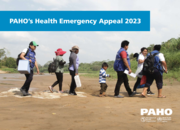
This document outlines PAHO’s regional priorities for the year 2023 to sustain and scale up health emergency and humanitarian assistance in the Americas, with a focus on five priority countries currently facing a prolonged humanitarian crisis and recovering from recent acute emergencies: Colombia,
...

No education system is effective unless it promotes the health and well-being of its students, staff and community. These strong links have never been more visible and compelling than in the context of the COVID-19 pandemic. Towards making every school a health-promoting school: Let’s start with a
...
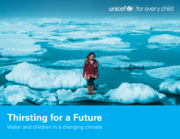
Children without access to safe water are more likely to die in infancy -- and throughout childhood -- from diseases caused by
water-borne bacteria, to which their small bodies are more vulnerable.
The core of the strategy is the goal for all patients to have better overall care, so that the numbers of deaths and cases of disability are reduced by 50% before 2030. For this to be achieved, four strategic aims will be pursued.
Empower and engage communities,
Ensure safe, effective trea
...
From Exclusion to Inclusion

Self-care interventions are among the most promising and exciting new approaches to improve health and well-being, both from a health systems perspective and for people who use these interventions.
The World Health Organization (WHO) uses the following working definition of self-care: Self-care i
...
The Global Vaccine Action Plan (GVAP) 2011-2020, endorsed by Member States during the May 2012 World Health Assembly, has set ambitious targets to improve access to immunization and tackle vaccine-preventable diseases. This responsibility has been translated into firm commitments in February 2016, t
...
By 2100, new UN figures show that 4 of today’s 10 most populous nations will be replaced by African countries.
Brazil, Bangladesh, Russia and Mexico—where populations are projected to stagnate or decline—will drop out. In their place: Democratic Republic of the Congo, Ethiopia, Tanzania and E
...
Compared to the previous five-year assessment period 2011–2015, the current five-year period 2015–2019 has seen a continued increase in carbon dioxide (CO2 ) emissions and an accelerated increase in the atmospheric concentration of major greenhouse gases (GHGs), with growth rates nearly 20% high
...
WHO published the first COVID-19 Strategic Response and Preparedness Plan (SPRP) on 3 February, 2020. This report highlights the main points of progress that were made up to 30 June 2020 under the three objectives outlined in the SPRP: scaling up international coordination and support; scaling up co
...

The World Health Organization (WHO) and the global community of countries, partners, donors, technical experts, scientists and field implementation teams continue to work towards the ultimate goal of a world free of the burden of neglected tropical diseases (NTDs).
