
Filter
175
Text search:
UN
environment
programme
(UNEP)
Featured
Recommendations
14
New Publications
27
Language
Document type
Studies & Reports
70
No document type
42
Guidelines
25
Strategic & Response Plan
18
Manuals
10
Fact sheets
4
Training Material
3
Resource Platforms
2
Online Courses
1
Countries / Regions
Global
15
Kenya
6
South–East Asia Region
4
Latin America and the Carribbean
4
Ghana
3
Nepal
3
Zambia
3
Syria
3
Africa
3
Uganda
2
India
2
Bangladesh
2
Namibia
2
Myanmar / Burma
2
Ethiopia
1
Zimbabwe
1
Haiti
1
Philippines
1
Germany
1
Turkey
1
Thailand
1
Malawi
1
Ukraine
1
Yemen
1
Middle East and North Africa
1
Asia
1
Laos
1
Authors & Publishers
Publication Years
Category
Countries
43
Key Resources
16
Public Health
5
Women & Child Health
4
Capacity Building
2
Pharmacy & Technologies
2
Clinical Guidelines
1
Toolboxes
Planetary Health
79
Global Health Education
20
COVID-19
12
AMR
11
Pharmacy
9
Specific Hazards
6
2.0 Rapid Response
6
Conflict
5
Caregiver
5
Natural Hazards
4
Rapid Response
4
Refugee
4
Health Financing Toolbox
2
NCDs
2
Ebola & Marburg
1
Cholera
1
Mental Health
1
NTDs
1
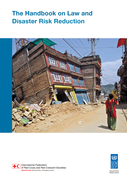
The Handbook on Law and Disaster Risk Reduction (the Handbook) has been developed to provide guidance on how to use the Checklist and conduct related legislative reviews and reform processes. While the methodology for using the Checklist needs to be tailored to each country’s context and respectiv
...
Non-Motorized Transport (NMT) has immense benefits for individual users, as well as society at large, through improvements to physical health, air quality, the environment, climate change, personal finance, accessibility, mobility and the empowermen
...
Governments have dedicated a pivotal role to the private sector in the implementation and financing of the 2030 Agenda and the SDGs. This has pushed a turn towards the private sector, the promotion of multi-stakeholder partnerships between public and private actors. However, far too often there is a
...
Sectors in which Priority Adaptation Projects should be implemented first include:
- 1) Agriculture, Early Warning Systems and Forest (First Priority Level Sectors). This is followed by:
- 2) Public Health and Water Resources (Second Priority Level Sectors);
- 3) Coastal Zone (Thir ...
- 1) Agriculture, Early Warning Systems and Forest (First Priority Level Sectors). This is followed by:
- 2) Public Health and Water Resources (Second Priority Level Sectors);
- 3) Coastal Zone (Thir ...
Research Report

This publication presents the Agenda for the Americas on Health, Environment, and Climate Change 2021–2030 (the Agenda). The Agenda is a call to action to the health sector to lead the charge to address environmental determinants of health in the
...
This working paper aims to provide a rough over-view of existing rules and guidelines on the coopera-tion between the UN and the private sector – at least as they are publicly available. It will describe com-mon features and discus
...
This new publication presents the continuing and emerging challenges to children’s environmental health.

In 2015, 5.9 million children under age five died (1). The major causes of child deaths globally are pneumonia, prematurity, intrapartum-related complications, neonatal sepsis, congenital anomalies, diarrhoea, injuries and malaria (2). Most of these diseases and conditions are at least partially cau
...
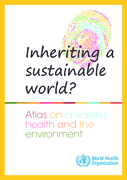
In 2015, 26% of the deaths of 5.9 million children who died before reaching their fifth birthday could have been prevented
through addressing environmental risks – a shocking missed opportunity. The prenatal and early childhood period represents
a window of particular vulnerability, where enviro
...
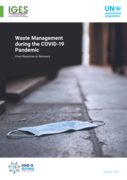
A new publication - Waste Management during the COVID-19 Pandemic: from response to recovery - reviews current practices for managing waste from healthcare facilities, households and quarantine locations accommodating people with confirmed or suspected cases of COVID-19. Jointly produced by
...
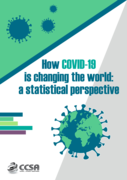
COVID-19 has turned the world upside down. Everything has been impacted. How we live and interact with each other, how we work and communicate, how we move around and travel. Every aspect of our lives has been affected.
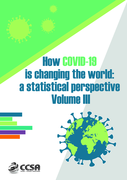
Since the release of the first volume in May 2020, the COVID-19 pandemic has continued to rage around the world. By mid-March, 2021, countries around the globe had reported over 123 million cases—a nearly five-fold increase since this report’s previous volume—and over 2.7 million deaths attrib
...
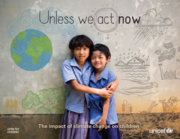
Today’s children, and their children, are the ones who will live with the consequences of climate change.
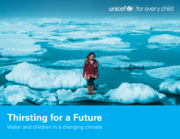
Children without access to safe water are more likely to die in infancy -- and throughout childhood -- from diseases caused by
water-borne bacteria, to which their small bodies are more vulnerable.
A United Nations System Commitment for
Action to assist Member States delivering on
the post-2020 global biodiversity framework
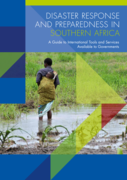
The Guide has been developed to enhance the knowledge capabilities of NDMAs and their local partners. This is accomplished by exposing them to the existing tools and services developed by the international community to facilitate effective disaster response to any scale of disaster (small, medium an
...
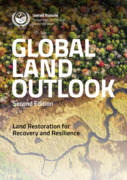
27 April 2022 Chronic land degradation: UN offers stark warnings and practical remedies in Global Land Outlook 2. GLO2 offers hundreds of examples from around the world that demonstrate the potential of land restoration.
The way land resources â€
...
สื่อ “สาร” ให้เข้าถึง : คู่มือนักข่าวส าหรับการรายงานเกี่ยวกับการเปลี่ยนแปลงสภาพภูมิอากาศและการพัฒนาอย่า
...
