
Filter
459
Text search:
Lin,
J.
Featured
Recommendations
60
New Publications
62
Language
Document type
No document type
168
Studies & Reports
123
Guidelines
120
Manuals
20
Strategic & Response Plan
10
Fact sheets
7
Training Material
6
Infographics
3
Situation Updates
1
Online Courses
1
Countries / Regions
Global
29
Russia
20
India
11
Myanmar / Burma
11
Latin America and the Carribbean
7
Western and Central Europe
7
Asia
7
Liberia
6
Kenya
6
Africa
6
Germany
5
South Africa
5
Brazil
5
Eastern Europe
5
Sierra Leone
4
Congo, Democratic Republic of
4
Philippines
4
South Sudan
4
Syria
4
Rwanda
4
Yemen
4
Middle East and North Africa
4
Eastern Europe and Central Asia
4
Vietnam
4
Guinea
3
Ghana
3
Ukraine
3
North America
3
Spain
3
Nigeria
2
Senegal
2
Ethiopia
2
Uganda
2
Zambia
2
Tanzania
2
Cambodia
2
Indonesia
2
Bangladesh
2
Argentina
2
Ecuador
2
West and Central Africa
2
Venezuela
2
Laos
2
Burkina Faso
1
Mali
1
Côte d’Ivoire / Ivory Coast
1
USA
1
Zimbabwe
1
Nepal
1
Egypt
1
Thailand
1
China
1
Mozambique
1
Sudan
1
Peru
1
Colombia
1
Angola
1
Guatemala
1
Madagascar
1
Chile
1
East and Southern Africa
1
South–East Asia Region
1
Western Pacific Region
1
Mongolia
1
France
1
Authors & Publishers
Publication Years
Category
Countries
111
Clinical Guidelines
57
Public Health
29
Key Resources
13
Women & Child Health
7
Pharmacy & Technologies
6
Capacity Building
2
Toolboxes
COVID-19
114
TB
48
Mental Health
38
HIV
29
Planetary Health
27
NCDs
21
NTDs
19
Disability
15
Caregiver
13
Ebola & Marburg
12
AMR
10
Pharmacy
7
Refugee
6
Health Financing Toolbox
5
Natural Hazards
4
Zika
4
Global Health Education
4
Conflict
3
Rapid Response
3
Social Ethics
3
Malaria
3
Specific Hazards
2
2.0 Rapid Response
2
Polio
1

Emerging Infectious Diseases • www.cdc.gov/eid • Vol. 19, No. 9, September 2013
The world agreed to achieve 17 Sustainable Development Goals by 2030. Nine planetary boundaries set an upper limit to Earth system impacts of human activity in the long run. Conventional efforts to achieve the 14 socio-economic goals will raise pressure on planetary boundaries, moving the world away
...
This paper presents lessons learned from previous flood responses in developing countries, based on a structured review of the literature. It is intended for people working in relief and recovery operations who have to decide if, when and how to intervene after a flood.

The Lancet Planetary Health Volume 6, ISSUE 4, e342-e349, April 01, 2022. Human impacts on earth-system processes are overshooting several planetary boundaries, driving a crisis of ecological breakdown. This crisis is being caused in large part by global resource extraction, which has increased dra
...

180
Biomédica 2018;38:180-8

This an updated revised edition of the book which is published in 1986 ,The whole text has been updated and revised in line with current anaesthetic teaching. New chapters on hypothermia and acute pain relief added and some other chapters for easier reference have been amalgamated and re-arranged.A
...
Science . 2020 Sep 11;369(6509):1309-1312. doi: 10.1126/science.abe2803. Epub 2020 Sep 3.
The Fair Priority Model offers a practical way to fulfill pledges to distribute vaccines fairly and equitably
To realize Agenda 2030, aid agencies, private philanthropies, and their partners in the Global South need better data to monitor how official development finance (ODF) dollars advance the Sustainable Development Goals (SDGs) and avoid missing the mark. In this report, we summarize the results of a n
...


Glob Heart . 2020 Oct 13;15(1):69. doi: 10.5334/gh.891.


Current HIV/AIDS Reports (2022) 19:358–374. https://doi.org/10.1007/s11904-022-00615-z.
MINDSPACE is an acronym developed by the UK's behavioural insights team to summarise nine key influences on human behaviour: Messenger, Incentives, Norms, Default, Salience, Priming, Affect, Commitment, and E
...
Key populations brief.

Editorial Review
AIDS 2019, 33:1411–1420
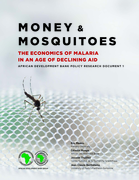
The report examines financing in the battle against malaria, focusing on the role of foreign aid. It analyzes whether or not a disease such as malaria can be controlled or eliminated in Africa without health aid. It also presents a theoretical model of the economics of malaria and shows how health a
...
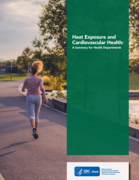
Extreme heat events (EHEs) are a leading cause of weather-related injury and death in the United States, and under a changing climate, these meteorological episodes are predicted to increase in both frequency and intensity. Prolonged heat exposure from EHEs places an increased strain on the heart an
...

Background
Noncommunicable diseases are major contributors to morbidity and mortality worldwide. Modifying the risk factors for these conditions, such as physical inactivity, is thus essential. Addressing the context or circumstances in which physical activity occurs may promote physical activity a
...
