
Filter
226
Text search:
Florida
Health
Featured
Recommendations
15
New Publications
44
Language
Document type
No document type
117
Studies & Reports
41
Guidelines
24
Manuals
17
Strategic & Response Plan
11
Training Material
9
Situation Updates
5
Fact sheets
2
Countries / Regions
Global
14
Latin America and the Carribbean
11
Africa
5
Venezuela
5
Congo, Democratic Republic of
4
USA
3
Brazil
3
Western and Central Europe
3
Eastern Europe
3
Guinea
2
Burkina Faso
2
Nigeria
2
Haiti
2
India
2
South Sudan
2
Germany
2
South Africa
2
Bolivia
2
Russia
2
North America
2
Sierra Leone
1
Liberia
1
Senegal
1
Ethiopia
1
Philippines
1
Turkey
1
Syria
1
Tanzania
1
Rwanda
1
Bangladesh
1
Malawi
1
Ukraine
1
Colombia
1
Ecuador
1
Guatemala
1
Chile
1
Yemen
1
Paraguay
1
Asia
1
Lithuania
1
Vietnam
1
France
1
United Kingdom
1
Portugal
1
Spain
1
Authors & Publishers
Publication Years
Category
Countries
36
Clinical Guidelines
21
Public Health
13
Capacity Building
8
Women & Child Health
5
Key Resources
4
Pharmacy & Technologies
1
Toolboxes
Mental Health
43
TB
20
Planetary Health
19
NTDs
16
HIV
15
Disability
12
COVID-19
11
Ebola & Marburg
9
Malaria
9
Refugee
8
Rapid Response
6
Global Health Education
6
Natural Hazards
5
Zika
5
Pharmacy
5
AMR
4
Caregiver
4
Specific Hazards
3
Conflict
2
Social Ethics
2
Cholera
1
Polio
1
Health Financing Toolbox
1
NCDs
1
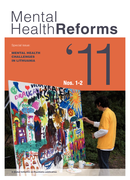
Special issue: Mental Health Challenges in Lithuania
Nos. 1-2 '11

To support countries in adapting their response to different COVID-19 scenarios, the World Health Organization (WHO) Department of Maternal, Newborn, Child and Adolescent Health and Ageing commissio
...
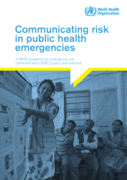
Communication Risk in Public Health Emergencies
recommended
A WHO Guideline for Emergency Risk Communication (ERC) policy and practice.
Recent public health emergencies, such as the Ebola virus disease outbreak in West Africa (2014–2015), the emergence of the Zika virus syndrome in 2015–2016 and multi-
...
An interdisciplinary approach to address global health challenges such as the Covid-19 pandemic, climate change, loss of biodiversity, human migration has been framed by the One Health approach. Thi
...
BackgroundClimate change is one of the great challenges of our time. The consequences of climate change on exposed biological subjects, as well as on vulnerable societies, are a concern for the entire scientific community. Rising temperatures, heat waves, floods, tornadoes, hurricanes, droughts, fir
...
These guidelines – an update to the World Health Organization’s 2015 publication Consolidated strategic information guidelines – present a set of essential aggregate indicators and guidance on choosing, collecting and systematically analysing
...
Key populations brief.

Burkina Faso has approximately 10.5 million inhabitants and is divided into 30 provinces. The study took place in the districts of Tougan, Nouna, and Solenzo, in provinces Sourou and Kossi, in north-west Burkina Faso. There is one medical centre in every district capital and 6 to 14
...

Lancet Infectious Diseases Volume 22, Issue 11e327-e335.
In February, 2022, WHO published new guidelines with six recommendations to update the global public health strategy against schistosomiasis, including expansion of preventive chemotherapy e
...
In order to maintain daily operations and patient care services, health care facilities need to develop an Emergency Water Supply Plan (EWSP) to prepare for, respond to, and recover from a total or partial interruption of the facilities’ normal wa
...
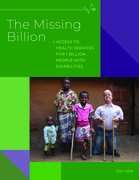
One billion people around the world live with disabilities. This report makes the case that they are being “left behind” in the global community’s work on health. This lack of access not only violates the rights of people with disabilities und
...
Annals of Global Health, 87(1), p.30. DOI: http://doi.org/10.5334/aogh.2647
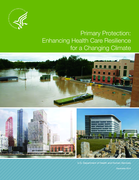
Best Practices Report.PART 1 Primary Protection: Enhancing Health Care Resilience for a Changing Climatei Primary Protection: EnhancingU.S. Department of Health and Human Services
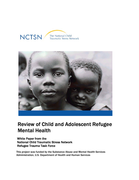
White Paper from the National Child Traumatic Stress Network Refugee Trauma Task Force
Snakebite envenoming is a serious public health problem in Central America, where approximately 5,500 cases occur every year. Panama has the highest incidence and El Salvador the lowest. The majority, and most severe, cases are inflicted by the pit
...
