Filter
894
Text search:
clinical
pathway
Featured
100
153
Language
Document type
320
188
167
102
50
29
16
10
3
3
3
2
Countries
46
32
26
21
21
19
19
16
11
11
11
11
10
9
9
8
8
8
7
7
6
6
6
5
5
5
5
5
4
4
4
4
4
4
4
3
3
3
3
3
3
2
2
2
2
2
2
2
2
2
2
2
2
1
1
1
1
1
1
1
1
1
1
1
1
1
1
1
1
1
1
1
1
1
Authors & Publishers
Publication Years
Category
253
95
69
60
33
28
15
Toolboxes
96
93
74
55
46
41
35
32
29
22
22
19
18
15
15
14
13
10
4
4
4
3
2
2
1
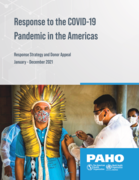
While much progress has been achieved over the past year, the Region of the Americas has stubbornly remained the epicenter of the COVID-19 pandemic. PAHO is launching its 2021 COVID-19 Response Strategy and Donor Appeal to continue supporting Latin American and Caribbean countries and territories i
...

This Interim Guidance outlines how key public health and social measures needed to reduce the risk of COVID-19 spread and the impact of the disease can be adapted for use in low capacity and humanitarian settings. The recommendations outlined here need to be adjusted to the scale of transmission, co
...

Establishing COVID-19 triage stations at healthcare facilities. Key instructions and tips
recommended
Available in Englisch, French and Portuguese

The International Council of Nurses (ICN) Code of Ethics ([1], p. 5) specifies the nurse’s role of promoting “an environment in which the human rights, values, customs and spiritual beliefs of the individual, family and community are respected”. The Malta Code of Ethics supports this for nurse
...
Our spiritual health profoundly impacts our physical health, well-being, and quality of life. Just as medical professionals care for our bodies and minds, spiritual care practitioners care for our spirits. The increasing need for spiritual care makes these practitioners even more crucial. However, m
...
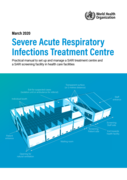
Severe acute respiratory infections treatment centre: practical manual to set up and manage a SARI treatment centre and a SARI screening facility in health care facilities
These guidelines provide evidence-based guidance on the use of peripartum antiviral prophylaxis in HBsAg-positive pregnant women for the prevention of mother-to-child transmission of HBV.

It is targeted towards humanitarian settings and aims to complement other guidance on the management of the dead with a stronger focus on the practical realities faced when dealing with the dead in humanitarian settings. The guidance offers practical recommendations for the management of the bodies
...
22 July 2022. This document summarizes current WHO guidance for public health surveillance of coronavirus disease 2019 (COVID-19) in humans caused by infection with severe acute respiratory syndrome coronavirus 2 (SARS-CoV-2).
Practical considerations
It provides more detailed and practical guidance for continuing services for each life stage across the life-course continuum. As such, both documents should be read and used together. The countries in South-East Asia and the Pacific regions would like to adapt the guidance
...
Non-Communicable Diseases (NCDs) are a worldwide epidemic. Particularly, the most common diseases - Cardiovascular diseases, Chronic Obstructive Pulmonary Diseases (COPD), Chronic Kidney Diseases, Cancer, Diabetes, injuries and disabilities, EMT, oral, eye g
...
This module is part of the WHO series The Immunological Basis for Immunization, which was initially developed in 1993 as a set of eight modules, comprising one module on general immunology and seven modules each devoted to one of the vaccines recommended for the Expanded Programme on Immunization, i
...
According to the World Health Organization (WHO), sub-Saharan Africa has only 3% of the world’s health workers to cater for 11% of the world population, bearing over 25% of the global disease burden (WHO, 2014). With a steady increase in reported cases on the African Continent, the current COVID-1
...
This twelfth version of the WHO living guideline now contains 19 recommendations. This latest update provides updated recommendations for remdesivir, addresses the use of combination therapy with corticosteroids, interleukin-6 (IL-6) receptor blockers and Janus kinase (JAK) inhibitors in patients wi
...
The conduct of paediatric anaesthesia presents many unique challenges. One of the most striking is the variabilityof behaviour and responses of children and their parents at induction. Behavioural problems, the need for restraint,difficult IV accessandco-morbiditiesadd complexity and
...
This document, a first of its kind, clearly sets out the standards for rehabilitation and provides guidance on building or strengthening the capacity of EMTs in this area.The importance of early rehabilitation for functional outcomes is well documented. Rehabilitation needs can p
...