Filter
532
Text search:
Prevention
of
developmental
difficulties
Featured
44
120
Language
Document type
410
43
30
26
11
7
2
2
1
Countries / Regions
17
12
12
11
11
10
9
9
9
8
8
8
6
6
6
6
4
4
4
4
3
3
3
2
2
2
2
2
2
2
2
2
2
2
2
1
1
1
1
1
1
1
1
1
1
1
1
1
1
1
1
1
1
1
1
1
1
1
1
1
1
Authors & Publishers
Publication Years
Category
140
48
27
23
20
19
Toolboxes
161
94
31
11
10
10
9
8
6
5
5
4
3
3
3
2
2
2
2
1
1
1
1
1
OECD Development Policy Tools
Recognising that donor policies and responses constantly evolve, this guidance recommends that donors operating in situations of forced displacement prioritise three broad areas ...
Human African trypanosomiasis (HAT) has been an alarming global public health issue. The disease affects mainly poor and marginalized people in low-resource settings and is caused by two subspecies of haemoflagellate parasite, Trypanosoma brucei and
...
salud pública de méxico / vol. 50, suplemento 2 de 2008, pp.167-177.
In response to the emerging global concern regarding health and people with intellectual disabilities (ID), several developed countries have established national initiatives to address the unique health needs
...
Methodological field approaches for scientists with a basic background in entomology to prepare and implement a yellow fever entomological assessment during outbreaks
WHO recommendations on adolescent health: guidelines approved by the WHO Guidelines Review Committee
This document is meant to respond to the questions:
■ What health interventions should the adolescent receive and when should s/he receive it?
■ What health behaviours should the adolescent practise (or not practise)?
■ What health interventions should the adolescent receive and when should s/he receive it?
■ What health behaviours should the adolescent practise (or not practise)?
Externalizing disorders
Chapter 1.1
An Evidence-Based Treatment Guide for Clinicians
Miscellaneous
Chapter J.5
Introduction
Chapter A.9
Anxiety disorders
Chapter F.2
Anxiety disorders
Chapter F.3
This Technical Brief reviews current practice and evidence on nutrition-specific preventive approaches to MAM, providing practical guidance for implementers and programme managers, and highlighting gaps in evidence and guidance.
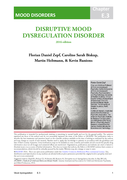
Mood disorders
Chapter E.4
2018 edition
Other disorders Chapter H.1
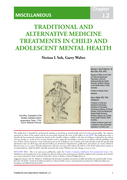
Miscellaneous
Chapter J.2