
Filter
666
Text search:
World
Health
Organization.
Country
Office
for
Nepal
Featured
Recommendations
70
New Publications
197
Language
Document type
No document type
379
Studies & Reports
128
Guidelines
68
Manuals
49
Strategic & Response Plan
16
Situation Updates
8
Fact sheets
8
Training Material
7
Infographics
3
Countries / Regions
Nepal
98
Global
47
South–East Asia Region
37
Asia
29
India
23
Bangladesh
14
Myanmar / Burma
8
Haiti
6
Pakistan
6
Liberia
5
Uganda
5
Tanzania
5
Thailand
5
Indonesia
5
South Africa
5
Ethiopia
4
Ghana
4
Philippines
4
Zambia
4
Sri Lanka
4
Africa
4
Sierra Leone
3
Afghanistan
3
Syria
3
Kenya
3
Cambodia
3
Mozambique
3
North Macedonia
3
Latin America and the Carribbean
3
Western and Central Europe
3
Russia
3
Vietnam
3
Nigeria
2
Zimbabwe
2
Jordan
2
Lebanon
2
Malawi
2
East and Southern Africa
2
Western Pacific Region
2
Bhutan
2
Laos
2
Georgia
2
Guinea
1
Senegal
1
Congo, Democratic Republic of
1
Morocco
1
Rwanda
1
Central African Republic
1
Argentina
1
Namibia
1
Brazil
1
Hungary
1
Ukraine
1
Colombia
1
Ecuador
1
Mexico
1
Yemen
1
West and Central Africa
1
Middle East and North Africa
1
Eastern Europe and Central Asia
1
Other region
1
Venezuela
1
North Korea
1
Armenia
1
Timor Leste/ East Timor
1
Romania
1
Kyrgyzstan
1
Jamaica
1
Belgium
1
Norway
1
Portugal
1
Belarus
1
Authors & Publishers
Publication Years
Category
Countries
176
Key Resources
76
Clinical Guidelines
56
Women & Child Health
54
Public Health
43
Capacity Building
12
Pharmacy & Technologies
2
Toolboxes
HIV
72
Disability
52
Mental Health
46
COVID-19
32
Planetary Health
31
TB
28
NTDs
28
Global Health Education
20
Natural Hazards
18
Conflict
17
AMR
15
Caregiver
14
2.0 Rapid Response
13
Refugee
11
Pharmacy
10
NCDs
10
Rapid Response
8
Health Financing Toolbox
7
Malaria
5
Polio
4
Specific Hazards
4
Ebola & Marburg
3
Cholera
2
Typhoon
2
Zika
1
The purpose of this report is to provide an overview of the issues in regulating and managing international emergency in a selection of large and small-scale sudden onset disasters (SODs). In doing so, it aims to contribute to several key international commitments as well as its objective in disaste
...

This report summarizes the World Health Organization’s (WHO) global work on water, sanitation and hygiene (WASH) during 2022. It describes how th
...

The "Regional Action Plan 2017–2030: Towards a Malaria-Free South-East Asia Region" by the World Health Organization (WHO) outlines a strategic f
...

At the end of 2023, WHO convened our first-ever annual WHO Stakeholder Review Conference for Prevention and Response to Sexual Misconduct. Aimed at joint learning and frank discussion on challenges faced in the achieving zero tolerance
...

Access to NCD medicines: emergent issues during the COVID-19 pandemic and key structural factors
recommended
The coronavirus disease (COVID-19) pandemic exacerbated pre-existing inequalities in the treatment and care of noncommunicable diseases (NCDs). This report examines the effect of the COVID-19 pandemic on access to NCD medicines, and the policies and strategies implemented by countries and
...

The 2023 meeting of the WHO Clinical Consortium on Healthy Ageing (CCHA) was the group’s ninth gathering and took place in Geneva 5–7 December 2023. The meeting was structured around seven panels, with a series of technical presentations, plenary discussions and group work, and a final session o
...

An Indicator-based Approach - This manual presents an indicator-based approach for rapidly assessing pharmaceutical management systems and programs. The manual contains a set of 46 indicators of performance, grouped under eight topics of pharmaceuti
...
In our fourth year of producing The State of Open Humanitarian Data, we can report the highest levels yet for data availability across priority humanitarian operations. These gains can be attributed to the commitment of organizations to sharing and
...
State of the Climate in Asia 2023
recommended
Asia remained the world’s most disaster-hit region from weather, climate and water-related hazards in 2023. Floods and storms caused the highest number of reported casualties and economic losses, whilst the impact of heatwaves became more severe,
...
Disaster planning - organization and administration. 2.Emergency medical services - methods. 3.Emergency medical services - organization and administration. 4.Emergencies. 5.
...
This evaluation is the first systematic effort by UNICEF to generate evidence on how well its global as well as country level Community Management of Acute Malnutrition (CMAM) strategies have worked, including their acceptance and ownership in vario
...

The Food and Agriculture Organization of the United Nations (FAO) launched a new Framework for Environmental and Social Management (FESM) to ensure that both people and the environment are protected
...

Antibiotics and other antimicrobial agents are invaluable life savers, particularly in resource-limited countries where infectious diseases are abundant. Both uncomplicated and severe infections are potentially curable as long as the aetiological agents are susceptible to the
...
An Overview of Current Evidence with Recommendations for Strengthening Community Health Worker Programs to Accelerate Progress in Achieving the Health
...
World Drug Report 2017
-1-
Accessed: 14.03.2019
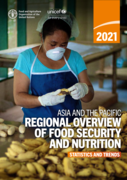
English Analysis on World about Agriculture, Climate Change and Environment, Epidemic and more; published on 15 Dec 2021 by FAO and UNICEF
Embracing Diversity: Toolkit for Creating Inclusive, Learning-Friendly Environments Specialized Booklet 3

Climate change is a growing concern for Bangladesh because 90 percent of the country is approximately 10 feet above sea level. An evaluation was completed which discovered that high tides in Banglad
...
Thailand is exposed to flooding, landslides, drought, earthquakes, tsunamis, heat waves, forest fires, and epidemics. Thailand is also exposed to technological hazards such as chemical accidents. Flooding is the natural hazard with the most significant impact on human life, livelihoods, and the econ
...
