
Filter
763
Text search:
flow
chart
Featured
112
213
Language
Document type
405
148
78
68
39
16
5
2
1
1
Countries
83
28
24
23
23
23
21
18
18
16
16
13
12
11
10
10
9
9
8
8
6
6
5
5
5
4
3
3
3
3
3
3
2
2
2
2
2
2
2
2
2
1
1
1
1
1
1
1
1
1
1
1
1
1
1
1
1
1
1
1
1
1
1
1
1
Authors & Publishers
Publication Years
Category
352
76
66
62
46
36
10
Toolboxes
47
35
34
31
28
27
23
23
18
18
17
17
15
15
11
11
10
10
6
5
4
4
1
1
1
End of Project Monograph

Trials (2017) 18:152, DOI 10.1186/s13063-017-1881-z
11-17 April 2012
Eur Respir J. 2014 April ; 43(4): 1132–1141. doi:10.1183/09031936.00203613.
DHS Working Papers No. 101
Women’s empowerment, HIV testing, birth in past five years, Tanzania
A systematic review of randomized controlled efficacy trials | REPORT -
DEPARTMENT OF CHILD AND ADOLESCENT HEALTH AND DEVELOPMENT
Program Report for Collaborative Agreement: DFD-A-00-08-00309-00 September 30, 2008 -December 31, 2015
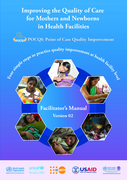
WHO-SEARO in partnership with WHOCC AIIMS, UNICEF, UNFPA and USAID has prepared a training package for building capacity of healthcare teams in health facilities for continous quality improvement of maternal and newborn healthcare. The focus is on the care of mothers and newborns at the time of chil
...
A training package for building capacity of healthcare teams in health facilities for continous quality improvement of maternal and newborn healthcare. The focus is on the care of mothers and newborns at the time of child birth since a large proportion of maternal deaths, newborn deaths and stillbir
...
Four simple steps to practice quality improvement at health facility level
Prepared for the Stunting Prevention and Reduction Project - The project Medical Waste Management Plan’s (MWMP) overall objective is to prevent and/or mitigate the negative effects of increased generation of medical waste on human health and the environment. The plan proposes measures to prevent t
...
The target audience for this guideline is primarily for health care providers nurses, doctors, social workers and other people involved in HIV response in Rwanda so that they are capable of offering quality care services to patients over a long time. The new National Guidelines for Prevention and Ma
...

Vitamin A deficiency is a risk factor for blindness and for mortality from measles and diarrhoea in children aged 6–59 months. We aimed to estimate trends in the prevalence of vitamin A defi ciency between 1991 and 2013 and its mortality burden in low-income and middle-income countries.
Article published in: Journal of Intensive Care (2015) 3:16
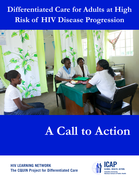
The evidence base for differentiated care for stable patients has grown in recent years. There has been less attention, however, to developing differentiated models of care for patients with advanced or unstable HIV disease. Current clinical guidelines and policies regarding optimal packages of care
...
Estimating the size of key affected populations (KAP) provides important data for planning and implementing an effective response to the HIV epidemic. In the Philippines, these KAP include males who have sex with males (MSM), female sex workers (FSW), and injecting drug users (IDU). Given the diffic
...

The overall goal of the programme, to reduce the malaria morbidity and mortality by 75% (using 2012 as baseline) by the year 2020, continued to be pursued in 2014. The following areas were identified as some of the priorities for the year: Malaria Case Management under which we have Malaria in Pregn
...
The guide book provides a set of tools and methods to assess existing structures and capacities of national, district and local institutions with responsibilities for Disaster Risk Management (DRM) in order to improve their effectiveness and the integration of DRM concerns into development planning,
...
National Tuberculosis Programme and Senior Paediatricians
This guideline was first developed in 2007 but further updated in 2012 and 2016 to ensure the use of the latest evidence-based international recommendations on childhood TB. The guidelines will fill the gaps in a systematic approach to T ...
This guideline was first developed in 2007 but further updated in 2012 and 2016 to ensure the use of the latest evidence-based international recommendations on childhood TB. The guidelines will fill the gaps in a systematic approach to T ...
