Filter
1785
Text search:
risk
mitigation
Featured
168
438
Language
Document type
655
472
261
138
137
45
37
33
3
2
2
Countries
106
64
57
37
37
37
31
31
29
27
27
26
26
26
25
23
21
20
20
19
19
18
18
18
17
17
16
13
12
12
12
11
11
10
10
10
10
9
8
8
8
8
7
7
7
7
6
6
6
5
5
5
5
5
5
5
5
4
4
4
4
4
4
3
3
3
3
3
2
2
2
2
2
2
2
2
2
2
2
2
2
1
1
1
1
1
1
1
1
1
1
1
1
1
1
1
1
1
1
1
1
1
1
1
Authors & Publishers
Publication Years
Category
675
218
84
46
37
18
13
Toolboxes
316
249
99
76
75
50
47
45
41
36
36
34
33
28
24
23
23
21
20
18
15
12
10
8
2
2
1

WHY THIS GUIDE?
Because, in the face of crises and emergencies, it is vital to include a human rights perspective in responses. Vulnerable groups face major obstacles to accessing and benefiting from prevention, mitigation, and health care policies
...
Climate information is critical towards strengthening the decision making among different users interested in mitigating impacts of climate related disasters. However, there is need for the climate users to have basic knowledge on weather and climate concepts and to a larger extend, early warning ea
...

Forests, trees and green spaces, hereinafter ‘forests and trees’ for short, provide multiple goods and services that contribute to human health. These include medicines, nutritious foods and other non-wood forest products (NWFPs). Globally, at least 3.5 billion people use NWFPs, including medici
...
There is growing international consensus that food systems transformation is important to address the challenges of malnutrition in all its forms, the burden of noncommunicable diseases (NCDs), environmental sustainability, increasing inequality and ensuring the welfare of workers and animals. In li
...
The 2021 Financing for Sustainable Development Report responds to the request made by Member States to review the impact of the COVID-19 pandemic on nancing for sustainable development, and to propose recommendations to rebuild better. The report underlines the need for policy actions to ensure e e
...

Prompt, effective antimalarial treatment, and supportive care can substantially reduce the rate of mortality from severe malaria. However, many children in malaria-endemic countries do not have access to health facilities or a qualified health care provider and do not receive the necessary care in a
...
The United Nations Framework Convention on Climate Change (UNFCCC) established its Financial Mechanism to facilitate the provision and transfer of resources from developed to developing countries. The Global Environment Facility became the first operating entity of the Financial Mechanism after the
...
Climate change is one of the biggest crises of our time. Climate threats range from higher temperatures, heavy rainfalls and floods, erratic precipitation, droughts, desertification, and land degradation. This has negative implications on the quality and quantity of natural resources, such as land a
...

Antimicrobials are medicines, including antibiotics, antivirals, antifungals, and antiparasitics, that are used to prevent and treat infections in humans, animals, and plants. Antimicrobial Resistance (AMR) arises when bacteria, viruses, fungi, and parasites no longer respond to these medicines, ren
...

The Rwanda Malaria Strategic Plan 2020–2024 outlines Rwanda’s national strategy to reduce malaria morbidity and mortality by at least 50% compared to 2019 levels. The vision is a malaria-free Rwanda contributing to socioeconomic development.
The plan includes strengthening prevention through lo
...

The document “Mpox Continental Response Plan 2.0” outlines the strategy developed by the Africa Centres for Disease Control and Prevention (Africa CDC) in collaboration with the World Health Organization (WHO) to respond to the ongoing mpox outbreak across Africa. The plan describes coordinated
...

For thousands of years, humans have been using wildlife for commercial and subsistence purposes. Wildlife trade takes place at local, national and international levels, with different forms of wildlife, such as live animals, partly processed products and finished products. Wildlife is a vital source
...

The United Nations Children's Fund (UNICEF), the International Organization for Migration (IOM), Georgetown University, and the United Nations University have today launched new guidelines to provide the first-ever global policy framework that will help protect, include, and empower children on the
...
Six months after its launch on 24 April, the Access to COVID-19 Tools (ACT) Accelerator has already delivered concrete results in speeding up the development of new therapeutics, diagnostics, and vaccines. Now mid-way through the scale-up phase, the tools we need to fundamentally change the course o
...

This country cooperation strategy (CCS) outlines how the World Health Organization (WHO) will work with the Lao People’s Democratic Republic over the next five years (2024–2028), supporting the implementation of the five-year health sector development plans and the Health Sector Reform Strategy
...

Small drinking-water supplies commonly experience operational, managerial, technical and resourcing challenges that impact their ability to deliver safe and reliable services. The needs and opportunities associated with these supplies therefore warrant explicit consideration in policies and regulati
...
Beat the heat: child health amid heatwaves in Europe and Central Asia finds that half of these children died from heat-related illnesses in their first year of life. Most children died during the summer months.
"Around half of children across Europe and Central Asia – or 92 million children –
...
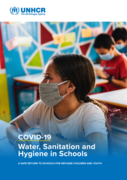
This document presents the results of a survey assessing the WASH readiness of schools in UNHCR-supported refugee camps and refugee settlements. UNHCR and partners are using the results to improve water, sanitation and hygiene (WASH) COVID-19 mitigation
...

Key resources include the Manual for Disaster Response Teams, which helps experts plan public communication, exchange information, and manage media, ensuring crucial data reaches humanitarian actors