
Filter
3081
Text search:
provision
of
mental
health
Featured
314
739
Language
3005
71
64
45
37
16
15
14
8
6
6
6
5
4
4
4
4
4
4
4
3
3
3
3
3
3
3
3
3
2
2
2
2
2
2
2
2
1
1
1
1
1
1
1
1
1
1
1
1
1
1
1
1
1
1
1
1
1
1
1
1
Document type
1671
508
374
206
155
57
47
43
9
5
2
1
1
Countries
138
126
97
96
89
70
67
65
59
55
53
50
49
46
45
45
41
40
40
37
36
27
25
24
24
23
23
21
21
21
19
18
18
16
16
15
15
14
14
13
13
13
13
11
11
11
10
10
9
9
9
8
8
8
8
7
7
7
7
7
6
5
5
5
5
5
5
5
4
4
4
4
4
4
4
4
3
3
3
3
3
3
3
3
3
3
2
2
2
2
2
2
2
2
2
2
2
2
2
2
2
2
1
1
1
1
1
1
1
1
1
1
1
1
1
1
1
1
1
1
1
1
1
1
1
1
1
1
1
Authors & Publishers
425
111
103
93
82
59
44
40
30
26
25
22
21
20
19
19
19
18
17
17
17
16
15
15
13
13
13
12
11
11
11
11
10
10
10
10
10
10
10
10
10
10
9
9
9
9
9
9
9
8
8
8
8
8
8
8
7
7
7
7
7
7
7
6
6
6
6
6
6
6
6
6
6
6
6
6
6
6
5
5
5
5
5
5
5
5
5
5
5
5
5
5
5
5
5
5
5
5
5
5
5
4
4
4
4
4
4
4
4
4
4
4
4
4
4
4
4
4
4
4
4
4
4
4
4
4
4
4
4
4
4
4
4
4
4
3
3
3
3
3
3
3
3
3
3
3
3
3
3
3
3
3
3
3
3
3
3
3
3
3
3
3
3
3
3
3
3
3
3
3
3
3
3
3
3
3
3
3
3
3
3
3
3
3
3
3
3
3
3
3
3
3
2
2
2
2
2
2
2
2
2
2
2
2
2
2
2
2
2
2
2
2
2
2
2
2
2
2
2
2
2
2
2
2
2
2
2
2
2
2
2
2
2
2
2
2
2
2
2
2
2
2
2
2
2
2
2
2
2
2
2
2
2
2
2
2
2
2
2
2
2
2
2
2
2
2
2
2
2
2
2
2
2
2
2
2
2
2
2
2
2
2
2
2
2
2
2
2
2
2
2
2
2
2
2
2
2
2
2
2
2
2
2
2
2
2
2
2
2
2
2
2
2
2
2
2
2
2
2
2
2
2
2
2
2
2
2
2
2
2
2
2
2
2
2
2
2
2
2
2
2
2
2
2
2
2
2
2
2
2
2
2
2
2
2
2
2
2
2
2
2
1
1
1
1
1
1
1
1
1
1
1
1
1
1
1
1
1
1
1
1
1
1
1
1
1
1
1
1
1
1
1
1
1
1
1
1
1
1
1
1
1
1
1
1
1
1
1
1
1
1
1
1
1
1
1
1
1
1
1
1
1
1
1
1
1
1
1
1
1
1
1
1
1
1
1
1
1
1
1
1
1
1
1
1
1
1
1
1
1
1
1
1
1
1
1
1
1
1
1
1
1
1
1
1
1
1
1
1
1
1
1
1
1
1
1
1
1
1
1
1
1
1
1
1
1
1
1
1
1
1
1
1
1
1
1
1
1
1
1
1
1
1
1
1
1
1
1
1
1
1
1
1
1
1
1
1
1
1
1
1
1
1
1
1
1
1
1
1
1
1
1
1
1
1
1
1
1
1
1
1
1
1
1
1
1
1
1
1
1
1
1
1
1
1
1
1
1
1
1
1
1
1
1
1
1
1
1
1
1
1
1
1
1
1
1
1
1
1
1
1
1
1
1
1
1
1
1
1
1
1
1
1
1
1
1
1
1
1
1
1
1
1
1
1
1
1
1
1
1
1
1
1
1
1
1
1
1
1
1
1
1
1
1
1
1
1
1
1
1
1
1
1
1
1
1
1
1
1
1
1
1
1
1
1
1
1
1
1
1
1
1
1
1
1
1
1
1
1
1
1
1
1
1
1
1
1
1
1
1
1
1
1
1
1
1
1
1
1
1
1
1
1
1
1
1
1
1
1
1
1
1
1
1
1
1
1
1
1
1
1
1
1
1
1
1
1
1
1
1
1
1
1
1
1
1
1
1
1
1
1
1
1
1
1
1
1
1
1
1
1
1
1
1
1
1
1
1
1
1
1
1
1
1
1
1
1
1
1
1
1
1
1
1
1
1
1
1
1
1
1
1
1
1
1
1
1
1
1
1
1
1
1
1
1
1
1
1
1
1
1
1
1
1
1
1
1
1
1
1
1
1
1
1
1
1
1
1
1
1
1
1
1
1
1
1
1
1
1
1
1
1
1
1
1
1
1
1
1
1
1
1
1
1
1
1
1
1
1
1
1
1
1
1
1
1
1
1
1
1
1
1
1
1
1
1
1
1
1
1
1
1
1
1
1
1
1
1
1
1
1
1
1
1
1
1
1
1
1
1
1
1
1
1
1
1
1
1
1
1
1
1
1
1
1
1
1
1
1
1
1
1
1
1
1
1
1
1
1
1
1
1
1
1
1
1
1
1
1
1
1
1
1
1
1
1
1
1
1
1
1
1
1
1
1
1
1
1
1
1
1
1
1
1
1
1
1
1
1
1
1
1
1
1
1
1
1
1
1
1
1
1
1
1
1
1
1
1
1
1
1
1
1
1
1
1
1
1
1
1
1
1
1
1
1
1
1
1
1
1
1
1
1
1
1
1
1
1
1
1
1
1
1
1
1
1
1
1
1
1
1
1
1
1
1
1
1
1
1
1
1
1
1
1
1
1
1
1
1
1
1
1
1
1
1
1
1
1
1
1
1
1
1
1
1
1
1
1
1
1
1
1
1
1
1
1
1
1
1
1
1
1
1
1
1
1
1
1
1
1
1
1
1
1
1
1
1
1
1
1
1
1
1
1
1
1
1
1
1
1
1
1
1
1
1
1
1
1
1
1
1
1
1
1
1
1
1
1
1
1
1
1
1
1
1
1
1
1
1
1
1
1
1
1
1
1
1
1
1
1
1
1
1
1
1
1
1
1
1
1
1
1
1
1
1
1
1
1
1
1
1
1
1
1
1
1
1
1
1
1
1
1
1
1
1
1
1
1
1
1
1
1
1
1
1
1
1
1
1
1
1
1
1
1
1
1
1
1
1
1
1
1
1
1
1
1
1
1
1
1
1
1
1
1
1
1
1
1
1
1
1
1
1
1
1
1
1
1
1
1
1
1
1
1
1
1
1
1
1
1
1
1
1
1
1
1
1
1
1
1
1
1
1
1
1
1
1
1
1
1
1
1
1
1
1
1
1
1
1
1
1
1
1
1
1
1
1
1
1
1
1
1
1
1
1
1
1
1
1
1
1
1
1
1
1
1
1
1
1
1
1
1
1
1
1
1
1
1
1
1
1
1
1
1
1
1
1
1
1
1
1
1
1
1
1
1
1
1
1
1
1
1
1
1
1
1
1
1
1
1
1
1
1
1
1
1
1
1
1
1
1
1
1
1
1
1
1
1
1
1
1
1
1
1
1
1
1
1
1
1
1
1
1
1
1
1
1
1
1
1
1
1
1
1
1
1
1
1
1
1
1
1
1
1
1
1
1
1
1
1
1
1
1
1
1
1
1
1
1
1
1
1
1
1
1
1
1
1
1
1
1
1
1
1
1
1
1
1
1
1
1
1
1
1
1
1
1
1
1
1
1
1
1
1
1
1
1
1
1
1
1
1
1
1
1
1
1
1
1
1
1
1
1
1
1
1
1
1
1
1
1
1
1
1
1
1
1
1
1
1
1
1
1
1
1
1
1
1
1
1
1
1
1
1
1
1
1
1
1
1
1
1
1
1
1
1
1
1
1
1
1
1
1
1
1
1
1
1
1
1
1
1
1
1
1
1
1
1
1
1
1
1
1
1
1
1
1
1
1
1
1
1
1
1
1
1
1
1
1
1
1
1
1
1
1
1
1
1
1
1
1
1
1
1
1
1
1
1
1
1
1
1
1
1
1
1
1
1
1
1
1
1
1
1
1
1
1
1
1
1
1
1
1
1
1
1
1
1
1
1
1
1
1
1
1
1
1
1
1
1
1
1
1
1
1
1
1
1
1
1
1
1
1
1
1
1
1
1
1
1
1
1
1
1
1
1
1
1
1
1
1
1
1
1
1
1
1
1
1
1
1
1
1
1
1
1
1
1
1
1
1
1
1
1
1
1
1
1
1
1
1
1
1
1
1
1
1
1
1
1
1
1
1
1
1
1
1
1
1
1
1
1
1
1
1
1
1
1
1
1
1
1
1
1
1
1
1
1
1
1
1
1
1
1
1
1
1
1
1
1
1
1
1
1
1
1
1
1
1
1
1
1
1
1
1
1
1
1
1
1
1
1
1
1
1
1
1
1
1
1
1
1
1
1
1
1
1
1
1
1
1
1
1
1
1
1
1
1
1
1
1
1
1
1
1
1
1
1
1
1
1
1
1
1
1
1
1
1
1
1
1
1
1
1
1
1
1
1
1
1
1
1
1
1
1
1
1
1
1
1
1
1
1
1
1
1
1
1
1
1
1
1
1
1
1
1
1
1
1
1
1
1
1
1
1
1
1
1
1
1
1
1
1
1
1
1
1
1
1
1
1
1
1
1
1
1
1
1
1
1
1
1
1
1
1
1
1
1
1
1
1
1
1
1
1
1
1
1
1
1
1
1
1
1
1
1
1
1
1
1
1
1
1
1
1
1
1
1
1
1
1
1
1
1
1
1
1
1
1
1
1
1
1
1
1
1
1
1
1
1
1
1
1
1
1
1
1
1
1
1
1
1
1
1
1
1
1
1
1
1
1
1
1
1
1
1
1
1
1
1
1
1
1
1
1
1
1
1
1
1
1
1
1
1
1
1
1
1
1
1
1
1
1
1
1
1
1
1
1
1
1
1
1
1
1
1
1
1
1
1
1
1
1
1
1
1
1
1
1
1
1
1
1
1
1
1
1
1
1
1
1
1
1
1
1
1
1
1
1
1
1
1
1
1
1
1
1
1
1
1
1
1
1
1
1
1
1
1
1
1
1
1
1
1
1
1
1
1
1
1
1
1
1
1
1
1
1
1
1
1
1
1
1
1
1
1
1
1
1
1
1
1
1
1
1
1
1
1
1
1
1
1
1
1
1
1
1
1
1
1
1
1
1
1
1
1
1
1
1
1
1
1
1
1
1
1
1
1
1
1
1
1
1
1
1
1
1
1
1
1
1
1
1
1
1
1
1
1
1
1
1
1
1
1
1
1
1
1
1
1
1
1
1
1
1
1
1
1
1
1
1
1
1
1
1
1
1
1
1
1
1
1
1
1
1
1
1
1
1
1
1
1
1
1
1
1
1
1
1
1
1
1
1
1
1
1
1
1
1
1
1
1
1
1
1
1
1
1
1
1
1
1
1
1
1
1
1
1
1
1
1
1
1
1
1
1
1
1
1
1
1
1
1
1
1
1
1
1
1
1
1
1
1
1
1
1
1
1
1
1
1
1
1
1
1
1
1
1
1
1
1
1
1
1
1
1
1
1
1
1
1
1
1
1
1
1
1
1
1
1
1
1
1
1
1
1
1
1
1
1
1
1
1
1
1
1
1
1
1
1
1
1
1
1
1
1
1
1
1
1
1
1
1
1
1
1
1
1
1
1
1
1
1
1
1
1
1
1
1
1
1
1
1
1
1
1
1
1
1
1
1
1
1
1
1
1
1
1
1
1
1
1
1
1
1
1
1
1
1
1
1
1
1
1
1
1
1
1
1
1
1
1
1
1
1
1
1
1
1
1
1
1
1
1
1
1
1
1
1
1
1
1
1
1
1
1
1
1
1
1
1
1
1
1
1
1
1
1
1
1
1
1
1
1
1
1
1
1
1
1
1
1
1
1
1
1
1
1
1
1
1
1
1
1
1
1
1
1
1
1
1
1
1
1
1
1
1
1
1
1
1
1
1
1
1
1
1
1
1
1
1
1
1
1
1
1
1
1
1
1
1
1
1
1
1
1
1
1
1
1
1
1
1
1
1
1
1
1
1
1
1
1
Publication Years
994
1764
306
17
Category
1193
191
185
181
143
70
9
1
Toolboxes
458
275
262
163
119
112
111
93
87
54
53
49
48
42
33
29
26
24
16
15
5
5
5
4
3
2
1
you can find all 14 Technical Booklets on Inclusive Education, produced by UNICEF, in ENGLISH. Other versions can be found on the website https://www.ded4inclusion.com/inclusive-education-resources-free/unicef-inclusive-education-booklets-and-webinars-english-version. Each Technical Booklet (and com
...
panion webinar) introduces a sub-theme of particular interest within Inclusive Education, and each was written by an expert, and peer-reviewed widely
more
Recovering from the Ebola Crisis
Magdy Martínez-Solimán; Abdoulaye Mar Dieye; Izumi Nakamitsu et al.
United Nations, The World Bank, European Union and African Development Bank
(2015)
Full Report.
In response to a call by the United Nations Secretary-General and the Governments of Guinea, Liberia and Sierra Leone, an international team conducted an Ebola Recovery Assessment. The aim was to contribute towards laying the foundatio
...
n for short-, medium- and long-term recovery while the medical emergency response continues to tackle the epidemic. This report is a contribution to ongoing efforts by the Governments of Guinea, Liberia and Sierra Leone to design their national Ebola virus disease recovery strategies
more
This report from Human Rights Watch found that South Africa has failed to guarantee the right to education for many of the country’s children and young adults due to widespread discrimination against children with disabilities in enrollment decisi
...
ons. Human Rights Watch research in five out of South Africa’s nine provinces showed that children with disabilities face discriminatory physical and attitudinal barriers, often beginning early in children’s lives when government officials classify them according to their disabilities. Human Rights Watch August 2015
more
DEVELOPMENT BULLETIN | No.74, June 2011 | Editor: Pamela Thomas | Features and case studies | Progress with implementing conventions and strategies | Progress with capacity building | Progress with disability-inclusive education | Disability-inclusive research | Innovative inclusion | Review
...
of urbanisation in the Pacific | Development assistance and disability
more
Education for Students with Intellectual Disabilities in Kenya: Challenges and Prospects
M.J. Chomba, S.G. Mukuria, P.W. Kariuki, S. Tumuti, B.A. Bunyasi
Disability Studies Quarterly
(2015)
C2
Kenya has great potential for enhancing education for individuals with intellectual disabilities. The fact that it has recognized the need to care for learners with special needs is commendable. In comparison to many African countries, Kenya and Nigeria are ahead in developing programs for special e
...
ducation in institutions of higher learning, and in starting schools and units for special education. However, a legal mandate is still required as it would seal many loopholes that currently exist. Without it, the assessment of individual with intellectual disabilities cannot be administered correctly and professionally. In this article, the authors present a coherent account on various aspects related to learners with intellectual disabilities in Kenya. No doubt, the issues and challenges identified call for attention by not only the government of Kenya but also those interested in improving the status of learners with intellectual disabilities.
more

This case study examines the humanitarian response to the conflict-related crisis in the North-East of Nigeria, focusing primarily on the period from 2015 to the end of 2016. The aim is test the ce
...
ntral hypotheses of the Emergency Gap project: that the current structure, conceptual underpinning and prevalent mindset of the international humanitarian system limits its capacity to be effective in response to conflict-related emergencies.
As with many conflict-related crises, the emergency in north-east Nigeria has deep and complex roots in the history of the region. The conflict began in 2009 and quickly developed beyond the control of the authorities. It unfolded in the midst of pre-existing political, social and economic tensions, making an effective humanitarian response exceedingly difficult. Despite this complexity, what is clear is that the crisis has resulted in a sprawling humanitarian disaster that has killed over 25,000 people as a direct result of the violence, and continues to devastate many more lives through hunger, psychological trauma and lack of access to healthcare. more
As with many conflict-related crises, the emergency in north-east Nigeria has deep and complex roots in the history of the region. The conflict began in 2009 and quickly developed beyond the control of the authorities. It unfolded in the midst of pre-existing political, social and economic tensions, making an effective humanitarian response exceedingly difficult. Despite this complexity, what is clear is that the crisis has resulted in a sprawling humanitarian disaster that has killed over 25,000 people as a direct result of the violence, and continues to devastate many more lives through hunger, psychological trauma and lack of access to healthcare. more
Disability Inclusion in Disaster Risk Management: Promising practices and opportunities for enhanced engagement
Guernsey, Katherine; Scherrer, Valérie
Global Facility for Disaster Reduction and Recovery (GFDRR), World Bank
(2018)
C1
This paper provides information to assist World Bank and GFDRR staff in affecting disability-inclusive DRM. It is based upon desk reviews of existing practice, as well as consultations with experts in the field
...
of disability-inclusive DRM. The paper:
- Illustrates promising practices related to disability-inclusive DRM;
- Identifies key gaps in knowledge and practices;
- Identifies value-added areas for GFDRR and the World Bank, including specific actions they can take to advance the disability and social inclusion agenda in DRM;
It includess:
- Relevant guiding international policy frameworks;
- Disability inclusion in the priorities of the Sendai Framework for Disaster Risk Reduction; - Illustrations of promising practices in disability-inclusive DRM;
- An annex of resources related to disability and DRM. more
- Illustrates promising practices related to disability-inclusive DRM;
- Identifies key gaps in knowledge and practices;
- Identifies value-added areas for GFDRR and the World Bank, including specific actions they can take to advance the disability and social inclusion agenda in DRM;
It includess:
- Relevant guiding international policy frameworks;
- Disability inclusion in the priorities of the Sendai Framework for Disaster Risk Reduction; - Illustrations of promising practices in disability-inclusive DRM;
- An annex of resources related to disability and DRM. more

Myanmar 2019 Humanitarian needs overview
recommended
Over 244,000 displaced people remain in camps or camp-like situations in Kachin, Shan, Rakhine
and Kayin states. Children make up at least 50 per cent of this population, while women and„Myanmar: 2019 Humanitarian Needs Overview - Myanmar“. Rel
...
iefWeb. Zugegriffen 4. Januar 2019. https://reliefweb.int/report/myanmar/myanmar-2019-humanitarian-needs-overview.
children together make up about 77 per cent. This includes approximately 97,000 people in
Kachin, 8,800 in Shan and 10,300 in Kayin who remain displaced as a result of the armed conflict.
It also includes about 128,000 people in Rakhine, the vast majority of whom are stateless, who
were displaced as a result of the violence in 2012.
more
Migrants in Central Asia and the Russian Federation, have been among the most severely impacted by the COVID-19 pandemic.
In the short term, IOM aims at providing support to migrants who are stranded in countries of destination. In addition, IOM wi
...
ll focus its efforts on addressing data gaps, enhancing national and community preparedness, response and recovery efforts, ensuring that affected people have access to basic services, commodities and protection as well as mitigating the socioeconomic impact of COVID-19.
more
Aligned to the Lancet Migration Global Statementto include migrants and refugees incountries’response toCOVID-192, this brief focuses onGreece’s challenges and opportunities to build an inclusive response. Asylum seekers and refugees in Greece are currently placed by the Greek governments in Rec
...
eption and Identification Centres(RICs), apartments, hotels and camps across the Greek islands and the mainland, along with a proportion who are homeless. Currently there are six RICson the Greek islands: Vial on Chios island; Pyli on Kos island; Lepida on Leros island; Moria on Lesvos island; and Vathy on Samos, as well asan unofficial camp on Rhodes. Inaddition there are 18 camps in the northern mainland of Greece; 13 camps in the southern mainland of Greece and one in the southern peninsula (Peloponnese).
more
The Handbook is a guide to the normative framework for humanitarian action and the operational approaches, coordination structures, and available tools and services that facilitate the mobilization of humanitarian assistance.
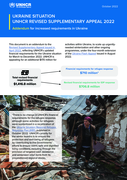
This document is an addendum to the Revised Supplementary Appeal issued in April 2022, reflecting UNHCR’s updated financial requirements for the Ukraine situation for March to December 2022. UNHCR is appealing for an additional $170 million for activities within Ukraine, to scale up urgentlyneeded
...
winterization and other ongoing programmes, under the four-month extension of the Ukraine Flash Appeal issued in August 2022.
Updated situation
There are 17.7 million people in Ukraine in urgent need of protection and assistance, including 6.2 million who are internally displaced. Housing conditions for millions of people have become increasingly perilous since the start of the international armed conflict.
more
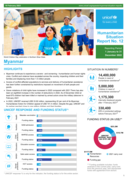
Myanmar continues to experience a severe - and worsening - humanitarian and human rights crisis. Conflict and violence have escalated across the country, impacting children and their families and displacing more than 1.5 million people. Access of co
...
nflict-affected populations to services and delivery of humanitarian assistance has been further constrained by restrictions imposed on movement of both people and goods.
more

This report makes clear that there is a path to end AIDS. Taking that path will help ensure preparedness to address other pandemic challenges, and advance progress across the Sustainable Development Goals. The data and real-world examples in the report make it very clear what that path is. It is not
...
a mystery. It is a choice. Some leaders are already following the path—and succeeding. It is inspiring to note that Botswana, Eswatini, Rwanda, the United Republic of Tanzania and Zimbabwe have already achieved the 95–95–95 targets, and at least 16 other countries (including eight in sub-Saharan Africa) are close to doing so.
more
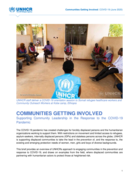
The COVID-19 pandemic has created challenges for forcibly displaced persons and the humanitarian organizations working to support them. With restrictions on movement and limited access to refugees, asylum-seekers, internally displaced persons (IDPs) and stateless persons across the globe, UNHCR is s
...
upporting displaced communities to take the lead in the prevention of, and the response to, the existing and emerging protection needs of women, men, girls and boys of diverse backgrounds.
more

It is our hope and prayer that the guidance and multiple tools provided herein to manage
the entire lifecycle of a food security program are useful to our food security staff, our
local partners, and our fellow international Cooperating Sponsors t
...
hroughout the world.
more
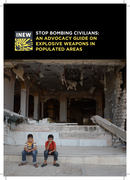
This guide has been produced by the International
Network on Explosive Weapons (INEW) to introduce the
humanitarian advocacy agenda on the use of explosive
weapons in populated areas and to provide ideas for actions
at the national level. It
...
is aimed primarily at NGOs and
campaigners working on humanitarian issues and issues
related to weapons and protection of civilians.
more
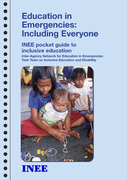
INEE pocket gu ide to inclusive education.
This guide is aimed at anyone working to provide, manage or support education services in emergencies and complements the INEE Minimum Standards.
The Pocket Guide to Inclusive Education outlines useful principles for an inclusive education approach in
...
emergencies and provides advice for planning, implementing and monitoring. The guide also looks at the issue of resistance to inclusion, and highlights ways in which organisations can support their emergency staff to develop more inclusive education responses. Available in Arabic, English, Indonesia, French, Spanish
more
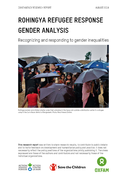
Rohingya Refugee Response Gender Analysis: Recognizing and responding to gender inequalities
Toma, Iulia; Chowdhury, Mita; Laiju, Mushfika; Gora, Nina; Padamada, Nicola
Oxfam, Action Against Hunger, Save the Children
(2018)
C1
This gender analysis was conducted to understand the different risks and vulnerabilities but also opportunities and skills for Rohingya and host community women, men, boys and girls. Data collection was conducted over three weeks from 8 April to 29 April 2018. The work aimed to identify the differen
...
t needs, concerns, risks and vulnerabilities of women, girls, boys and men in both Rohingya refugee communities and host communities in the Cox’s Bazar district of Bangladesh. The analysis shows various gaps in the humanitarian response for both communities, especially in terms of accountability, communication with affected communities and disaster preparedness, but also in equitable access to services, in particular for women and girls, and especially for the Rohingya community. The key findings are presented below, along with recommendations for action.
more

Around the world, approximately 1 in 45 children are on the move – nearly 50 million boys and girls that have migrated across borders or been forcibly displaced within their own countries.1 Climate-related events
and their impacts are already contributing significantly to these staggering numbers
...
,with 14.7 million people facing new internal displacement as a result of weather-related disasters in 2015 alone. The annual average
since 2008 is higher still, at 21.5 million, equivalent to almost 2,500 people being displaced every single day.2
more
