
Filter
2059
Text search:
acute
respiratory
infections
Featured
301
515
Language
Document type
883
528
341
115
66
52
36
20
5
4
3
3
2
Countries
133
100
71
61
44
41
41
40
39
36
36
35
35
32
29
28
28
26
26
26
26
25
19
19
18
17
15
14
14
14
13
13
12
12
11
11
11
10
10
9
9
9
9
8
7
7
7
6
6
6
5
5
5
4
4
4
4
3
3
3
3
3
3
3
3
3
2
2
2
2
2
2
2
2
2
2
1
1
1
1
1
1
1
1
1
1
1
1
1
1
1
1
1
1
1
1
1
1
1
1
1
1
1
1
1
1
Authors & Publishers
Publication Years
Category
943
203
126
114
109
27
27
Toolboxes
433
96
77
71
64
52
52
51
44
44
43
36
34
31
31
31
22
14
13
12
10
10
9
9
2
The humanitarian crisis in Yemen remains the worst in the world. Nearly four years of conflict and severe economic decline are driving the country to the brink of famine and exacerbating needs in all sectors. An estimated 80 per cent of the population – 24 million people – require some form of h
...
Of the 50 antibiotics in the pipeline, 32 target WHO priority pathogens but the majority have only limited benefits when compared to existing antibiotics. Two of these are active against the multi-drug resistant Gram-negative bacteria, which are spreading rapidly and require urgent solutions.
Gr
...

The "Integrated Management of Malaria Training – Health Worker’s Manual" is a practical guide developed by Uganda’s Ministry of Health to train healthcare workers at all levels in the effective diagnosis, treatment, prevention, and management of malaria. It aligns with national malaria treatme
...

This handbook summarizes the experience of leading practitioners in the field of war surgery and is intended to help military and civilian surgical teams treat people wounded in armed conflicts. It covers first aid, admission of urgent cases and triage, skin grafts, treatment of
...
The Access to Controlled Medications Programme identified the development of treatment guidelines that cover the treatment of all types of pain as one of the core areas of focus for improving access to opioid analgesics. Such guidelines are interesting both for health-care professionals and policy-
...

The extensive use of antimicrobials in human and veterinary medicine in recent years has accelerated the emergence and spread of resistant microorganisms. This situation has been worsened by the lack of investment in developing new effective antibiotics. The severity of the consequences is clear to
...
Interim guidance. 12 May 2021. The Continuity of essential health services: Facility Assessment Tool can be used by countries to rapidly assess the capacity of health facilities to maintain the provision of essential health services during the COVID-19 pandemic. It can help to alert the authorities
...
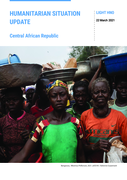
The humanitarian situation in the Central African Republic (CAR) has further worsened over the past six months. Election-related violence that broke out in mid-December 2020 has had a devastating effect on civilians. Thousands of people have been forced to flee, human rights violations have surged,
...
This guideline covers identifying, assessing and managing the long-term effects of COVID-19, often described as ‘long COVID’. It makes recommendations about care in all healthcare settings for adults, children and young people who have new or ongoing symptoms 4 weeks or more after the start of
...
There is a broad consensus nowadays that the Earth is warming up as a result of greenhouse gas emissions caused by anthropogenic activities. It is also clear that current trends in the fields of energy, development and population growth will lead to continuous and ever more dramatic climate change.
...

While there has been real progress in addressing the burden of disease in the WHO African region, the COVID-19 pandemic has highlighted the link between health, economics and security, as the region saw decades of progress threatened, including positive trends in decreasing inequality. In the Africa
...
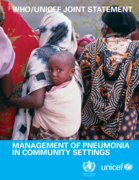
Pneumonia kills more children than any other illness – more than AIDS, malaria and measles combined. Over 2 million children die from pneumonia each year, accounting for almost 1 in 5 under five deaths worldwide. Yet, little attention is paid to this disease. This joint UNICEF/WHO report examines
...
The revised guidelines present two major changes to existing guidelines: (A) there are now just 2 categories of pneumonia instead of 3 (“pneumonia” which is treated at home with oral amoxicillin and “severe pneumonia” which requires injectable antibiotics) and (B) oral amoxicillin replaces o
...
Centro de tratamiento de infecciones respiratorias agudas graves: manual práctico para instalar y gestionar un centro de tratamiento de las infecciones respiratorias agudas graves y una zona para el tamizaje de estas en los establecimientos de asistencia médica
Этот документ, содержащий ответы на часто задаваемые вопросы, дополняет временные рекомендации ВОЗ «Клиническое руководство по ведению пациентов с тяжелой остроÐ
...
Lancet 2013; 381: 1405–16
Series: Childhood Pneumonia and Diarrhoea no.1
The document provides inforation on tobacco use (health effects, quitting, benefits of quitting, e-cigarettes etc.) in a descriptive way.

The Public Health Burden of Secondhand Exposure to Commercial Tobacco Smoke Secondhand smoke, the combination of smoke from burning commercial tobacco* products and the smoke breathed out by a person who is smoking, is deadly.

This report is one of the first major products of the newly established Precision Public Health Metrics unit of the UCN cluster of the WHO Regional Office for Africa. The report presents national trends in communicable and non-communicable disease burden and control in the WHO African region. It tra
...
