
Filter
2500
Text search:
national
preparedness
plan
Featured
276
695
Language
Document type
1083
430
363
240
224
56
49
45
4
4
1
1
Countries
146
87
76
73
72
62
59
52
52
50
42
41
41
38
35
35
34
28
27
26
24
24
23
23
22
21
20
20
18
16
15
15
15
14
14
14
14
13
11
10
10
9
9
8
8
8
8
8
8
8
8
7
7
7
7
7
7
7
6
6
6
6
6
6
5
5
5
4
4
4
4
4
4
4
4
4
3
3
3
3
2
2
2
2
2
2
2
2
2
2
2
2
2
2
2
2
2
2
2
2
2
1
1
1
1
1
1
1
1
1
1
1
1
1
1
1
1
1
1
1
1
1
1
1
1
1
Authors & Publishers
Publication Years
Category
939
328
128
96
85
39
19
Toolboxes
432
163
157
120
109
104
97
89
63
57
56
51
51
45
40
39
37
29
29
29
19
19
18
15
4
1
1

A Guide to Inclusive Education 2023
recommended
Refugee children with disabilities experience a reality of exclusion and marginalisation that makes them among the most vulnerable displaced persons in the world. Excluded from participation in social activities and access to school, not only because of their disability, but especially because of so
...

This document lays out economic arguments for investing in the Access to COVID-19 Tools Accelerator (ACT-Accelerator). Framed within an overall context that recognizes the broader human health and societal impacts of the COVID-19 crisis, ACT-Accelerator's Economic Investment Case argues that investm
...

In April 2020, Gavi and COVAX joined the Access to COVID-19 Tools Accelerator (ACT-A) to provide equitable global access to COVID-19 vaccines to tackle the pandemic. In June 2020, the Gavi COVAX Advance Market Commitment (AMC) was launched to finance equitable access in 92 lower-income countries. Si
...
State of the Climate in Asia 2023
recommended
Asia remained the world’s most disaster-hit region from weather, climate and water-related hazards in 2023. Floods and storms caused the highest number of reported casualties and economic losses, whilst the impact of heatwaves became more severe, according to a new report from the World Meteorolog
...

The workshop aimed to support countries in the prioritization and acceleration of NCD prevention and management with a specific focus on accelerating the prevention and control of hypertension and diabetes, identifying the most impactful NCD interventions within their context, closing the gaps in ca
...

Health Statistics in the Western Pacific Region 2023: Monitoring health for the SDGs is the third biennial report providing an overview of the progress of the World Health Organization (WHO) Western Pacific Region towards the health-related Sustainable Development Goal (SDG) targets. Thi
...

Toolkit regarding Zika Virus

Antimicrobials are medicines, including antibiotics, antivirals, antifungals, and antiparasitics, that are used to prevent and treat infections in humans, animals, and plants. Antimicrobial Resistance (AMR) arises when bacteria, viruses, fungi, and parasites no longer respond to these medicines, ren
...

The social protection landscape for people affected by TB in the WHO South-East Asia Region

For many years, Community Health Care Workers (CHWs) in Tanzania and Africa in general have played significant role in community health promotion. Their specific roles have been changing from time to time. However, their key roles have over time included giving health education and dissemination of
...
The rapid assessment tool (RAT) is meant to assess health facilities within mpox-affected areas that have at least one inpatient bed. Depending on time and resources available, certain facilities may be prioritized during an mpox outbreak. The RAT evaluates 16 infection prevention and control (IPC)
...

Antimicrobial resistance (AMR) is a global public health crisis that resulted in 1.14 million deaths in 2021. According to the Institute for Health Metrics and Evaluation estimates, 96 416 of these deaths occurred in the World Health Organization (WHO) Eastern Mediterranean Region. All 22 countr
...

To meet our Strategy objectives and get within reach
of the 2030 SDG 3 target related to the three diseases,
the Global Fund needs to raise US$18 billion for the
Eighth Replenishment. That sum is essential to drive the
required pace of progress in the fight against HIV, TB
and malaria, and to m
...
This paper examines the implications of the IMF’s April 2024 macro-fiscal forecast updates on government health expenditure (GHE) across 170 economies through 2029, covering nearly all years remaining to achieve the Sustainable Development Goals (SDGs). The findings reveal wide disparities in gove
...
In 2019, the Task Force on Fiscal Policy for Health concluded that taxes on tobacco, alcohol, and sugar-sweetened beverages were a highly effective but greatly underused policy tool to reduce consumption, save lives, and raise domestic resources. The Task Force estimated that if all countries increa
...

2nd edition. This second edition builds on the experience of more than 10 years of SMC deployment, and reflects changes introduced in the WHO guidelines for malaria, 3 June 2022. The goal of this publication is to share these best practices to improve SMC implementation, coverage, and monitoring and
...

According to the WHO, there were an estimated 251 million malaria cases (95% of global cases) and 579,414 malaria deaths (97% of global deaths) in African Union Member States in 2023. 76% of these deaths were children under the age of five.

Access to safe, effective and quality-assured health products and technologies is crucial for achieving universal health coverage and primary health care goals. The continued growth of the aging population; increasing burden of noncommunicable diseases; growing burden of mental health issues; climat
...

The annual bulletin of the Mekong Malaria Elimination (MME) programme is a yearly report that reviews ongoing efforts to combat multidrug resistance and eliminate malaria in the 6 countries of the Greater Mekong subregion (GMS): Cambodia, China (Yunnan province), Lao People's Democratic Republic, My
...
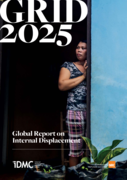
IDMC's Global Report on Internal Displacement (GRID) is the authoritative source for data and analysis on the state of internal displacement for the previous year.
