
Filter
505
Text search:
World
Health
Organization
WHO,
Bangladesh
Featured
Recommendations
48
New Publications
126
Language
Document type
No document type
275
Studies & Reports
111
Guidelines
56
Manuals
32
Strategic & Response Plan
12
Training Material
7
Situation Updates
5
Fact sheets
4
Resource Platforms
2
Infographics
1
Countries / Regions
Global
47
Bangladesh
33
Nepal
16
Myanmar / Burma
15
South–East Asia Region
15
Asia
15
India
11
Uganda
5
Philippines
5
Ethiopia
4
Pakistan
4
Thailand
4
Zimbabwe
3
Syria
3
Rwanda
3
Indonesia
3
Western and Central Europe
3
Africa
3
Russia
3
Liberia
2
Nigeria
2
Congo, Democratic Republic of
2
Afghanistan
2
Zambia
2
Kenya
2
Tanzania
2
Cambodia
2
China
2
South Africa
2
Malawi
2
Colombia
2
Sri Lanka
2
Guinea
1
Burkina Faso
1
Sierra Leone
1
Senegal
1
Mali
1
Cameroon
1
Ghana
1
Niger
1
Haiti
1
South Sudan
1
Iraq
1
Lebanon
1
Eswatini/ Swaziland
1
Brazil
1
North Macedonia
1
Ukraine
1
Yemen
1
East and Southern Africa
1
West and Central Africa
1
Latin America and the Carribbean
1
Other region
1
Bhutan
1
Venezuela
1
Eastern Europe
1
Mongolia
1
Authors & Publishers
Publication Years
Category
Countries
106
Women & Child Health
60
Key Resources
51
Clinical Guidelines
49
Public Health
29
Capacity Building
9
Pharmacy & Technologies
7
Toolboxes
TB
40
COVID-19
40
HIV
36
Disability
34
Mental Health
26
Planetary Health
26
Global Health Education
19
Caregiver
19
NTDs
17
Health Financing Toolbox
12
Natural Hazards
10
Refugee
10
AMR
10
Conflict
7
NCDs
7
2.0 Rapid Response
6
Polio
5
Pharmacy
5
Rapid Response
3
Social Ethics
3
Ebola & Marburg
2
Cholera
2
Zika
2
Typhoon
1
Specific Hazards
1
Notable progress has also been made on other key health indicators such as reducing maternal, infant and child deaths and malnutrition, increasing immunization coverage, eliminating infectious diseases such as polio and reducing the incidence of mal
...
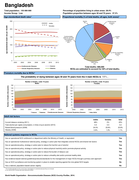

Country profile: Bangladesh
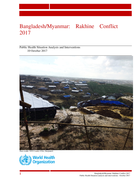
Public Health Situation Analysis and Interventions 10 October 2017
This fourth annual report monitors global progress towards the 2023 target for global elimination of industrially produced trans-fatty acids (TFA), highlighting achievements during the past year (October 2021 – September 2022). Countries are responding to the
...
Rabies is a global public health problem with important socioeconomic impacts. Human rabies is preventable; almost all cases are transmitted through the bite of a rabid dog. Elimination of human rabies is possible. Technical support and tools are av
...

This publication is a compendium of 49 country examples highlighting efforts in improving refugees’ and migrants’ health following the adoption of the WHO Global Action Plan on Promoting the
...
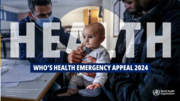
In 2024, we need US$1.5 billion to provide live-saving health care to millions of people in emergencies. An alarming combination of conflict, climate-related threats and increasing economic hardship mean an estimated 166 million people require
...
The primary audience for the guideline is health programme managers, including governmental and non-governmental organizations, and policy makers who are responsible for designing maternal, newborn
...

This fourth WHO report on neglected tropical diseases (NTDs) reviews the progress made towards achieving the Roadmap targets for 2020, noting the remaining challenges, then looks beyond 2020 to evaluate the changing global
...
Preliminary overview of refugees and migrants self-reported impact of COVID-19
The study surveyed over 30,000 refugees and migrants living in 170 countries. Many of the respondents had fled war or dire economic conditions in their home country only to be faced with the additional challenges posed b
...
Forcibly Displaced Myanmar National / Rohingya Refugee Response.
This document gives guidance for medical providers to understand the care of both healthy and COVID suspect or confirmed patients who present for antenatal (ANC), intrapartum (IP), po
...
Antimicrobial resistance (AMR) is described as a situation when bacteria, viruses, fungi and parasites
change over time and no longer respond to medicines, making infections harder or impossible to treat,
and increasing the risk of disease spread, severe illness and death.1 AMR in recent years has
...
2nd edition
WASH FIT is a risk-based, continuous improvement framework with a set of tools for undertaking water, sanitation and hygiene (WASH) improvements as part of wider quality improvements in health care facilities. It is aimed at small prima
...
WHO REPORT ON THE GLOBAL TOBACCO EPIDEMIC, 2017
The standards of care cover the routine care and management of complications occurring for women and their babies during labour, childbirth and the early postnatal period, including those of small babies during the first week of life. They define priorities for improving the quality of maternal and
...
