
Filter
169
Featured
Language
Document type
85
23
17
11
8
7
6
5
5
1
1
Countries / Regions
100
42
9
2
2
2
1
1
1
1
1
1
1
Authors & Publishers
Publication Years
Category
136
11
10
1
Toolboxes
55
41
34
15
14
4
2
1
1
1
1
1

Asthma is the most common chronic condition in children worldwide. It affects daytime activities, sleep and school attendance and causes anxiety to parents, families and other carers. The quality of asthma diagnosis and management globally still needs substantial improvement. From infancy to the tee
...

In 2014, the International Study of Asthma and Allergies in Childhood (ISAAC) reported that the highest prevalence of symptoms of severe asthma was found in the low- and middle-income countries (LMICs), including Nigeria. While exposure to biomass fuel use may be an important risk factor in the deve
...

Several countries or regions within countries have an effective national asthma strategy resulting in a reduction of the large burden of asthma to individuals and society. There has been no systematic appraisal of the extent of national asthma strategies in the world.

This guideline covers diagnosing, monitoring and managing asthma in adults, young people and children. It aims to improve the accuracy of diagnosis, help people to control their asthma and reduce the risk of asthma attacks. It does not cover managing severe asthma or acute asthma attacks. It emphasi
...
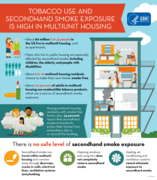
There is no safe level of secondhand smoke exposure
Secondhand smoke can travel within multiunit housing and common areas through doorways, cracks in walls, electrical lines, ventilation systems and plumbing.
Opening windows and using fans does not completely remove secondhand smoke.
Heating, air
...
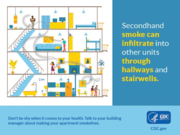
Secondhand smoke can infiltrate into other units through hallways and stairwells. Don’t be shy when it comes to your health. Talk to your building manager about making your apartment smokefree.

The goal of asthma treatment is to obtain clinical control and reduce future risks to the patient. To reach this goal in children with asthma, ongoing monitoring is essential. While all components of asthma, such as symptoms, lung function, bronchial hyperresponsiveness and inflammation, may exist i
...
Demographic and epidemiological transitions are changing the age structure of the population and the most common diseases. Non-communicable respiratory diseases are an increasing problem at both ends of the age range in low-income and middle-income countries. In children, who represent a large propo
...

Over the past 20 years, the Global Initiative for Asthma (GINA) has regularly published and annually updated a global strategy for asthma management and prevention that has formed the basis for many national guidelines. However, uptake of existing guidelines is poor. A major revision of the GINA r
...
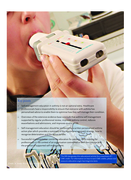
This articel summarises the evidence base underpinning supported self-management for asthma. It provides clinicians with a practical approach to providing supported self-management for asthma and suggests an appropriate strategy for implementing supported self-management.

Secondhand smoke and the harmful chemicals in it are known causes of Sudden Infant Death Syndrome RESPIRATORY INFECTIONS, ear infections.and asthma attacks in infants and children. They are also known causes of HEART DISEASE,stroke, and lung cancer in adult nonsmokers.

The article discusses the education strategy of the International Primary Care Respiratory Group (IPCRG) for 2014–2020, focusing on building capacity to improve respiratory care globally. It highlights the significant burden of respiratory diseases and the role of primary care in addressing this i
...
This journal provides information about the definition of Asthma, about its measurement in populations, the global burden of disease and the outcomes of childhood Asthma. It continues with the causes and treatment options of Asthma, followed by an outlook into the future.

South Africa is a mineral-rich country. Although the mining of these minerals generates wealth for the country, it also causes diseases in the mine workers who are exposed to harmful dust. Pulmonary silicosis, the disease most commonly caused by exposure to crystalline silica dust, was described in
...

Asthma is a chronic inflammatory condition characterized by airway hyper-responsiveness to a variety of stimuli largely of allergic origin with reversible airflow limitation. The major clinical features of asthma are wheezing, shortness of breath, and cough. It is a major cause of impaired quality o
...

Chronic respiratory diseases (CRDs) are among the leading causes of death worldwide, with asthma rated the most common chronic disease affecting children (1). Globally, about 300 million people have asthma, and current trends suggest that an additional 100 million people may be living with asthma by
...
The National Asthma Education Programme (or NAEP for short) was started in 2008. We are a registered Non-Profit Organisation that aims to disseminate impartial information about asthma diagnosis and treatment to health professionals and the South African public.

Asthma:
• is one of the most common respiratory complaints in the world today.
• affects one in ten children (10%) and one in twenty adults (5%)
• can occur for the first time at any age, even in adulthood.
•usually begins before the age of five years. A few children affected will â
...
Asthma can be a serious disease, but if you understand
the disease and take the right medication to control it, you
should have no problems or symptoms due to your asthma,
even when you are pregnant. To be free from asthma
attacks, you should also check your lung function and use
an action plan
...
Asthma is a chronic lung disease, which means it cannot be cured. But with the right treatment asthma can be kept under control so that those affected area be to live completely normal lives enjoyingfull involvement in sport and all other activities.
