
Filter
625
Featured
44
76
Language
Document type
183
145
76
41
34
30
19
18
18
17
15
13
11
2
Countries
21
20
18
10
10
9
8
5
5
4
4
3
3
3
3
3
3
3
3
3
3
3
3
3
3
3
3
3
3
3
3
2
2
2
2
2
2
2
2
2
2
2
2
2
2
1
1
1
1
1
1
1
1
1
1
1
1
1
1
1
1
1
1
1
1
1
1
1
1
1
1
1
1
1
1
1
1
1
1
1
1
1
1
1
1
1
1
1
1
1
1
1
1
1
1
1
1
1
1
1
Authors & Publishers
Publication Years
Category
79
32
8
4
2
2
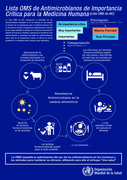
La lista OMS de AIC categoriza la totalidad de los antimicrobianos utilizados en el ser humano en tres grupos en función de su importancia para la medicina humana. Por el momento se limita a los fármacos antibacterianos, muchos de los cuales también se utilizan en la medicina v
...
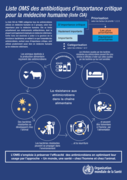
La liste CIA de l’OMS catégorise tous les antimicrobiens utilisés en médecine humaine en 3 groupes, selon leur importance pour la médecine humaine. Elle se limite actuellement aux médicaments antibactériens, dont la plupart sont également employés en médecine vété
...
A regional guide for governments in Asia and the Pacific to review, update and develop policies to address antimicrobial resistance and antimicrobial use in animal production

Since the World Health Organization (WHO) launched the Global Antimicrobial Resistance Surveillance System (GLASS) in 2015, there has been rapidly growing awareness among many African countries that they need to be doing more to combat antimicrobial resistance (AMR). The Africa Centres fo
...
Methicillin-resistant Staphylococcus aureus(MRSA) strainsor multidrug-resistant S.aureus, initially described in 1960s,emerged in the last decade as a cause of nosocomial infections responsible for rapidly progressive, potential fatal diseases including life-threatening pneumonia, necrotizing fascii
...
Global actions to reduce antimicrobial resistance (AMR) include optimising the use of antimicrobial medicines in human and animal health. In countries with weak healthcare regulation, this requires a greater understanding of the drivers of antibiotic use from the perspective of providers and consume
...
Using antimicrobials responsibly is an essential component ofefforts to contain antimicrobial resistance (AMR), and to ensurethat patients receive appropriate treatment. The WHO global action plan on AMR emphasizes the importance of training healthcare professionals in antimicrobial prescribing and
...
A guide for practical implementation in adult and pediatric emergency department and urgent care settings
Antibiotic stewardship refers to coordinated efforts and activities that seek to measure and improve use of antibiotics. Implementation of ASPs has demonstrated positive public health and clinical impacts including reducing costs, lengths of hospital stays, and the burden of antibiotic resistance wh
...
This small scale project aimed to optimize antibiotic prescriptions for Urinary Tract Infections (UTI) at Okhaldhunga Community Hospital in Nepal. A review of 18 months data from urine cultures taken in the hospital was completed in 2017. Presentations about antibiotic resistance, the local bacteria
...
The global emergence of antimicrobial resistance (AMR) is posing a threat to human health. Putting resources into the containment of AMR – including surveillance – is one of the highest-yield investments a country can make to mitigate its impact. In 2015, WHO launched the Global Antimicrobial Re
...
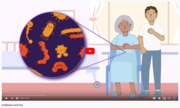
This video explains what antibiotics and the microbiome are, how they work, and side effects that patients may experience. It also provides helpful questions for patients and their families to ask their health care providers when they have been prescribed antibiotics.
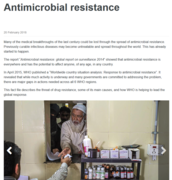
Many of the medical breakthroughs of the last century could be lost through the spread of antimicrobial resistance. Previously curable infectious diseases may become untreatable and spread throughout the world. This has already started to happen.
Newsroom - Facts in Pictures is also available in
...

Poster - Available in Different languages

póster - disponible en diferentes idiomas

affiche - disponible en différentes langues
Antimicrobial resistance happens when microorganisms (such as bacteria, fungi, viruses, and parasites) change when they are exposed to antimicrobial drugs (such as antibiotics, antifungals, antivirals, antimalarials, and anthelmintics). Microorganisms that develop antimicrobial resistance are someti
...
La résistance aux antimicrobiens Esurvient lorsque les micro-organismes (bactéries, champignons, virus et parasites) évoluent quand ils sont exposés à des médicaments antimicrobiens (comme les antibiotiques, les antifongiques, les antiviraux, les antipaludiques et les anthelminthiques).
On ap
...
La RAM se produce cuando los microorganismos (bacterias, hongos, virus y parásitos) sufren cambios al verse expuestos a los antimicrobianos (antibióticos, antifúngicos, antivíricos, antipalúdicos o antihelmínticos, por ejemplo). Los microorganismos resistentes a la mayoría de los antimicrobia
...
Event-based surveillance (EBS) is defined as the organized collection, monitoring, assessment and interpretation of mainly unstructured ad hoc information regarding health events or risks, which may represent an acute risk to health. Both indicator-based and event-based surveillance components serve
...
