
Filter
90
Featured
16
15
Language
Document type
29
13
12
12
8
4
3
3
2
2
1
1
Countries
16
3
1
1
1
1
1
1
1
1
1
1
1
Authors & Publishers
Publication Years
Category
11
7
5
2
1
Los combustibles fósiles (carbón, petróleo y gas) son, con diferencia, los que más contribuyen al cambio climático mundial, ya que representan más del 75 % de las emisiones mundiales de gases de efecto invernadero y casi el 90 % de todas las emisiones de dióxido de carbono.
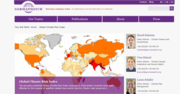
The Climate Risk Index (CRI) ranks countries by the human and economic toll of extreme weather. The latest edition highlights increasing losses and the urgent need for stronger climate resilience and action.
El cambio climático está intesificando el calor extremo, con efectos graves sobre la salud.
The Advancing Climate-Resilient Education Technical Guidance builds on the USAID 2022–2030 Climate Strategy and the 2018 USAID Education Policy to support USAID Missions and partners who seek to integrate climate action and awareness into education programs and are committed to achieving climate-r
...
This document summarizes several air quality measurement and modelling methods that can be used to estimate ground-level air pollutant concentrations and presents multiple approaches to monitoring ambient air pollution at different spatial and temporal scales. These methods are crucial for estimatin
...
In 2019, WHO estimated that 6.7 million premature deaths could be attributed to ambient and household air pollution from particulate matter (particles with a diameter less than 2.5 μm, PM2.5. Of the 4.2 million deaths attributed specifically to ambient air pollution exposures.
This report describes the “Building health workers capacity on air pollution and health” pilot workshop held in Ghana in 2022 which aimed at testing the training material of the first WHO Air Pollution and Health Training toolkit (APHT) targeting health professionals. APHT aims at strengthening
...
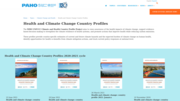
Climate and Health Country Profiles
recommended
The Health and Climate Change Country Profiles, developed in collaboration with national governments, are part of WHO’s monitoring of health sector response to climate change. The profiles summarize evidence of the climate hazards and health risks facing countries. They track national progress in
...
In the spirit of the Sustainable Development Goals, WHO and the International Labour Organization (ILO) produce the WHO/ILO Joint Estimates of the Work-related Burden of Disease and Injury (WHO/ILO Joint Estimates). The WHO/ILO Joint Estimates quantify the population exposed to occupational risk fac
...
Climate change is the single biggest health threat facing humanity, and health professionals worldwide are already responding to the health harms caused by this unfolding crisis.
The Intergovernmental Panel on Climate Change (IPCC) has concluded that to avert catastrophic health impacts and prevent
...
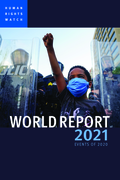
World Report 2021, Human Rights Watch’s 31st annual review of human rights practices and trends around the globe, reviews developments in more than 100 countries.
In his introductory essay, Executive Director Kenneth Roth calls on the incoming US administration to more deeply embed respect for
...

The Quality Criteria for Health National Adaptation Plans (HNAPs) presents examples of good practice in HNAP development to assist countries in developing a comprehensive, feasible and implementable plan. The criteria are also intended to guide countries in setting the foundation for a long-term ite
...

The discourse on climate change and migration has shifted from labelling migration merely as a consequence of climate impacts, to describing it as a form of human adaptation. This article explores the adaptation framing of the climate change and migration nexus and highlights its shortcomings and ad
...
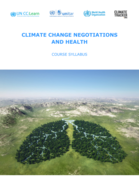
This free online course on Climate Change Negotiations and Health features key information on climate change and its impacts on human health, provides an overview of the international climate change negotiations so far, and considers entry points to address health issues and priorities within climat
...
A new brief published by the IFRC and Climate Centre today details the adverse impacts of climate change on human health and provides more detail on the second of four pillars of action in the Red Cross Red Crescent Movement ambitions on climate.
Climate change is resulting in poorer health outcomes, increasing mortality and is a driver of health inequities. However, health is well placed to be a significant part of the solution; the positive health impacts from stronger climate change action can motivate stronger global ambition; health sys
...
Climate Change 2021: The Physical Science Basis
recommended
The Working Group I contribution to the Sixth Assessment Report, Climate Change 2021: The Physical Science Basis is now out (August 2021). The report addresses the most up-to-date physical understanding of the climate system and climate change, bringing together the latest advances in climate scien
...
Press Release for the Working Group I contribution to the Sixth Assessment Report, Climate Change 2021: The Physical Science Basis
Available in Arabic, Chinese, English, French, Russian and Spanisch
Young people living in the Central African Republic, Chad, Nigeria, Guinea, and Guinea-Bissau are the most at risk of the impacts of climate change, threatening their health, education, and protection, and exposing them to deadly diseases. The report is the first comprehensive analysis of climate ri
...
Since the start of the pandemic, the region has been hit by multiple natural and biological disasters. At the same time, climate change has continued to warm the world, exacerbating the impacts of many of these disasters. The *Asia-Pacific Disaster Report 2021, *also launched today, shows that the p
...
