
Filter
2344
Text search:
therapeutic
use
Featured
284
566
Language
2258
54
46
31
22
17
17
6
5
5
5
5
4
4
4
3
3
2
2
2
2
2
2
2
2
2
2
2
1
1
1
1
1
1
1
1
1
1
1
1
1
1
1
Document type
1202
428
377
151
67
44
40
19
9
6
1
Countries
136
84
75
67
60
52
43
39
34
34
33
31
30
30
30
29
29
25
23
20
19
17
15
15
15
14
14
13
13
13
12
11
11
11
11
11
11
10
10
9
9
8
8
7
7
7
6
6
6
6
5
5
5
5
5
5
5
4
4
3
3
3
3
3
3
2
2
2
2
2
2
2
2
2
2
2
2
2
2
2
2
2
1
1
1
1
1
1
1
1
1
1
1
1
1
1
1
1
1
1
1
1
1
1
1
1
1
1
1
1
1
1
1
1
1
1
Authors & Publishers
315
108
74
61
53
51
42
35
24
22
20
18
18
18
13
13
13
13
13
12
11
10
10
9
9
8
8
8
8
8
8
8
8
8
7
7
7
7
6
6
6
6
6
6
6
6
6
6
6
6
6
5
5
5
5
5
5
5
5
5
5
5
4
4
4
4
4
4
4
4
4
4
4
4
4
4
4
4
4
4
4
3
3
3
3
3
3
3
3
3
3
3
3
3
3
3
3
3
3
3
3
3
3
3
3
3
3
3
3
3
3
3
3
3
3
3
2
2
2
2
2
2
2
2
2
2
2
2
2
2
2
2
2
2
2
2
2
2
2
2
2
2
2
2
2
2
2
2
2
2
2
2
2
2
2
2
2
2
2
2
2
2
2
2
2
2
2
2
2
2
2
2
2
2
2
2
2
2
2
2
2
2
2
2
2
2
2
2
2
2
2
2
2
2
2
2
2
2
2
2
2
2
2
2
2
2
2
2
2
2
2
2
2
2
2
2
2
2
2
2
2
2
2
2
2
2
2
2
2
2
2
2
2
2
2
2
2
2
2
2
2
2
2
2
2
2
2
2
2
2
2
2
2
2
2
2
2
2
2
2
2
2
2
2
2
2
2
2
2
2
2
1
1
1
1
1
1
1
1
1
1
1
1
1
1
1
1
1
1
1
1
1
1
1
1
1
1
1
1
1
1
1
1
1
1
1
1
1
1
1
1
1
1
1
1
1
1
1
1
1
1
1
1
1
1
1
1
1
1
1
1
1
1
1
1
1
1
1
1
1
1
1
1
1
1
1
1
1
1
1
1
1
1
1
1
1
1
1
1
1
1
1
1
1
1
1
1
1
1
1
1
1
1
1
1
1
1
1
1
1
1
1
1
1
1
1
1
1
1
1
1
1
1
1
1
1
1
1
1
1
1
1
1
1
1
1
1
1
1
1
1
1
1
1
1
1
1
1
1
1
1
1
1
1
1
1
1
1
1
1
1
1
1
1
1
1
1
1
1
1
1
1
1
1
1
1
1
1
1
1
1
1
1
1
1
1
1
1
1
1
1
1
1
1
1
1
1
1
1
1
1
1
1
1
1
1
1
1
1
1
1
1
1
1
1
1
1
1
1
1
1
1
1
1
1
1
1
1
1
1
1
1
1
1
1
1
1
1
1
1
1
1
1
1
1
1
1
1
1
1
1
1
1
1
1
1
1
1
1
1
1
1
1
1
1
1
1
1
1
1
1
1
1
1
1
1
1
1
1
1
1
1
1
1
1
1
1
1
1
1
1
1
1
1
1
1
1
1
1
1
1
1
1
1
1
1
1
1
1
1
1
1
1
1
1
1
1
1
1
1
1
1
1
1
1
1
1
1
1
1
1
1
1
1
1
1
1
1
1
1
1
1
1
1
1
1
1
1
1
1
1
1
1
1
1
1
1
1
1
1
1
1
1
1
1
1
1
1
1
1
1
1
1
1
1
1
1
1
1
1
1
1
1
1
1
1
1
1
1
1
1
1
1
1
1
1
1
1
1
1
1
1
1
1
1
1
1
1
1
1
1
1
1
1
1
1
1
1
1
1
1
1
1
1
1
1
1
1
1
1
1
1
1
1
1
1
1
1
1
1
1
1
1
1
1
1
1
1
1
1
1
1
1
1
1
1
1
1
1
1
1
1
1
1
1
1
1
1
1
1
1
1
1
1
1
1
1
1
1
1
1
1
1
1
1
1
1
1
1
1
1
1
1
1
1
1
1
1
1
1
1
1
1
1
1
1
1
1
1
1
1
1
1
1
1
1
1
1
1
1
1
1
1
1
1
1
1
1
1
1
1
1
1
1
1
1
1
1
1
1
1
1
1
1
1
1
1
1
1
1
1
1
1
1
1
1
1
1
1
1
1
1
1
1
1
1
1
1
1
1
1
1
1
1
1
1
1
1
1
1
1
1
1
1
1
1
1
1
1
1
1
1
1
1
1
1
1
1
1
1
1
1
1
1
1
1
1
1
1
1
1
1
1
1
1
1
1
1
1
1
1
1
1
1
1
1
1
1
1
1
1
1
1
1
1
1
1
1
1
1
1
1
1
1
1
1
1
1
1
1
1
1
1
1
1
1
1
1
1
1
1
1
1
1
1
1
1
1
1
1
1
1
1
1
1
1
1
1
1
1
1
1
1
1
1
1
1
1
1
1
1
1
1
1
1
1
1
1
1
1
1
1
1
1
1
1
1
1
1
1
1
1
1
1
1
1
1
1
1
1
1
1
1
1
1
1
1
1
1
1
1
1
1
1
1
1
1
1
1
1
1
1
1
1
1
1
1
1
1
1
1
1
1
1
1
1
1
1
1
1
1
1
1
1
1
1
1
1
1
1
1
1
1
1
1
1
1
1
1
1
1
1
1
1
1
1
1
1
1
1
1
1
1
1
1
1
1
1
1
1
1
1
1
1
1
1
1
1
1
1
1
1
1
1
1
1
1
1
1
1
1
1
1
1
1
1
1
1
1
1
1
1
1
1
1
1
1
1
1
1
1
1
1
1
1
1
1
1
1
1
1
1
1
1
1
1
1
1
1
1
1
1
1
1
1
1
1
1
1
1
1
1
1
1
1
1
1
1
1
1
1
1
1
1
1
1
1
1
1
1
1
1
1
1
1
1
1
1
1
1
1
1
1
1
1
1
1
1
1
1
1
1
1
1
1
1
1
1
1
1
1
1
1
1
1
1
1
1
1
1
1
1
1
1
1
1
1
1
1
1
1
1
1
1
1
1
1
1
1
1
1
1
1
1
1
1
1
1
1
1
1
1
1
1
1
1
1
1
1
1
1
1
1
1
1
1
1
1
1
1
1
1
1
1
1
1
1
1
1
1
1
1
1
1
1
1
1
1
1
1
1
1
1
1
1
1
1
1
1
1
1
1
1
1
1
1
1
1
1
1
1
1
1
1
1
1
1
1
1
1
1
1
1
1
1
1
1
1
1
1
1
1
1
1
1
1
1
1
1
1
1
1
1
1
1
1
1
1
1
1
1
1
1
1
1
1
1
1
1
1
1
1
1
1
1
1
1
1
1
1
1
1
1
1
1
1
1
1
1
1
1
1
1
1
1
1
1
1
1
1
1
1
1
1
1
1
1
1
1
1
1
1
1
1
1
1
1
1
1
1
1
1
1
1
1
1
1
1
1
1
1
1
1
1
1
1
1
1
1
1
1
1
1
1
1
1
1
1
1
1
1
1
1
1
1
1
1
1
1
1
1
1
1
1
1
1
1
1
1
1
1
1
1
1
1
1
1
1
1
1
1
1
1
1
1
1
1
1
1
1
1
1
1
1
1
1
1
1
1
1
1
1
1
1
1
1
1
1
1
1
1
1
1
1
1
1
1
1
1
1
1
1
1
1
1
1
1
1
1
1
1
1
1
1
1
1
1
1
1
1
1
1
1
1
1
1
1
1
1
1
1
1
1
1
1
1
1
1
1
1
1
1
1
1
1
1
1
1
1
1
1
1
1
1
1
1
1
1
1
1
1
1
1
1
1
1
1
1
1
1
1
1
1
1
1
1
1
1
1
1
1
1
1
1
1
1
1
1
1
1
1
1
1
1
1
1
1
1
1
1
1
1
1
1
1
1
1
1
1
1
1
1
1
1
1
1
1
1
1
1
1
1
1
1
1
1
1
1
1
1
1
1
1
1
1
1
1
1
1
1
1
1
1
1
1
1
1
1
1
1
1
1
1
1
1
1
1
1
1
1
1
1
1
1
1
1
1
1
1
1
1
1
1
1
1
1
1
1
1
1
1
1
1
1
1
1
1
1
1
1
1
1
1
1
1
1
1
1
1
1
1
1
1
1
1
1
1
1
1
1
1
1
1
1
1
1
1
1
1
1
1
1
1
1
1
1
1
1
1
1
1
1
1
1
1
1
1
1
1
1
1
1
1
1
1
1
1
1
1
1
1
1
1
1
1
1
1
1
1
1
1
1
1
1
1
1
1
1
1
1
1
1
1
1
1
1
1
1
1
1
1
1
1
1
1
1
1
1
1
1
1
1
1
1
1
1
1
1
1
1
1
1
1
1
1
1
1
1
1
1
1
1
1
1
1
1
1
1
1
1
1
1
1
1
1
1
1
1
1
1
1
1
1
1
1
1
1
1
1
1
1
1
1
1
1
1
1
1
1
1
1
1
1
1
1
1
1
1
1
1
1
1
1
1
1
1
1
1
1
1
1
1
1
1
1
1
1
1
1
1
1
1
1
1
1
1
1
1
1
1
1
1
1
1
1
1
1
1
1
1
1
1
1
1
1
1
1
1
1
1
1
1
1
1
1
1
1
1
1
1
1
1
1
1
1
1
1
1
1
1
1
1
1
1
1
1
1
1
1
1
1
1
1
1
1
1
1
1
1
1
1
1
1
1
1
1
1
1
1
1
1
1
1
1
1
1
1
1
1
1
1
1
1
1
1
1
1
1
1
1
1
1
1
1
1
1
1
1
1
1
1
1
1
1
1
1
1
1
1
1
1
1
1
1
1
1
1
1
1
1
1
1
1
1
1
1
1
1
1
1
1
1
1
1
1
1
1
1
1
1
1
1
1
1
1
1
1
1
1
1
1
1
1
1
1
1
1
1
1
1
1
1
1
1
1
1
1
1
1
1
1
1
1
1
1
1
1
1
1
1
1
1
1
1
1
1
1
1
1
1
1
1
1
1
1
1
1
1
1
1
1
1
1
1
1
1
1
1
1
1
1
1
1
1
1
1
1
1
1
1
1
1
1
1
1
1
1
1
1
1
1
1
1
1
1
1
1
1
1
1
1
1
1
1
1
1
1
1
1
Publication Years
613
1442
262
25
2
Category
873
238
136
117
116
41
40
1
Toolboxes
313
174
141
130
96
94
81
65
61
58
56
53
38
32
26
24
22
18
18
15
14
10
10
8
7
1
Severe Acute Malnutrition (SAM) is one of the greatest child survival challenges in the world today and
reportedly affects more than 16.2 million children each year1. High impact, proven treatment interventions exist
yet sadly approximately only 3.2 million children with SAM have access to treatme
...
nt each year2. Thus, there
is a need to scale up interventions to improve coverage and access across high burden countries. While efforts
are currently underway to expand services in many countries, obstacles remain.
One critical barrier to expanding SAM treatment services is the acceptance, accessibility and utilisation of
ready-to-use therapeutic food (RUTF). In some countries and contexts, RUTF is still not fully accepted by
community members; while other countries face problems with procurement, storage and supply chain
management which impact on availability and use3. Reports from Ghana and Zambia highlighted that stock-
outs and logistical challenges are often noted as key contributors to high default rates in outpatient treatment
centres4.
more
In aquaculture, antibiotics have been used mainly for therapeutic purposes and as prophylactic agents. The contribution to antimicrobial resistance of antibiotics used in aquaculture is reviewed here, using a risk analysis framework. Some recommenda
...
tions on responsible conduct in this context are proposed, aimed at diminishing the threat of build up of antimicrobial resistance.
more
Selection and Use of Essential Medicines 2021
recommended
The 23rd meeting of the WHO Expert Committee on Selection and Use of Essential Medicines was coordinated from Geneva, Switzerland, and held virtually from 21 June to 2 July 2021. The Committee considered 88 applications proposing additions, changes
...
and deletions of medicines, medicine classes and formulations on the Model Lists of Essential Medicines. The Committee evaluated the scientific evidence for comparative effectiveness, safety and cost-effectiveness of the medicines in question. The Committee also considered a review of the therapeutic alternatives for medicines on the Model Lists, and update to the AWaRe classification of antibiotics, and reviews and reports relevant to the selection and use of essential medicines.
more
Report of the 23rd WHO Expert Committee on the selection and use of essential medicines
This executive summary reports the recommendations made by the Expert Committee for the 2021 update of the WHO Model List of Essential Medicines (EML) and the M
...
odel List of Essential Medicine for Children (EMLc).
The 23rd meeting of the WHO Expert Committee on Selection and Use of Essential Medicines was coordinated from Geneva, Switzerland, and held virtually from 21 June to 2 July 2021. The Committee considered 88 applications proposing additions, changes and deletions of medicines, medicine classes and formulation on the Model Lists of Essential Medicines. The Committee evaluated the scientific evidence for comparative effectiveness, safety and cost-effectiveness of the medicines in question. The Committee also considered a review of the therapeutic alternatives for medicines on the Model Lists, and update to the AWaRe classification of antibiotics, and reviews and reports relevant to the selection and use of essential medicines.
more
Ivermectin is an antiparasitic drug approved for the treatment of parasitic infections, including strongyloidiasis and onchocerciasis in humans. There is a reported increase in the use of ivermectin for the prevention and treatment of COVID-19 by th
...
e public in African Union Member States.
Currently, there is:
1. No scientific evidence from pre-clinical studies on the therapeutic effect of ivermectin for the management of COVID-19;
2. No evidence of its clinical efficacy for the management of patients with asymptomatic, mild, moderate or severe COVID-19; and
3. No safety data regarding the use of ivermectin for COVID-19 in the majority of the published studies.
more
Antimicrobials are widely used in food animal production, and use is rapidly increasing.
In an era of growing demand for animal products, there is an increasing trend towards the industrial production of food animals, especially in lower- and middl
...
e-income countries (LMICs). One hallmark of this method of animal production is the
use of antimicrobial drugs, which in the majority of cases are administered to healthy animals for purposes other than
treating or controlling disease (termed “therapeutic uses”)
more
WHO has updated its guidelines for COVID-19 therapeutics, with revised recommendations for patients with non-severe COVID-19. This is the 13th update to these guidelines.
Updated risk rates for hospital admission in patients with non-severe COVID-19
The guidance includes updated risk rates for
...
hospital admission in patients with non-severe COVID-19.
The current COVID-19 virus variants tend to cause less severe disease while immunity levels are higher due to vaccination, leading to lower risks of severe illness and death for most patients.
This update includes new baseline risk estimates for hospital admission in patients with non-severe COVID-19. The new ‘moderate risk’ category now includes people previously considered to be high risk including older people and/or those with chronic conditions, disabilities, and comorbidities of chronic disease. The updated risk estimates will assist healthcare professionals to identify individuals at high, moderate or low risk of hospital admission, and to tailor treatment according to WHO guidelines:
**High: **People who are immunosuppressed remain at higher risk if they contract COVID-19, with an estimated hospitalization rate of 6%.
**Moderate: **People over 65 years old, those with conditions like obesity, diabetes and/or chronic conditions including chronic obstructive pulmonary disease, kidney or liver disease, cancer, people with disabilities and those with comorbidities of chronic disease are at moderate risk, with an estimated hospitalization rate of 3%.
Low: Those who are not in the high or moderate risk categories are at low risk of hospitalization (0.5%). Most people are low risk.
Review of COVID-19 treatments for people with non-severe COVID-19
WHO continues to strongly recommend nirmatrelvir-ritonavir (also known by its brand name ‘Paxlovid’) for people at high-risk and moderate risk of hospitalization. The recommendations state that nirmatrelvir-ritonavir is considered the best choice for most eligible patients, given its therapeutic benefits, ease of administration and fewer concerns about potential harms. Nirmatrelvir-ritonavir was first recommended by WHO in April 2022.
If nirmatrelvir-ritonavir is not available to patients at high-risk of hospitalization, WHO suggests the use of molnupiravir or remdesivir instead.
WHO suggests against the use of molnupiravir and remdesivir for patients at moderate risk, judging the potential harms to outweigh the limited benefits in patients at moderate risk of hospital admission.
For people at low risk of hospitalization, WHO does not recommend any antiviral therapy. Symptoms like fever and pain can continue to be managed with analgesics like paracetamol.
WHO also recommends against use of a new antiviral (VV116) for patients, except in clinical trials.
The update also includes a strong recommendation against the use of ivermectin for patients with non-severe COVID-19. WHO continues to advise that in patients with severe or critical COVID-19, ivermectin should only be used in clinical trials.
more
Community-Based Management of Acute Malnutrition (CMAM) is a decentralised community-based approach to treating acute malnutrition. Treatment is matched to the nutritional and clinical needs of the child, with the majority children receiving treatment at home using ready-to-
...
use foods. In-patient care is provided only for complicated cases of acute malnutrition. CMAM consists of four components: (1) stabilisation care for acute malnutrition with complications, (2) out-patient therapeutic care for severe acute malnutrition without complications, (3) supplementary feeding for moderate acute malnutrition and (4) community mobilisation.
more
Human African Trypanosomiasis (HAT, sleeping sickness) and Animal African Trypanosomiasis (AAT) are neglected tropical diseases generally caused by the same etiological agent, Trypanosoma brucei. Despite important advances in the reduction or disappearance of HAT cases, AAT represents a risky reserv
...
oir of the infections. There is a strong need to control AAT, as is claimed by the European Commission in a recent document on the reservation of antimicrobials for human use. Control of AAT is considered part of the One Health approach established by the FAO program against African Trypanosomiasis. Under the umbrella of the One Health concepts, in this work, by analyzing the pharmacological properties of the therapeutic options against Trypanosoma brucei spp., we underline the need for clearer and more defined guidelines in the employment of drugs designed for HAT and AAT. Essential requirements are addressed to meet the challenge of drug use and drug resistance development. This approach shall avoid inter-species cross-resistance phenomena and retain drugs therapeutic activity.
more
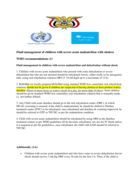
The document provides WHO guidelines on fluid management for children with severe acute malnutrition (SAM) and cholera. It outlines protocols for rehydration therapy, including oral rehydration solutions (ORS) and intravenous fluids for cases of severe dehydration or shock. The guidelines emphasize
...
careful monitoring to avoid overhydration and highlight the use of zinc supplementation to reduce diarrhea severity and future episodes. It also discusses the integration of therapeutic feeding to support recovery. The document is a resource for healthcare workers managing vulnerable children in cholera outbreaks.
more
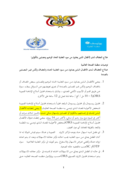
The document provides WHO guidelines on fluid management for children with severe acute malnutrition (SAM) and cholera. It outlines protocols for rehydration therapy, including oral rehydration solutions (ORS) and intravenous fluids for cases of severe dehydration or shock. The guidelines emphasize
...
careful monitoring to avoid overhydration and highlight the use of zinc supplementation to reduce diarrhea severity and future episodes. It also discusses the integration of therapeutic feeding to support recovery. The document is a resource for healthcare workers managing vulnerable children in cholera outbreaks.
more
Combination therapy is a cornerstone of modern malaria treatment, particularly in the context of widespread multidrug resistance. Using two or more antimalarial drugs with different mechanisms simultaneously enhances efficacy, shortens treatment duration, improves compliance and delays the developme
...
nt of resistance. Artemisinin-based combination therapies (ACTs), such as artemether–lumefantrine, artesunate–amodiaquine and artesunate–sulfadoxine/pyrimethamine, are highly effective in rapidly clearing parasites and reducing gametocyte carriage. They are also generally well tolerated. Non-artemisinin combinations, quinine-based regimens and novel combinations (e.g. piperaquine–dihydroartemisinin) offer alternative therapeutic options, although clinical experience with these remains limited. Although ACTs are the preferred first-line treatment, factors such as cost, local drug resistance patterns, safety during pregnancy and paediatric use must inform implementation and policy decisions.
more
Asthma is a heterogeneous condition characterised by chronic inflammation and variable expiratory airflow limitation, with airway reversibility. Management of chronic inflammation with anti-asthma medication improves asthma control and quality of life. The aim of this journal is to provide an eviden
...
ce-based approach for chronic asthma management in young children and adolescents and provide guidance on the use of new asthma drugs in children.
For that, the South African Childhood Asthma Working Group (SACAWG) convened in January 2017. The asthma treatment task group reviewed the available scientific literature and international asthma treatment guidelines. The evidence was then graded according to the Grades of Recommendation Assessment, Development and Evaluation (GRADE) system and recommendations were made based on scientific evidence and local context. Asthma management recommendations were made for children ˂6 years of age and older children and adolescents, as well as for stepping up and stepping down of therapy. This review does not include biologics or novel asthma drugs, which are covered in another CME article in this edition of SAMJ.
The final conclusions are that it is important to ensure good response, treatment and adherence, type of medication, device and checking of technique are all critical. Stepping up of therapy should be done only after ensuring good adherence and technique. Once therapeutic response is achieved, medication administration has to be stepped down to improve ease of use and avoid unnecessary side-effects.
more
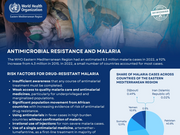
Antimicrobial resistance (AMR) and malaria remain significant public health challenges in the WHO Eastern Mediterranean Region (EMR). In 2021, the region reported 1.7 million sepsis-related deaths, with 373,000 associated with bacterial AMR. High antibiotic consumption, particularly in high-income c
...
ountries, combined with rising usage in middle-income countries, has accelerated the emergence of drug-resistant infections. Malaria management is further complicated by biological threats, including vector insecticide resistance, PFHRP2/3 gene deletions, and antimalarial drug resistance, alongside insufficient trained personnel and limited molecular surveillance capacity. Effective strategies to address these challenges include strengthening regional and cross-border surveillance networks, designating WHO collaborating centers for molecular monitoring, enforcing national treatment policies, and raising public and healthcare provider awareness about rational antimalarial and antibiotic use. These measures, coupled with sustainable funding and enhanced therapeutic efficacy studies, are essential to reduce the development and spread of drug-resistant malaria and improve overall health outcomes in the EMR.
more
Published: April 26, 2017 https://doi.org/10.1371/journal.pone.0176004
Male circumcision reduces a man’s risk of heterosexual acquisition of HIV by about 60%. This guideline provides an evidence-based recommendation on the use of adult male circumcision devices for HIV prevention in public health programmes in high H
...
IV prevalence, resource-limited settings. It also presents key programmatic considerations for the introduction and use of these devices in public health HIV prevention programmes. The primary audiences are policy- and decision-makers, programme managers, health-care providers, donors and implementing agencies.
more
World Psychiatry16:2 - June 2017
First published: 12 May 2017
https://doi.org/10.1002/wps.20428
Volume16, Issue2; Pages 213-214

STGs are designed to assist health care professionals in making decisions about appropriate, effective patient care. However, health managers often have trouble setting and meeting the high standards required of modern, developed health care systems. With stakeholders expressing concern over issues
...
such as strength of evidence, transparency, conflicts of interest, and effective implementation, it is clear that many health care professionals need further guidance in developing and making use of STGs.
This manual guides health professionals through the process of establishing and implementing STGs, placing special emphasis on the low- and middle-income country (LMIC) context. By including tools, templates, and success stories as well as hyperlinks to useful resources, the manual helps health practitioners understand not only important concepts of treatment guidelines, but also how they can best be used in practice.
more
