
Filter
519
Text search:
teacher
attitudes
Featured
32
136
Language
Document type
387
58
24
20
10
10
5
3
2
Countries
41
20
18
17
16
15
14
14
13
12
12
10
9
8
8
8
7
7
6
6
6
5
5
4
4
4
4
3
3
3
3
3
3
3
3
2
2
2
2
2
2
2
1
1
1
1
1
1
1
1
1
1
1
1
1
1
1
1
1
1
1
1
1
1
Authors & Publishers
Publication Years
Category
230
29
22
20
18
12
1
Toolboxes
131
81
14
10
9
9
9
8
7
6
4
4
3
3
3
2
2
1
1
1
1
The main aim of this paper is to present the current situation of children with disabilities in the Republic of Namibia, with special regard to their educational chances and influence of cultural beliefs on their lives. Namibia has a law, which entitles education for all its citizens. Despite numero
...
This is a resource pack for a Knowledge, Attitudes and Practices (KAP) surveys about Zika virus and its suspected complications such as microcephaly and Guillain-Barré syndrome.
This resource and associated advice was requested by governments and
...

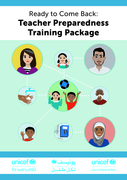
The package provides practical, concise yet crucial information about the impact of COVID-19 on daily teaching practices as well as tips and suggestions to improve safety, well-being and learning, with students in face-to-face or remote settings.
The package speaks directly to the teachers. It ca
...
Dissertation submitted in part fulfilment of the requirements for a Masters degree at the Centre for International Health and Development (CIHD) at University College London (UCL) Institute of Child Health (ICH)
The user has given permission for the uploaded document to be reproduced and made publi
...
International Health and Human Rights (2018) 18:18
Disability awareness, Community, Attitudes, Experts-by-experience
Teacher Handbook
The adoption and the entry into force of the Convention on the Rights of Persons with Disabilities and its Optional Protocol challenge such attitudes and mark a profound shift in existing approaches towards disability.
The State of the World’s Children 2013: Children with Disabilities examines the barriers – from inaccessible buildings to dismissive attitudes, from invisibility in official statistics to vicious discrimination – that deprive children with dis
...

The State of the World’s Children 2013: Children with Disabilities examines the barriers – from inaccessible buildings to dismissive attitudes, from invisibility in official statistics to vicious discrimination – that deprive children with dis
...

This report documents the findings from the Behavioral Surveillance Survey conducted among youuth aged 15-24 in Rwanda in 2009. The 2009 Youth BSS documented HIV knowledge, attitudes, and behaviors (KAB) among youth in Rwanda. The data provided a c
...
DHS Further Analysis Reports No. 89 - The 2010 Rwanda Demographic and Health Survey shows that 3 percent of Rwandan adults age 15-49 have been infected with HIV. The prevalence was much higher in urban areas, among women, and among adults who had multiple lifetime sexual partners and used a condom a
...
“The children are psychologically crushed and tired.
When we do activities like singing with them, they
don’t respond at all. They don’t laugh like they
would normally. They draw images of children
being butchered in the war, or tanks, or the siege
and the lack of food.”
...
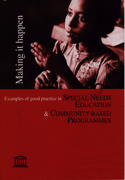
This monograph presents 12 reports of successful programs serving children with special needs in various nations. The program locations and the program report titles and authors are as follows: (1) Austria: "Integration Models for Elementary and Secondary Schools in Austria" (Volker Rutte)
...

The study analyses the current situation of children with disabilities in relation to realizing their rights and accessing basic services, as well as their life experiences in their communities. It also focuses on identifying the barriers created by society that prevent children with disabilities fr
...
School health programmes have been demonstrated to be the most cost-effective way to influence health behaviours in young people. The purpose of this two-part handbook is to support schools as they seek to implement interventions aimed at reducing the main modifiable risk behaviours f
...
School health programmes are the most cost-effective way to influence health behaviours in young people. The purpose of this two-part handbook is to support schools as they seek to implement interventions in order to reduce the main modifiable risk behaviours for noncommunicable disea
...
This guide is designed to assist UNICEF staff and partners, in establishing and
operating Child Friendly Spaces (CFS) in an emergency. It attempts to provide
readers with the main principles of a CFS and the processes on how to establish
one.
The overall aim is to improve the standards and capac
...
