Filter
2106
Text search:
public
commitments
Featured
130
585
Language
2067
47
44
26
19
15
12
6
3
2
2
2
1
1
1
1
1
1
1
1
1
1
1
1
1
Document type
1068
549
179
145
77
40
20
15
3
2
1
1
1
Countries / Regions
184
59
54
52
48
44
44
42
39
36
35
35
32
30
30
29
29
28
28
25
22
19
18
18
18
17
17
17
16
16
16
16
15
13
13
13
12
11
10
10
9
9
9
9
9
8
8
8
7
7
7
7
7
7
6
5
5
5
5
5
4
4
4
4
4
4
4
4
4
3
3
3
3
3
3
3
3
2
2
2
2
2
2
2
2
2
2
2
2
2
2
2
2
2
2
1
1
1
1
1
1
1
1
1
1
1
1
1
1
1
1
1
1
1
1
1
1
1
1
1
1
1
1
1
1
1
1
1
1
1
1
1
1
Authors & Publishers
215
75
66
60
57
55
51
31
21
20
17
13
12
12
12
12
11
11
11
10
10
10
10
9
9
9
9
9
8
8
8
8
8
8
7
7
7
7
7
7
6
6
6
6
6
6
6
6
6
6
6
6
6
5
5
5
5
5
5
5
5
5
5
5
4
4
4
4
4
4
4
4
4
4
4
4
4
4
4
4
4
4
4
3
3
3
3
3
3
3
3
3
3
3
3
3
3
3
3
3
3
3
3
3
3
3
3
3
3
3
3
3
3
3
3
3
3
3
3
3
3
3
3
3
3
3
3
3
2
2
2
2
2
2
2
2
2
2
2
2
2
2
2
2
2
2
2
2
2
2
2
2
2
2
2
2
2
2
2
2
2
2
2
2
2
2
2
2
2
2
2
2
2
2
2
2
2
2
2
2
2
2
2
2
2
2
2
2
2
2
2
2
2
2
2
2
2
2
2
2
2
2
2
2
2
2
2
2
2
2
2
2
2
2
2
2
2
2
2
2
2
2
2
2
2
2
2
2
2
2
2
2
2
2
2
2
2
2
2
2
2
2
2
2
2
2
2
2
2
2
2
2
2
2
2
2
2
2
2
2
2
2
2
1
1
1
1
1
1
1
1
1
1
1
1
1
1
1
1
1
1
1
1
1
1
1
1
1
1
1
1
1
1
1
1
1
1
1
1
1
1
1
1
1
1
1
1
1
1
1
1
1
1
1
1
1
1
1
1
1
1
1
1
1
1
1
1
1
1
1
1
1
1
1
1
1
1
1
1
1
1
1
1
1
1
1
1
1
1
1
1
1
1
1
1
1
1
1
1
1
1
1
1
1
1
1
1
1
1
1
1
1
1
1
1
1
1
1
1
1
1
1
1
1
1
1
1
1
1
1
1
1
1
1
1
1
1
1
1
1
1
1
1
1
1
1
1
1
1
1
1
1
1
1
1
1
1
1
1
1
1
1
1
1
1
1
1
1
1
1
1
1
1
1
1
1
1
1
1
1
1
1
1
1
1
1
1
1
1
1
1
1
1
1
1
1
1
1
1
1
1
1
1
1
1
1
1
1
1
1
1
1
1
1
1
1
1
1
1
1
1
1
1
1
1
1
1
1
1
1
1
1
1
1
1
1
1
1
1
1
1
1
1
1
1
1
1
1
1
1
1
1
1
1
1
1
1
1
1
1
1
1
1
1
1
1
1
1
1
1
1
1
1
1
1
1
1
1
1
1
1
1
1
1
1
1
1
1
1
1
1
1
1
1
1
1
1
1
1
1
1
1
1
1
1
1
1
1
1
1
1
1
1
1
1
1
1
1
1
1
1
1
1
1
1
1
1
1
1
1
1
1
1
1
1
1
1
1
1
1
1
1
1
1
1
1
1
1
1
1
1
1
1
1
1
1
1
1
1
1
1
1
1
1
1
1
1
1
1
1
1
1
1
1
1
1
1
1
1
1
1
1
1
1
1
1
1
1
1
1
1
1
1
1
1
1
1
1
1
1
1
1
1
1
1
1
1
1
1
1
1
1
1
1
1
1
1
1
1
1
1
1
1
1
1
1
1
1
1
1
1
1
1
1
1
1
1
1
1
1
1
1
1
1
1
1
1
1
1
1
1
1
1
1
1
1
1
1
1
1
1
1
1
1
1
1
1
1
1
1
1
1
1
1
1
1
1
1
1
1
1
1
1
1
1
1
1
1
1
1
1
1
1
1
1
1
1
1
1
1
1
1
1
1
1
1
1
1
1
1
1
1
1
1
1
1
1
1
1
1
1
1
1
1
1
1
1
1
1
1
1
1
1
1
1
1
1
1
1
1
1
1
1
1
1
1
1
1
1
1
1
1
1
1
1
1
1
1
1
1
1
1
1
1
1
1
1
1
1
1
1
1
1
1
1
1
1
1
1
1
1
1
1
1
1
1
1
1
1
1
1
1
1
1
1
1
1
1
1
1
1
1
1
1
1
1
1
1
1
1
1
1
1
1
1
1
1
1
1
1
1
1
1
1
1
1
1
1
1
1
1
1
1
1
1
1
1
1
1
1
1
1
1
1
1
1
1
1
1
1
1
1
1
1
1
1
1
1
1
1
1
1
1
1
1
1
1
1
1
1
1
1
1
1
1
1
1
1
1
1
1
1
1
1
1
1
1
1
1
1
1
1
1
1
1
1
1
1
1
1
1
1
1
1
1
1
1
1
1
1
1
1
1
1
1
1
1
1
1
1
1
1
1
1
1
1
1
1
1
1
1
1
1
1
1
1
1
1
1
1
1
1
1
1
1
1
1
1
1
1
1
1
1
1
1
1
1
1
1
1
1
1
1
1
1
1
1
1
1
1
1
1
1
1
1
1
1
1
1
1
1
1
1
1
1
1
1
1
1
1
1
1
1
1
1
1
1
1
1
1
1
1
1
1
1
1
1
1
1
1
1
1
1
1
1
1
1
1
1
1
1
1
1
1
1
1
1
1
1
1
1
1
1
1
1
1
1
1
1
1
1
1
1
1
1
1
1
1
1
1
1
1
1
1
1
1
1
1
1
1
1
1
1
1
1
1
1
1
1
1
1
1
1
1
1
1
1
1
1
1
1
1
1
1
1
1
1
1
1
1
1
1
1
1
1
1
1
1
1
1
1
1
1
1
1
1
1
1
1
1
1
1
1
1
1
1
1
1
1
1
1
1
1
1
1
1
1
1
1
1
1
1
1
1
1
1
1
1
1
1
1
1
1
1
1
1
1
1
1
1
1
1
1
1
1
1
1
1
1
1
1
1
1
1
1
1
1
1
1
1
1
1
1
1
1
1
1
1
1
1
1
1
1
1
1
1
1
1
1
1
1
1
1
1
1
1
1
1
1
1
1
1
1
1
1
1
1
1
1
1
1
1
1
1
1
1
1
1
1
1
1
1
1
1
1
1
1
1
1
1
1
1
1
1
1
1
1
1
1
1
1
1
1
1
1
1
1
1
1
1
1
1
1
1
1
1
1
1
1
1
1
1
1
1
1
1
1
1
1
1
1
1
1
1
1
1
1
1
1
1
1
1
1
1
1
1
1
1
1
1
1
1
1
1
1
1
1
1
1
1
1
1
1
1
1
1
1
1
1
1
1
1
1
1
1
1
1
1
1
1
1
1
1
1
1
1
1
1
1
1
1
1
1
1
1
1
1
1
1
1
1
1
1
1
1
1
1
1
1
1
1
1
1
1
1
1
1
1
1
1
1
1
1
1
1
1
1
1
1
1
1
1
1
1
1
1
1
1
1
1
1
1
1
1
1
1
1
1
1
1
1
1
1
1
1
1
1
1
1
1
1
1
1
1
1
1
1
1
1
1
1
1
1
1
1
1
1
1
1
1
1
1
1
1
1
1
1
1
1
1
1
1
1
1
1
1
1
1
1
1
1
1
1
1
1
1
1
1
1
1
1
1
1
1
1
1
1
1
1
1
1
1
1
1
1
1
1
1
1
1
1
1
1
1
1
1
1
1
1
1
1
1
1
1
1
1
1
1
1
1
1
1
1
1
1
1
1
1
1
1
1
1
1
1
1
1
1
1
1
1
1
1
1
1
1
1
1
1
1
1
1
1
1
1
1
1
1
1
1
1
1
1
1
1
1
1
1
1
1
1
1
1
1
1
1
1
1
1
1
1
1
1
1
1
1
1
1
1
1
1
1
1
1
1
1
1
1
1
1
1
1
1
1
1
1
1
1
1
1
1
1
1
1
1
1
1
1
1
1
1
1
1
1
1
1
1
1
1
1
1
1
1
1
1
1
1
1
1
1
1
1
1
1
1
1
1
1
1
1
1
1
1
1
1
1
1
1
1
1
1
1
1
1
1
1
1
1
1
1
1
1
1
1
1
1
1
1
1
1
1
1
1
1
1
1
1
1
1
1
1
1
1
1
1
1
1
1
1
1
1
1
1
1
1
1
1
1
1
1
1
1
1
1
1
1
1
1
1
1
1
1
1
1
1
1
1
1
1
1
1
1
1
1
1
1
1
1
1
1
1
1
1
1
1
1
1
1
1
1
1
1
1
1
1
1
1
1
1
1
1
1
1
1
1
1
1
1
1
1
1
1
1
1
1
1
1
1
1
1
1
1
1
1
1
1
1
1
1
1
1
1
1
1
1
1
Publication Years
735
1258
111
1
1
Category
779
175
127
126
76
18
9
Toolboxes
158
141
132
112
109
109
92
73
64
56
44
41
36
35
33
28
27
22
16
13
11
11
9
8
1
1
In Kenya, 12.7 percent of sick Kenyans do not seek health care when they are ill with high cost of services being one of the major barriers that accounted for upto 21 percent of those who did not seek care in 2013. Further, 2.6 million Kenyans (6.2 percent) of households were at risk of impoverishme
...
nt as a consequence of expenditure on health care depleting household savings and were at a risk of falling into poverty (Republic of Kenya 2015b).
more
The Lancet Planetary Health, Vol.5 Issue 2, Feb. 1,2021.
Nationally determined contributions (NDCs) serve to meet the goals of the Paris Agreement of staying “well below 2°C”, which could also yield substantial health co-benefits in the process. However, existing NDC
...
commitments are inadequate to achieve this goal. Placing health as a key focus of the NDCs could present an opportunity to increase ambition and realise health co-benefits. We modelled scenarios to analyse the health co-benefits of NDCs for the year 2040 for nine representative countries (ie, Brazil, China, Germany, India, Indonesia, Nigeria, South Africa, the UK, and the USA) that were selected for their contribution to global greenhouse gas emissions and their global or regional influence.
more
This publication presents a framework to implement the Agenda for the Americas on Health, Environment, and Climate Change 2021–2030 (the Agenda) that is structured around essential public health functions focused on environmental determinants of h
...
ealth. The Agenda is a call to action to the health sector to lead the charge to address environmental determinants of health in the Americas. The Pan American Health Organization (PAHO) will work with Member States to achieve its goal and objective to ensure healthy lives and promote well-being for all at all ages using a sustainable and equitable approach that places a priority on reducing health inequity. The Agenda was developed under the umbrella of the WHO Global Strategy on Health, Environment, and Climate Change, and builds upon the commitments set forth in the Sustainable Health Agenda for the Americas 2018–2030 and the PAHO Strategic Plan 2020–2025.
more
National Action Plan on Antimicrobial Resistance/Afghanistan
Ministry of Public Health, Afghanistan
Food and Agriculture Organization of the United Nations FAO
(2017)
C2
AMR is one of the Key priority of the global health security agenda action package, as well as it is one of the commitments of Ministry of Public Health Afghanistan to combat AMR. In Afghanistan bec
...

ause of war and some other political issues the borders of the country are not well secured and well controlled therefore control of smuggling of medicine is a big challenge in front of the rational use of medicine. Lack of knowledge (professionals and public), poor economic state, conflict of war, presence of remote areas and etc…. are the other main challenges for this to won the battle of combating AMR.
more
Accelerator Discussion Paper 1: Sustainable Financing
Global Fund, World Bank Group, Gavi, the Vaccine Alliance et al.
World Health Organization (WHO)
(2019)
CC
The Global Action Plan for Healthy Lives and Well-being for All (SDG3 GAP) is a set of commitments by 13 multilateral agencies to strengthen their collaboration. For this purpose several accelerators were created and an invitation for
...

public comment was started. This document focuses on Accelerator Discussion Paper 1: Sustainable Financing.
more
The strategic plan reflects shared commitments to enhance collaboration between environmental, animal (wildlife and domestic) and human health, and building new One Health workforce capacity through higher institutions of learning. The strategy also
...
outlines interventions to be undertaken by government institutions and other partners to enhance existing structures and pool together additional resources to prevent and control zoonotic diseases and other events of public health importance. Successful implementation of the strategy will contribute to the realization of vision 2020 by improving public health, food safety and security, and hence significantly improve the socioeconomic status of the people of Rwanda. It is in this regard that we call upon implementing institutions, bilateral and multilateral partners, civil society and the private sector to join us in implementing the One Health strategy in Rwanda.
more
History has shown that governments tend to deprioritize environmental commitments during times of financial and public crises as they work to mitigate immediate needs—and the age of COVID-19 has b
...
een no different. Even though human interaction with wildlife is believed to be the cause of the pandemic, the focus on COVID’s fallout has deprioritized the importance of reversing the damage humans have done to the planet.
COVID has had a multifaceted and detrimental effect on environmental conservation. Not only has funding been diverted to deal with the pandemic, conservation-oriented organizations are operating with minimal staff or have closed entirely. People whose daily work it is to advance environmental science and protect the land and water have become ill or have been forced to stay home because of travel restrictions. Plastic use is at an all-time high.
The good news is that there is an unprecedented opportunity for philanthropy to recharge the effort to protect the planet. This Giving Smarter Guide examines the state of environmental philanthropy, and provides an overview of potential strategic starting points for philanthropy and impact capital to play a role in saving the planet. In addition to offering recommendations specific to the COVID-19 response, the Center for Strategic Philanthropy also asks the questions that philanthropists should consider at the start of their journey into the field of conservation philanthropy.
more
23 February 2022
A summary of the commitments and targets within the United Nations General Assembly’s 2021 Political Declaration on HIV and AIDS.The United Nations General Assembly’s 2021 Political Declaration on AIDS features bold global
...

commitments and targets for 2025 that are ambitious but achievable if countries and communities follow the evidence-informed guidance within the Global AIDS Strategy 2021–2026. This UNAIDS publication provides a summary of those commitments and targets to get every country and every community on-track to end AIDS as a public health threat by 2030
more
Populations affected by emergencies are continually at risk of outbreaks of epidemic-prone diseases and other public health hazards. This operational guidance aims to guide decision-making on when and how to implement and strengthen Early Warning Al
...
ert and Response (EWAR) in preparation for and response to emergencies. Each module aims to provide updated operational guidance for EWAR practices, which may be more easily understood and applied during emergencies. Through its application, this operational guidance aims to contribute to:
- earlier detection of acute public health events
- earlier and more effective response
- reduced impact of emergencies on health
- increased trust of the population in the (public) health system
- fulfilling our collective commitments to the International Health Regulations (IHR,
2005).
This guidance was developed jointly by 69 experts from more than 20 organizations from global level to country level.
more
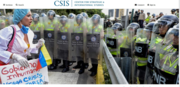
In responding to the health crisis in Venezuela, the United States and the international community can consider several options: they can encourage the Venezuelan government to fulfill commitments to protect the population's health and access to ess
...
ential medicines; and they can support civil society organizations and professional groups providing analysis about the health sector. Strengthening the potential of public health professionals within Venezuela, as well as in the diaspora, to develop plans for reforming the health system and addressing current public health challenges should there be a political opening for them to do so will be important, as well.
more
Governments have dedicated a pivotal role to the private sector in the implementation and financing of the 2030 Agenda and the SDGs. This has pushed a turn towards the private sector, the promotion of multi-stakeholder partnerships between public an
...
d private actors. However, far too often there is a considerable gap between the social and environmental commitments companies make publicly in political fora like the UN and the actual effects of their production patterns and investment strategies on people and the environment. A new working paper, published by Brot für die Welt, Global Policy Forum and MISEREOR provides an overview of the ways and means by which the UN involves business actors in the debates around the implementation of the 2030 Agenda. It describes new initiatives and alliances of business actors around SDG implementation at the international level, and their main messages and policy proposals. With a few selected examples it contrasts the sustainability rhetoric of corporations with their business reality. And finally, the working paper draws conclusions and formulates recommendations for policymakers on how to increase the benefits of UN-business interactions in implementing the 2030 Agenda - and how to reduce associated risks and negative side effects.
more
This report sets out the compelling case for repurposing harmful agricultural producer support to reverse this situation, by optimizing the use of scarce public resources, strengthening economic recovery from the COVID-19 pandemic, and ultimately dr
...
iving a food systems transformation that can support global sustainable development commitments.
more
The Strategy provides a high-level unifying framework to leverage existing capacities, address barriers and strengthen the use of genomic surveillance in the detection, monitoring and response to public health threats. Genomic surveillance is part o
...
f the broader surveillance and laboratory system, and its implementation should reinforce end-to-end capacities including sample collection, diagnostics, data sharing and analysis. The strategy aims to facilitate the connectivity between different disease control programs and surveillance networks. This interoperability will strengthen the cross-cutting essential public health laboratory functions underpinning genomics holistically. The strategy articulates the overarching goal, objectives and strategic actions needed. These are dependent on commitments from countries, partners and WHO for their implementation.
more
The increasing amounts of official development assistance (ODA) for health have been aimed primarily at fighting HIV/AIDS, malaria and tuberculosis. Neglected tropical diseases (NTD), one of the most serious public health burdens among the most depr
...
ived communities, have only recently drawn the attention of major donors. While frequently stated, the low share
of funding for NTD control projects has not been calculated empirically. Our analysis of ODA commitments for infectious disease control for the years 2003 to 2007 confirms that Development Assistance Committee (DAC)-countries and multilateral donors have largely ignored funding NTD control projects. On average, only 0.6% of total annual health ODA was dedicated
to the fight against NTDs while the average share of control projects for HIV/AIDS was 36.3%, for malaria 3.6%, and for tuberculosis 2.2%. This allocation of health ODA does not reflect the diseases’ respective health burdens.
more
Key considerations for the use of law to prevent noncommunicable diseases in the WHO European Region
Report of an intensive legal training and capacity-building workshop on law and noncommunicable diseases (Moscow, 30 May–3 June 2016)
The report summarizes important issues, themes and topics discussed during the meeting in Moscow, ranging from the design and implementation of legislation, reconc
...
iling public health objectives with international trade and investment law commitments, to examples of regional integration, such as the European Union and the Eurasian Economic Union.
more
This publication presents the Agenda for the Americas on Health, Environment, and Climate Change 2021–2030 (the Agenda). The Agenda is a call to action to the health sector to lead the charge to address environmental determinants of health in the Americas. The Pan American Health Organization (PAH
...
O) will work with Member States to achieve its goal and objective to ensure healthy lives and promote well-being for all at all ages using a sustainable and equitable approach that places a priority on reducing health inequity. The Agenda has been developed under the umbrella of the WHO Global Strategy on Health, Environment, and Climate Change, and builds upon the commitments set forth in the Sustainable Health Agenda for the Americas 2018–2030 and the PAHO Strategic Plan 2020–2025. The Agenda was developed in consultation with the Technical Advisory Group and through a consensus-driven decision-making process with Member States during the 2019–2020 period. Looking toward the achievement of Sustainable Development Goal 3, the Agenda focuses on: improving the performance of environmental public health programs and institutions; fostering environmentally resilient and sustainable health systems; and promoting environmentally healthy and resilient cities and communities. Its implementation will be context-specific, based on the needs and realities of the countries. It will benefit countries and territories by promoting good governance practices, strengthening the leadership and coordination roles of the health sector, fostering cross-sectoral action, focusing on primary prevention, and enhancing evidence and communication. It will facilitate access to human, technical, and financial resources necessary to address environmental determinants of health and ensure that the Region is fully engaged in global health, environment, and climate change processes and agreements. The objective of the Agenda is to strengthen the capacity of health actors in the health and non-health sectors to address and adapt to environmental determinants of health (EDHs), prioritizing populations living in conditions of vulnerability, in order to meet Outcome 18 of the PAHO Strategic Plan 2020–2025 directly and several other outcomes of the Plan indirectly. To address and adapt to the challenges of EDHs in the Region, an integrated and evidence-informed approach within the health sector and across sectors will be needed, one enabled, and supported by good governance practices, adequate management mechanisms, high-level political will, and adequate human, technical, technological, and financial resources.
more
This report seeks to uncover the extent to which global goals crowd in international financing, inform domestic policy priorities, and navigate progress toward development outcomes in low- and middle-income countries (LICs and MICs). Our report:
Provides a historical perspective on how ODA financin
...

g was aligned with the MDGs, and the perceived influence of global goals in shaping domestic priorities
Offers a baseline of ODA financing to the SDGs and a forward-looking perspective in translating past lessons learned from the MDGs era into actionable insights
Using a pilot methodology developed by AidData, we analyze ODA flows during the MDGs era (2000-2013) and approximate baseline financing for each goal prior to the adoption of Agenda 2030 in September 2015. The dataset used in the report, Financing to the SDGs, Version 1.0, provides project-level data on estimated Official Development Assistance (ODA) commitments to the 17 Sustainable Development Goals (SDGs) from 2000 to 2013. In this report, we also draw upon the responses of nearly 7,000 public, private, and civil society leaders from AidData’s novel 2014 Reform Efforts Survey to assess how national-level policymakers perceive the MDGs in light of their domestic reform priorities, and what this may mean for the SDGs.
more
In 2018 the Astana Declaration reaffirmed a global commitment to PHC as a cornerstone of sustainable health systems for accelerated progress on universal health coverage (UHC) (1). The vision for PHC in the 21st century is for a wholeof-government and whole-of-society approach to health that combine
...

s: 1) multisectoral policy and action; 2) empowered people and communities; and 3) primary care and essential public health functions as the core of integrated health service. Signatories, including Nigeria, were urged to implement the vision and commitments of the Declaration according to their national contexts. This case study examines Nigeria’s response to COVID-19 from a PHC perspective between March 2020 and mid-2021.
more
3 June 2021. After 40 years of AIDS, charting a course to end the pandemic.
The report shows that countries with progressive laws and policies and strong and inclusive health systems have had the best outcomes against HIV. In those countries, people living with and affected by HIV are more likely t
...
o have access to effective HIV services, including HIV testing, pre-exposure prophylaxis (medicine to prevent HIV), harm reduction, multimonth supplies of HIV treatment and consistent, quality follow-up and care.
more