
Filter
1598
Text search:
displaced
populations
Featured
177
446
Language
Document type
748
334
165
140
99
41
37
22
7
2
2
1
Countries
92
85
66
55
50
40
36
34
29
28
27
25
25
25
24
21
20
17
17
15
15
15
15
14
14
14
13
13
12
12
12
12
11
11
11
11
11
10
10
10
9
8
8
8
7
7
7
7
7
7
6
6
6
6
5
5
4
4
4
4
4
4
4
3
3
3
3
3
3
3
3
3
2
2
2
2
2
2
2
2
2
2
1
1
1
1
1
1
1
1
1
1
1
1
1
1
1
1
1
1
1
1
1
1
1
1
1
Authors & Publishers
Publication Years
Category
514
245
89
79
60
20
4
1
Toolboxes
213
195
126
107
93
83
58
42
40
37
35
29
28
27
27
23
21
20
13
9
7
4
4
2
2
1
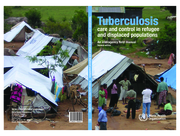
For the estimated 20 million refugees and 25 million internally displaced people worldwide, well-planned settlements can help to maximise their protection and security, and support them to minimise the spread of disease, manage natural resources sus
...
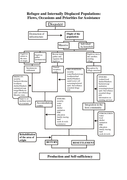
Lancet Infect Dis 2022 Published Online April 8, 2022 https://doi.org/10.1016/S1473-3099(22)00225-

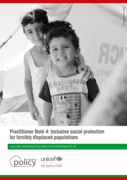
This Practitioner Note is part of a four-part series providing MENA governments and practitioners in the fields of both social protection and disaster risk management (DRM) with general guidelines for future shock response informed by lessons learned from the COVID pandemic. The first three notes of
...
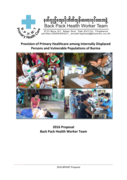
Project Programs:
A. Medical Care Program
B. Community Health Promotion and Prevention Program
C. Maternal and Child Health Program
Target Population: 228,000 people living within the Mon, Kayah, Kayan, Karen,Shan, Kachin, Pa O, Chin and Arakan areas
Projec ... January to December 2016
A. Medical Care Program
B. Community Health Promotion and Prevention Program
C. Maternal and Child Health Program
Target Population: 228,000 people living within the Mon, Kayah, Kayan, Karen,Shan, Kachin, Pa O, Chin and Arakan areas
Projec ... January to December 2016
The WHO Global research agenda on health, migration and displacement identified the health of displaced and migrant populations in the context of climate change as one of the most pressing, yet unde
...
The health of refugees and migrants is directly related to their access to quality, effective and appropriate health care along all their routes of travel. Refugees and migrants face challenges in accessing health care, including financial, legal and cultural barriers, that are well documented.
These country reports provide information on the legal situation for displaced populations, namely asylum seekers, refugees, and returnees, where relevant, regarding access to mobile services, in ea
...
Internal displacements due to conflict and disasters are a major driver of global human mobility. While the total numbers of internal displacements by cause and geographical location are increasingly well tracked, a significant gap remains in the availability of disaggregated data on key variables â
...
Internal displacements due to conflict and disasters are a major driver of global human mobility. While the total numbers of internal displacements by cause and geographical location are increasingly well tracked, a significant gap remains in the availability of disaggregated data on key variables â
...
Internally displaced persons (IDPs), refugees, migrants and returnees constitute a sizeable population in the WHO Eastern Mediterranean Region. There were 12 million refugees (half are Palestinians) and 13 million IDPs in the Regio
...
For most people in displacement contexts, there are simply not enough vaccines available in the places where they are hosted: 85% of refugees are hosted in lower- and middle-income countries, while in the first six months of this year 85% of vaccines went to wealthy countries; lower- and middle inco
...
he central Sahel region—Burkina Faso, Mali and Niger—is facing a severe humanitarian and protection crisis.
Massive displacement, most of it driven by intense and largely indiscriminate violence perpetrated by a range of armed actors against civilian
...
Establishing trauma referral pathways to provide urgent life-saving assistance for displaced populations and civilians remaining in Ar-Raqqa.
In July 2017, a WHO team comprising an external trauma
...
Much remains unknown about displaced communities in out-of-camp areas as identification constraints hinder knowledge on the overall situation and preeminent needs of an area. When compared to regularly monitored in-camp
...
