Search database
Filter
73
Text search: cutaneous leishmaniasis (CL)
Featured
Language
Document type
Studies & Reports
19
No document type
16
Resource Platforms
9
Guidelines
8
Videos
7
Fact sheets
4
Infographics
3
Strategic & Response Plan
3
Manuals
2
Training Material
2
Countries / Regions
Global
25
Latin America and the Carribbean
9
Ethiopia
8
India
3
Nepal
3
Kenya
3
Sudan
3
Brazil
3
Somalia
2
South Sudan
2
Bangladesh
2
Middle East and North Africa
2
Africa
2
Morocco
1
Saudi Arabia
1
Uganda
1
Pakistan
1
Iraq
1
Jordan
1
Germany
1
Lebanon
1
Turkey
1
Syria
1
China
1
Namibia
1
Colombia
1
Greece
1
South–East Asia Region
1
Western and Central Europe
1
Paraguay
1
Asia
1
Eastern Europe
1
Albania
1
Iran
1
Georgia
1
Tunisia
1
Authors & Publishers
World Health Organization World Health Organization WHO
16
World Health Organization (WHO)
8
World Health Organization WHO
6
Centers for disease control and prevention CDC
3
et al.
2
Food, Medicine and Healthcare Administration and Control Authority of Ethiopia
2
Mediversia
2
Pan American Health Organization PAHO
2
World Health Organisation (WHO)
2
AIDSinfo
1
Amaar, A.
1
Balamurali, M.
1
Baraa, A. et al
1
BMJ Innovations :234–239. doi:10.1136/bmj
1
Brindha, J.
1
Cafasso, J.
1
CDC Centers for Disease Control and Prevention
1
Clinical Info - HIV.gov
1
Cunze, S.
1
Current Tropical Medicines Report
1
D. Grace
1
Deutschen Gesellschaft für Tropenmedizin und Internationale Gesundheit (DTG) in Zusammenarbeit mit der Paul-Ehrlich-Gesellschaft für Chemotherapie (PEG) und der Deutschen Dermatologischen Gesellschaft
1
Devipriya, J.
1
DNDi 
1
Drugs for neglected diseases initiative DNDi
1
E.M. Févre
1
Else-Vet
1
European Centre for disease prevention and control (ECDC)
1
Federal Ministry of Health, Ethiopia
1
Frontiers in Chemistry
1
Gupta, A.
1
Healthline
1
Institutional research information sharing iris
1
K. Suzuki, R. E. Simmonds
1
Kaushik, C.
1
Khan, J.
1
Kita, K.
1
Koch, L.
1
Kochmann, J.
1
Kraef, C.
1
Liquid Jigsaw
1
Maternal & Childhealth Advocacy International MCAI
1
McGloin, J.
1
Medscape
1
MInistry of Health and Social Services Directorate of Special Programmes, Namibia
1
Ministry of Health Ethiopia
1
Ministry of Health, Federal Democratic Republic of Ethiopia
1
Multidisciplinary Digital Publishing Institute MDPI
1
Nagasaki University School of Tropical Medicine and Global Health
1
National Institutes of Health
1
One Health and Implementation Research
1
Paipilla, K., Castro-Arroyave, D., Grajales,L.
1
Pan American Health Organisation PAHO
1
Pan American Health Organization (PAHO)
1
PLOS One
1
Polidano, K.
1
Polidano, K., Wenning, B., Ruiz-Cadavid, A.
1
Quintana, M.
1
Reports and Data
1
Richards, M.
1
Royal Society open Science
1
Röbbel, N.
1
Ruiz-Cadavid. et al
1
Salomón, O.
1
SaludTV GMV
1
Salwa, S.
1
Social Sciences
1
Stophleishmania.org
1
The Lancet Planetary Health
1
Veeri, B.
1
Waage, J.
1
Wamai, R.
1
Wenning, B.
1
WHO Regional Office for the Eastern Mediterranean
1
World Health Organization
1
Yamada, H.
1
Yotsu,R.R.
1
Ziaggi, G.
1
Publication Years
Category
Countries
18
Clinical Guidelines
11
Public Health
8
Key Resources
2
Women & Child Health
1
Pharmacy & Technologies
1
Toolboxes
NTDs
50
HIV
2
Planetary Health
2
Malaria
2
Ebola & Marburg
1
Refugee
1
COVID-19
1
Pharmacy
1
Cutaneous leishmaniasis (CL) is a parasitic disease caused by infection with a vector-borne protozoan parasite of the genus Leishmania spp. The par ... more
Cutaneous leishmaniasis (CL) is a neglected infectious endemic disease that is transmitted through the bite of a vector insect (sandfly) of the Lut ... more
Webinar on Cutaneous Leishmaniasis and the summary of the proceedings

Yamada, H.; Kita, K. Nagasaki University School of Tropical Medicine and Global Health (2016) CC
Cutaneous Leishmaniasis (CL) is a painful disease that exerts a serious toll on societies around the world that are afflicted by it. Although not l ... more

Leishmaniasis is a complex vector-borne disease involving in its transmission several species of protozoan parasites called Leishmania, a wide variety of animal reservoirs and phlebotomine sandflies vectors. ... more
We reviewed the evidence on community-based interventions for the prevention and control of cutaneous leishmaniasis (CL). Community initiatives tai ... more

We developed an integrated vector surveillance (IVS) proposal for cutaneous leishmaniasis (CL) and visceral ... more
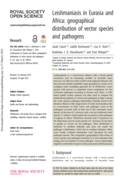
Leishmaniasis is a vector-borne disease with a broad global distribution and an increasing number of recorded cases worldwide. However, it is still one of the world's most neglected diseases. Over the last decades, the disease has been found to expa ... more
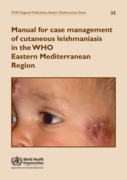
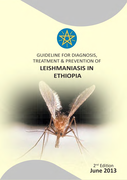
This publication represents a key step forward in translating Control of the leishmaniases (WHO Technical Report Series, No. 949) into a more practical tool for health personnel directly involved in the case management of cutaneous ... more
There are 3 main forms of leishmaniases: visceral (the most serious form because it is almost always fatal without treatment), cutaneous (the most common, usually causing skin ulcers), and mucocutaneous (affecting mouth, nose and throat). ... more
Leishmaniasis is a parasitic disease that is found in parts of the tropics, subtropics, and southern Europe. Leishmaniasis is caused by infection with Leishmania parasites, which are spread by the b ... more

Website last accessed on 04.06.2023 Bites of infected female sand flies causes the disease. The visceral form attacks internal organs; the cutaneous form causes facial ulcers, disfiguring scars and disability. #BeatNTDs
Leishmaniasis is a vector-borne tropical/subtropical disease caused by an intracellular parasite transmitted to humans by sand fly bite. It is endemic in Asia, Africa, the Americas, and the Mediterranean region. Worldwide reports include 1.5–2 mil ... more
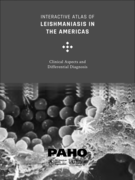
In the Region of the Americas, the leishmaniases are a group of diseases caused by various species of Leishmania, which cause a set of clinical syndromes in infected humans that can involve the skin, mucosa, and visceral organs. The spectrum of clinical disease is varied and depends on the interacti ... more
No vaccines or drugs to prevent infection are available. The best way for travelers to prevent infection is to protect themselves from sand fly bites. To decrease the risk of being bitten, follow these preventive measures: Avoid outdoor activities, especially from dusk to dawn, when sand flies ge ... more
Leishmaniasis is a vector-borne disease with a wide variety of parasite species, reservoirs, and vectors involved in transmission. It is caused by different species of the protozoa Leishmania and is transmitted to animals and humans through a bite o ... more
High prevalence of target diseases in rural and developing nations, increased prevalence of malnutrition across the globe, lack of hygiene and poor sanitation facilities, Migratory patterns of population, introduction of new chemical entity in the field of therapeutics, favorable government regulati ... more

What is Leishmaniasis?

Cafasso, J. Healthline (2018) CC
Leishmaniasis is a parasitic disease caused by the Leishmania parasite. This parasite typically lives in infected sand flies. You can contract leishmaniasis from a bite of an infected sand fly. T ... more
Website last accessed on 08.05.2023 Identificar las formas de transmisión de la leishmaniasis - Youtube Video
Frequently Asked Questions on Visceral Leishmaniasis
Websites last accessed on 24.03.2023 Education and information about Leishmaniasis prevention and control.