
Filter
284
Text search:
congenital
abnormalities
Featured
46
85
Language
Document type
169
69
15
15
6
5
3
1
1
Countries
20
17
11
9
8
8
6
6
4
4
4
4
3
3
3
3
3
2
2
2
2
2
2
2
2
1
1
1
1
1
1
1
1
1
1
1
1
1
1
1
1
1
1
1
1
1
1
1
Authors & Publishers
Publication Years
Category
107
64
26
16
5
5
Toolboxes
31
21
18
13
11
10
8
7
7
5
5
4
2
2
2
1
1
1
Zika virus infection: update on the evidence for a causal link to congenital brain abnormalities and Guillain-Barré syndrome
Update 7 September 2016
It provides selected illustrations and photographs of congenital anomalies that are severe enough to have a high probability of being captured during the first few days following birth
Birth defects surveillance: quick reference handbook of selected congenital anomalies and infections
This Quick Reference Handbook of Selected Congenital Anomalies and Infections is a companion tool to Birth defects surveillance: a manual for programme managers, and is intended for use by front-line health care professionals who are diagnosing and
...

A printable copy of the article published in Morbidity and Mortality Weekly Report (MMWR) can be found on the CDC Homepage. Follow the Download Link for redirection to CDC.
The goal of this course is to provide participants with the foundational skills needed to begin the development, implementation and ongoing improvement of a congenital anomalies surveillance programme, in particular for countries with limited resou
...
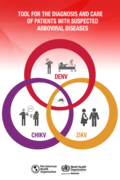
It is Zika virus (ZIKV) that most often causes these neurological effects it appears to be the only arbovirus than can cause congenital malformations such as microcephaly. In any case, more scientific tests are needed to establish the causal relatio
...
This Rapid Advice Guideline updates the Interim Guidance on the “Assessment of infants with microcephaly in the context of Zika virus” published in February 2016 (WHO/ZIKV/MOC/16.3). The recommendations provides guidance on the screening, clinical assessment, neuroimaging, laboratory investigati
...
This Birth Defect Surveillance facilitator (train-the-trainer) guide 2nd edition covers foundational skills needed to begin the development, implementation and ongoing improvement of a congenital anomaly surveillance programme, whether population-ba
...
The volume presents data on the surgical burden of disease, disability, congenital anomalies, and trauma, along with health impact and economic analyses of procedures, platforms, and packages to improve care in settings with severe budget limitation
...
Birth defect has been an emerging major cause of child mortality in the region. Scarcity of the birth defects information hampers policy decisions and control measures at national level. In order to create evidence for action for birth defects prevention in the region, WHO-SEARO in collaboration wit
...
Birth defect has been an emerging major cause of child mortality in the region. Scarcity of the birth defects information hampers policy decisions and control measures at national level. In order to create evidence for action for birth defects prevention in the region, WHO-SEARO in collaboration wit
...
WHO published interim guidelines on the prevention of sexual transmission of Zika virus in September 2016 (1), based on a limited amount of evidence under an emergency process during a public health emergency of international concern. The body of evidence has grown considerably since then and WHO e
...
Part of the CBM Prevention Toolkit on “Recognising Impairments at Birth”
This document provides interim recommendations for the surveillance of Zika virus infection, microcephaly and Guillain-Barré syndrome, in four different contexts and describes reporting requirements to WHO. Transmission refers to vector-borne transmission, unless specified differently. Autochthonou
...
Interim guidelines developed by CDC for healthcare providers in the United States caring for infants born to mothers who while pregnant traveled to or resided in an area with Zika virus transmission. These guidelines include recommendations for the evaluation, testing, and management of infants with
...

The training is based on ensuring that the competencies to care for newborn are acquired.
A range of adult learning methods are used, these include reading and self-study,
discussion, and case based learning in written exercises and group discussions, visual presentations and extensive clinical pr
...
Updated: 20 July 2019
Fact sheet also available in Arabic, French, Spanish, Portuguese, Chinese and Russian. For other language versions go to: http://www.who.int/mediacentre/factsheets/zika/en/
BMC Medicine201614:112 DOI: 10.1186/s12916-016-0660-0
