
Filter
745
Text search:
breast-milk
Featured
94
294
Language
Document type
504
84
47
36
29
22
12
4
4
2
1
Countries
49
31
30
26
25
23
21
20
18
18
15
14
14
14
14
10
10
9
8
7
7
7
6
4
4
4
3
3
3
3
3
2
2
2
2
2
2
2
2
2
2
2
2
2
2
1
1
1
1
1
1
1
1
1
1
1
1
1
1
1
1
1
1
1
1
1
Authors & Publishers
Publication Years
Category
360
145
72
40
35
23
1
Toolboxes
42
38
34
17
17
14
14
13
13
11
11
9
8
8
8
6
5
4
3
3
3
3
1

Marketing of breast-milk substitutes: national implementation of the International Code, status report 2024
recommended
This report provides updated information on the status of implementation of the International Code of Marketing of Breast-milk Substitutes (BMS) and subsequent relevant World Health Assembly (WHA) r
...
Bulletin of the World Health Organization; http://dx.doi.org/10.2471/BLT.16.176677
Expressing breastmilk can relieve breast fullness, soften the breasts, and make it easier for the milk to flow. It is also important to maintain a mother’s milk supply during separation and make milk available for someone else to feed the baby. This video shows how to hand express
...
Situation and Analysis of Exclusive Breast Milk and Breastfeeding in Indonesia
Complementary feeding, defined as the process of providing foods in addition to milk when breast milk or milk formula alone are no longer adequate to meet nutritional requirements, generally starts
...
Q11: 11a). In women with epilepsy, should antiepileptic therapy be prescribed as monotherapy or polytherapy to decrease the risk of fetal malformations?
11b). Does the use of folic acid preconceptually decrease the risk of foetal malformations in women with epilepsy?
11c). Do phenytoin, phenobarbi
...
These new reports from WHO document evidence of widespread inappropriate promotion of baby and toddler foods. Despite the WHO Guidance on ending inappropriate promotion of foods for infants and young children agreed in 2016 and nearly 40 years since the introduction of the International Code of Mark
...
The Baby-friendly Hospital Initiative (BFHI) is a global effort launched by WHO and UNICEF to implement practices that protect, promote and support breastfeeding. It was launched in 1991 in response to the Innocenti Declaration. The global BFHI materials have been revised, updated and expanded for i
...
The community-BFCI (c-BFCI) manual has been developed to facilitate training of CHVs and stakeholders providing nutrition sensitive services at community level. The manual covers a wide range of topics: basic nutrition, exclusive breastfeeding, complementary feeding,
...
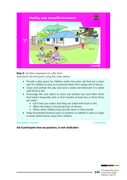
The community-BFCI (c-BFCI) manual has been developed to facilitate training of CHVs and stakeholders providing nutrition sensitive services at community level. The manual covers a wide range of topics: basic nutrition, exclusive breastfeeding, complementary feeding,
...
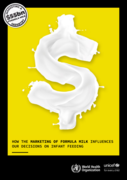
This report - the largest of its kind to date - draws on the experiences of over 8,500 women and 300 health professionals across eight countries. It exposes the aggressive marketing practices used by the formula milk industry, and highlights impacts on families’ decisions about how to feed their b
...
The revised package of BFHI materials includes five sections: 1. Background and Implementation, 2. Strengthening and Sustaining the BFHI: A course for decision-makers, 3. Breastfeeding Promotion and Support in a Baby-friendly Hospital: a 20-hour course for maternity staff, 4. Hospital Self-Appraisal
...

Accessed at March 2014
Ebola Situation Assessment 6 October 2014
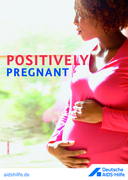
This brochure informes HIV postivie pregnant women what they can do for their and their babies health and stresses the importance of a good medical adivce in the beginning of the pregnancy.
It is also available in several other languages: http://aidshilfe.de/de/shop/positiv-schwanger-deutsch-eng
...
