
Filter
104
Text search:
antiepileptic
drugs
Featured
19
14
Language
Document type
80
14
4
4
1
1
Countries
4
4
4
3
3
3
3
2
2
1
1
1
1
1
1
1
1
1
1
1
1
1
1
Authors & Publishers
Publication Years
Category
25
7
4
3
1
Toolboxes
59
11
6
2
1
1
1
1
1
Q 7: For adults and children with convulsive epilepsy, which standard antiepileptic drugs (phenobarbital, phenytoin, carbamazepine, valproic acid) when compared to placebo/a comparator produce benef
...
Q 10: In adults and children with epilepsy, which psychological interventions used as adjunctive therapies with antiepileptic drugs when compared to placebo/comparator produce benefits/harm in speci
...
Q12: Should the treatment be similar in individuals with intellectual disability and epilepsy compared to people with epilepsy only?
Q8. Should Anti-Epileptic Drug (AED) treatment be started after first unprovoked seizure in non-specialist health settings?
Q9. In adults and children with convulsive epilepsy in remission, when should treatment be discontinued?

Scoping Question: For adults and children living with HIV, which antiepileptic medications (such as phenobarbital, phenytoin, carbamazepine or valproic acid) produce benefits and/or harms when compared to a placebo or controls?
Q11: 11a). In women with epilepsy, should antiepileptic therapy be prescribed as monotherapy or polytherapy to decrease the risk of fetal malformations?
11b). Does the use of folic acid preconceptually decrease the risk of foetal malformations in w
...
1. Provide treatment for mental disorders in primary care
2. Ensure wider accessibility to essential psychotropic drugs
3. Provide care in the community
4. Educate the public
5. Involve communities, families and consumers
6. Establish national
...
The internationally recognized criteria for diagnosis of neurocysticercosis include a requirement for neuroimaging techniques, such as computerized tomography (CT) and/or magnetic resonance imaging (MRI), ideally supported by serology. These facilities are not available in all settings, especially i
...
The new guide provides practical, first-line management recommendations for mental, neurological and substance use conditions. Contents include modules on assessing and managing conditions such as acute stress, grief, moderate-severe depressive disorder, post-traumatic stress disorder, epilepsy, and
...
The objective of this book is to provide health workers with easily accessible information on important aspects of the medicines commonly used at primary care level in Zimbabwe. Medicines are a crucial part of the management of most of our patients, yet many medicines are potentially dangerous if no
...

The availability, prices and affordability of essential medicines in Malawi: A cross-sectional study
The Malawian government recently introduced cost-covering consultation fees for self-referral patients in tertiary public hospitals. Previously, patients received medicines free of charge in government-owned health facilities, but must pay elsewhere. Before the government implements a payment policy
...
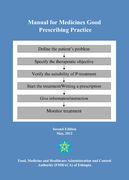



This is the fifteenth edition of the lecture notes. They were first published in 1987 as a summary of the material used in the biannual epilepsy teaching weekend organised under the auspices of the UK Chapter of the International League against Epilepsy.
(Lecture series consist of a total of 59 cha
...
Bulletin of the World Health Organization, 2001, 79 (4)
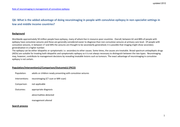
Q6: What is the added advantage of doing neuroimaging in people with convulsive epilepsy in non-specialist settings in low and middle income countries?

The Guide
