
Filter
849
Text search:
adolescence
Featured
61
170
Language
Document type
571
113
85
34
19
12
6
3
2
2
1
Countries
38
35
28
19
17
17
17
12
12
12
12
11
9
9
8
7
7
7
7
7
7
6
6
6
6
6
5
5
5
5
4
4
4
4
4
4
4
3
3
2
2
2
2
2
2
2
2
2
2
2
2
1
1
1
1
1
1
1
1
1
1
1
1
1
1
1
1
1
1
1
1
1
1
Authors & Publishers
Publication Years
Category
253
101
48
47
46
18
1
Toolboxes
281
45
29
23
18
17
16
12
12
12
11
5
4
3
2
2
2
1
1
1
1
1

DIAGNOSING PTSD IN CHILDHOOD | The following literature review addresses the developmental and domain-specific consequences of previous and current diagnostic criteria for posttraumatic stress disorder (PTSD) in pre-adolescent children. PTSD was introduced in 1980 to capture extreme responses follow
...

The webpage by the National Institute on Drug Abuse (NIDA) discusses strategies for preventing drug misuse and addiction. It highlights the importance of early intervention, education, and support systems to reduce risk factors and strengthen protective factors. The content emphasizes the role of fa
...
The purpose of this course is to contribute to the reduction of morbidity and mortality in children and adolescents with cancer by strengthening the capacities of healthcare professionals on the early diagnosis of cancer with concepts and learning instruments that allow them to recognize the signs a
...

The document "Pocketbook for Management of Diabetes in Childhood and Adolescence in Under-Resourced Countries" (2nd Edition) provides practical guidelines for managing diabetes in children and adolescents, particularly in resource-limited settings.
...
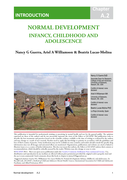
Introduction
Chapter A.2
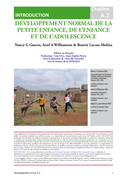
Introduction
Chapitre A.2
Edition en français
Traduction : Lisa Vitte, Anne-Sophie Perrin
Sous la direction de : Priscille Gérardin Avec le soutien de la SFPEADA
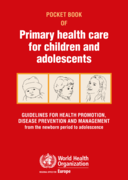
It summarizes guidance on how to manage – and when to refer – children and adolescents presenting with common complaints and conditions. It includes information to enable primary health care providers to coordinate the continued care of children and adolescents with long-term conditions and dise
...

Adolescence, defined as the period between 10 and 19 years of age, is a developmental stage during which many psychosocial and mental health challenges emerge. There is a well-established link between mental health and HIV outcomes. Adolescents and
...

Adolescence, defined as the period between 10 and 19 years of age, is a developmental stage during which many psychosocial
and mental health challenges emerge (1). Studies show that 34.6% of all mental health disorders begin by 14 years of age and
...

Adolescence is a critical stage in life for physical, cognitive and emotional development, shaping future health and well-being. Comprehensive measurement of adolescent health is essential to prioritize health issues, guide interventions and track p
...
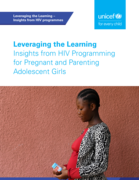
Pregnancy and childbirth during adolescence profoundly affects the lives of millions of girls worldwide, and is a leading cause of maternal mortality and morbidity, and infant and child mortality. Every year, an estimated 21 million girls aged 15–
...
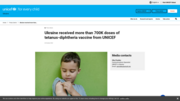
To survive and thrive from early childhood through to adolescence and beyond, children need to be healthy. This enables them to access education so that every child in Ukraine, irrespective of background or circumstance, has an equal chance to fulfi
...

The National Strategic Plan is based on the following guiding principles:
1) Life-course approach: adolescence is a key decade in the course of life that influences the health outcomes later in life.
2) Comprehensive approach: It recogniz ...
1) Life-course approach: adolescence is a key decade in the course of life that influences the health outcomes later in life.
2) Comprehensive approach: It recogniz ...

The articles in this compendium elaborate on some of the ideas shared at the symposium. Together, they provide a broad view of the dynamic interactions among physical, sexual and brain development that take place during adolescence. They highlight s
...
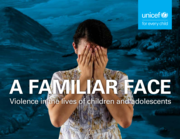
This report presents the most current data on four specific forms of violence – violent discipline and exposure to domestic abuse during early childhood; violence at school; violent deaths among adolescents; and sexual violence in childhood and adolescen
...

Asthma is one of the most common non-communicable diseases globally. This study aimed to assess asthma medicine use, management plan availability, and disease control in childhood, adolescence, and adulthood across different country settings.

Fragile Beginnings. The Fragile Beginnings series examines the growing body of research on the unique vulnerabilities of children: in utero and at birth, during infancy and childhood and throughout adolescence. Its purpose is to enable evidence-base
...

Over the past few decades and throughout the world, the landscape of adolescent health has been altered dramatically. Currently, the total population of adolescents between the ages of 10 and 19 years is 1.2 billion – the largest generation of young people in history. The vast majority of adolesce
...
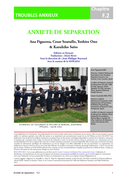
Le trouble anxiété de séparation (TAS) représente environ la moitié de l’ensemble des troubles anxieux
(Cartwright-Harton et al, 2006). La plupart des troubles anxieux pédiatriques
présentent les mêmes critères diagnostics que chez l’adulte à l’exception du TAS,
actuellement class
...

Accessed on 20.03.2020
Il est troublant de se voir changer. Cela soulève toutes sortes d’interrogations simples ou complexes, audacieuses, parfois angoissantes, toujours importantes. Des questions qui touchent à l’identité, au corps, à la relation à l’autre, à la sexualité et à l’
...
