Filter
82
Text search:
acaps
Featured
Recommendations
9
New Publications
47
Language
Document type
No document type
47
Studies & Reports
15
Guidelines
7
Manuals
3
Situation Updates
3
Strategic & Response Plan
2
Fact sheets
2
Training Material
1
Resource Platforms
1
Infographics
1
Countries / Regions
Sierra Leone
12
Liberia
6
Western and Central Europe
5
Bangladesh
4
Guinea
3
Congo, Democratic Republic of
3
Syria
3
Myanmar / Burma
3
Yemen
3
South Sudan
2
Ukraine
2
Global
2
Zimbabwe
1
Haiti
1
Philippines
1
Nepal
1
Pakistan
1
Iraq
1
Afghanistan
1
Kenya
1
Rwanda
1
Indonesia
1
Mozambique
1
Central African Republic
1
Croatia
1
Middle East and North Africa
1
Asia
1
Venezuela
1
Eastern Europe
1
Authors & Publishers
Publication Years
Category
Countries
20
Key Resources
19
Capacity Building
1
Public Health
1
Toolboxes
Ebola & Marburg
16
COVID-19
10
Natural Hazards
8
Refugee
6
Conflict
5
Rapid Response
5
2.0 Rapid Response
4
Disability
1
Cholera
1
Zika
1
Specific Hazards
1
Planetary Health
1
Pharmacy
1
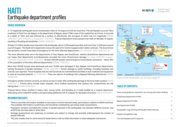
At least 2.2 million people were exposed to the earthquake, about 2,100 people have died, and more than 12,000 were injured as at 20 August. The death toll is expected to rise as the search for victims trapped under rubble continues. The Government has declared a month-long state of emergency for th
...
Global Level
COVID-19: Vulnerability to containment measures (21/04/2020)
COVID-19: Government Measures: Impact on Displaced Populations (16/04/2020)
COVID-19: Scenarios + Comparison table (10/04/2020)
COVID-19: Government Measures Report (26/03/2020)
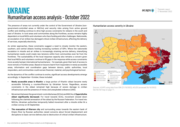
The presence of areas not currently under the control of the Government of Ukraine and security risks arising from active ground conflict and shelling continue to drive high access constraints for oblasts in the south and east of Ukraine.
This report aims to provide a comprehensive comparison of ac
...
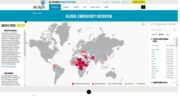
The Global Emergency Overview shows on a map: weekly picks, severe humanitarian crisis, humanitarian crisis, situation of concern.
Accessed August, 2025
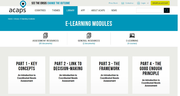
An introduction to Coordinated Needs Assessment in 6 parts:
Part 1: Key concepts
Part 2: Link to Decision-making
Part 3: The Framework
Part 4: The Good Enough Principle
Part 5: The assessment cycle
Part 6: Basic Principles
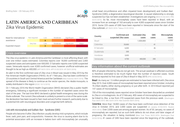
ACAPS Briefing Note: Zika virus epidemic
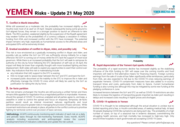
COVID-19 epidemic in Yemen
COVID-19 is thought to be widespread although the actual situation is unclear due to limited reporting and a fear, in Houthi-controlled areas, of seeking medical help. At least 50 people displaying COVID-like symptoms are dying each day. The probability of a high number
...
The report covers possible developments in Indonesia over the next 10 months (to end 2016). Four scenarios are outlined:
Delayed Second Crop Harvest
Delayed and Reduced Second Crop Harvest
La Niña disrupts main rural sources of income
Soaring rice prices
The scenarios wer
...
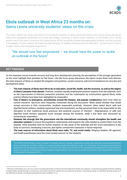
ACAPS Primary Data Collection report: November 2015.
This report reflects the views and voices of 53 university students in Sierra Leone and results from a focus group discussion held at the Geography Department, at Fourah Bay College, University o
...
Thematic Report– 3 April 2020
ACAPS Risk Analysis: COVID19
info@acaps.org
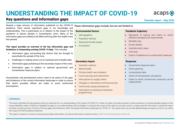
This report provides an overview of the key information gaps and limitations in interpreting existing COVID-19 data
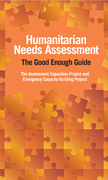
Needs assessment is essential for programme planning, monitoring and evaluation, and accountability, however needs assessment is still a critical weakness of humanitarian response. Organisations need to improve how they do assessments. The Assessment Capacities Project (
...

This report documents the secondary humanitarian problems and impacts of large-scale Ebola outbreak on the different humanitarian sectors, to provide a non-exhaustive plan to help future responders. A large scale Ebola outbreak, in this document, refers to an epidemic with an unprecedented scale, ge
...
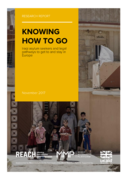
This assessment seeks to better understand what types of legal migration pathways and other protection services Iraqi refugees and other migrants are aware of and attempt to access at different points during their migration journey. Furthermore, it highlights when, where and why Iraqi refugees and o
...